


Important information:
Am 10. April 2024 wurden das Kundenportal sowie der Web-Zugriff auf das Kartenkonto eingestellt. Bitte laden Sie die Swiss Bankers App herunter, um weiterhin uneingeschränkten Zugriff auf alle Dienste zu haben.
Are you a Swiss Bankers sales partner?
Hier geht es zum Partnerportal.
Set between Table Mountain and the Indian Ocean, South Africa showcases, on a round-trip tour, just how many different worlds can fit into a single country. The route takes you from Cape Town through the wine region, along wild coastlines and tranquil lagoons, via the famous Garden Route to the Addo Elephant National Park – passing through small coastal villages, unspoilt forests and landscapes that are well worth a detour.
 17.09.2026
 Eliza
Contents:
From Cape Town to Addo – an overview of the South Africa tour
Cape Town – between Table Mountain, the Atlantic Ocean and colourful neighbourhoods
Stellenbosch & Franschhoek – indulgence amongst the vineyards
Hermanus – wild coastlines and whales off South Africa’s southern coast
Oudtshoorn – over mountain passes into the vastness of the Little Karoo
Wilderness – long beaches, tranquil lakes and unspoilt forests
Knysna – relaxing days between the lagoon and the Garden Route
Plettenberg Bay – dream beaches and nature right on the Indian Ocean
Tsitsikamma – along narrow paths through woodland and the wild coast
Addo Elephant National Park – a safari to round off the tour
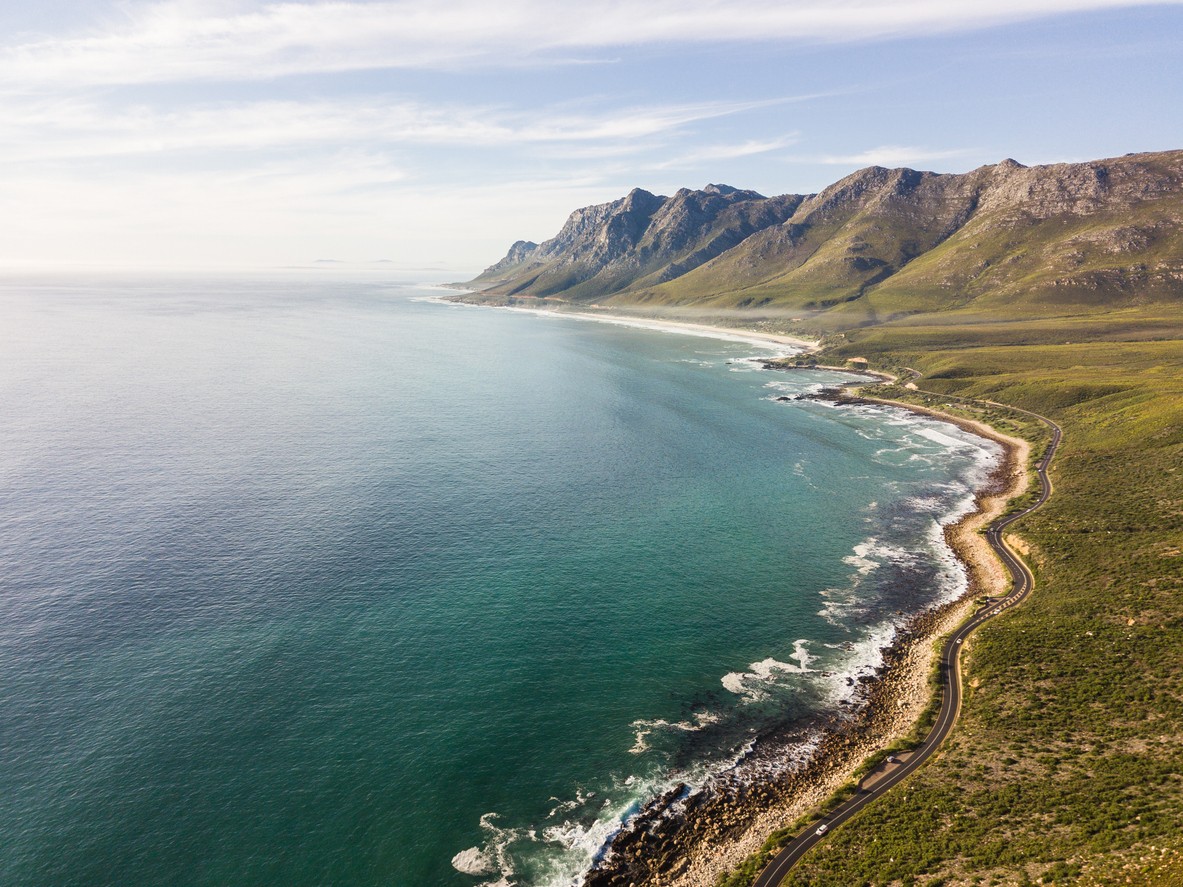
Photo: The recommended duration of the South Africa tour is 14 days. If you’d like to take a more leisurely pace, allow 16 to 18 days.
This round trip takes you through the south of South Africa, linking some of the region’s most beautiful landscapes and best-known destinations. From Cape Town, the route takes you through the wine-growing regions of the Western Cape, across the Little Karoo and along the Garden Route to Addo Elephant National Park. Along the way, you’ll experience a mix of vibrant towns, small coastal villages, wide beaches and unspoilt nature – before the journey concludes with a safari.
Route: Cape Town – Stellenbosch & Franschhoek – Hermanus – Oudtshoorn – Wilderness – Knysna – Plettenberg Bay – Tsitsikamma National Park – Addo Elephant National Park – Gqeberha
Recommended duration: 14 days. If you’d like to take a more leisurely pace, allow 16 to 18 days and spend extra nights in Cape Town, along the Garden Route or around the Addo Elephant National Park.
Distance travelled: Approximately 1,000 to 1,200 kilometres, depending on accommodation, excursions and detours.
Best time to visit: Spring and autumn are particularly pleasant, when temperatures are mild in many places and the region is ideal for road trips and outdoor activities. However, if you’d like to go whale watching in Hermanus, you should plan your trip for the South African winter and spring months.
Getting there and back: The round trip begins in Cape Town and ends in Gqeberha. For the return flight to Switzerland, a connecting flight via Cape Town or Johannesburg is required from there.
Transport: A hire car offers the greatest freedom for this route. In Cape Town, it isn’t strictly necessary from day one; however, it’s advisable by the time you continue on to the wine region at the latest. In South Africa, traffic drives on the left – you should make a conscious effort to get used to this, particularly during the first few kilometres.
Luggage: Light clothing is a must, as is a warmer layer for cool evenings and early-morning safaris. You’ll also need sun cream, insect repellent, a lightweight rain jacket and sturdy, comfortable shoes for hikes and walks in the national parks.
The individual stages can be flexibly extended or shortened. If you have more time available, you shouldn’t necessarily spend it on additional stops: two or three extra nights in Cape Town, on the coast around Wilderness and Plettenberg Bay, or near the Addo Elephant National Park will make the round trip much more relaxed.
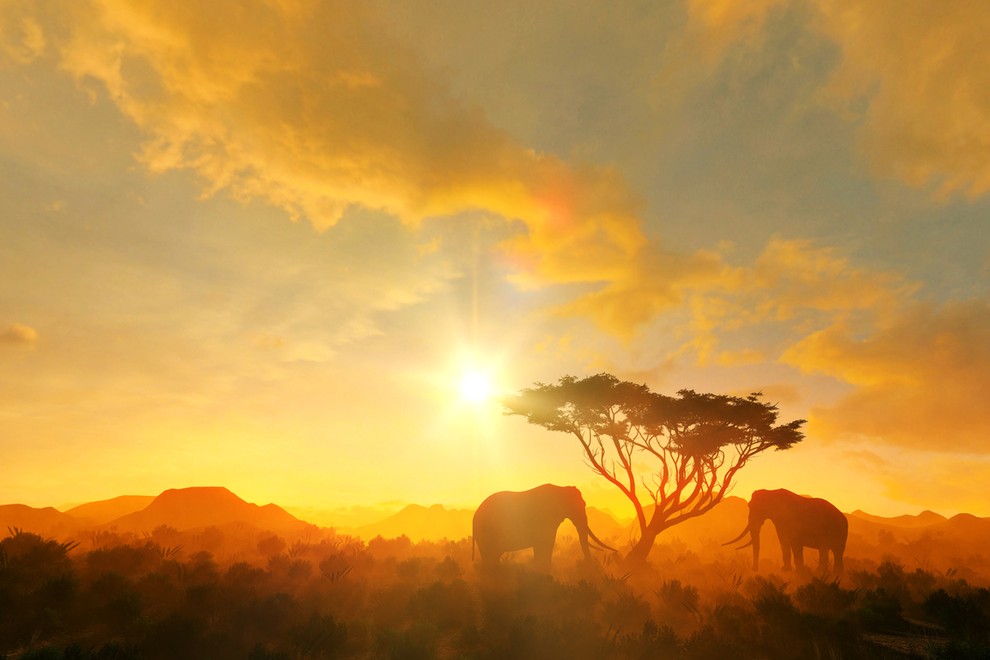
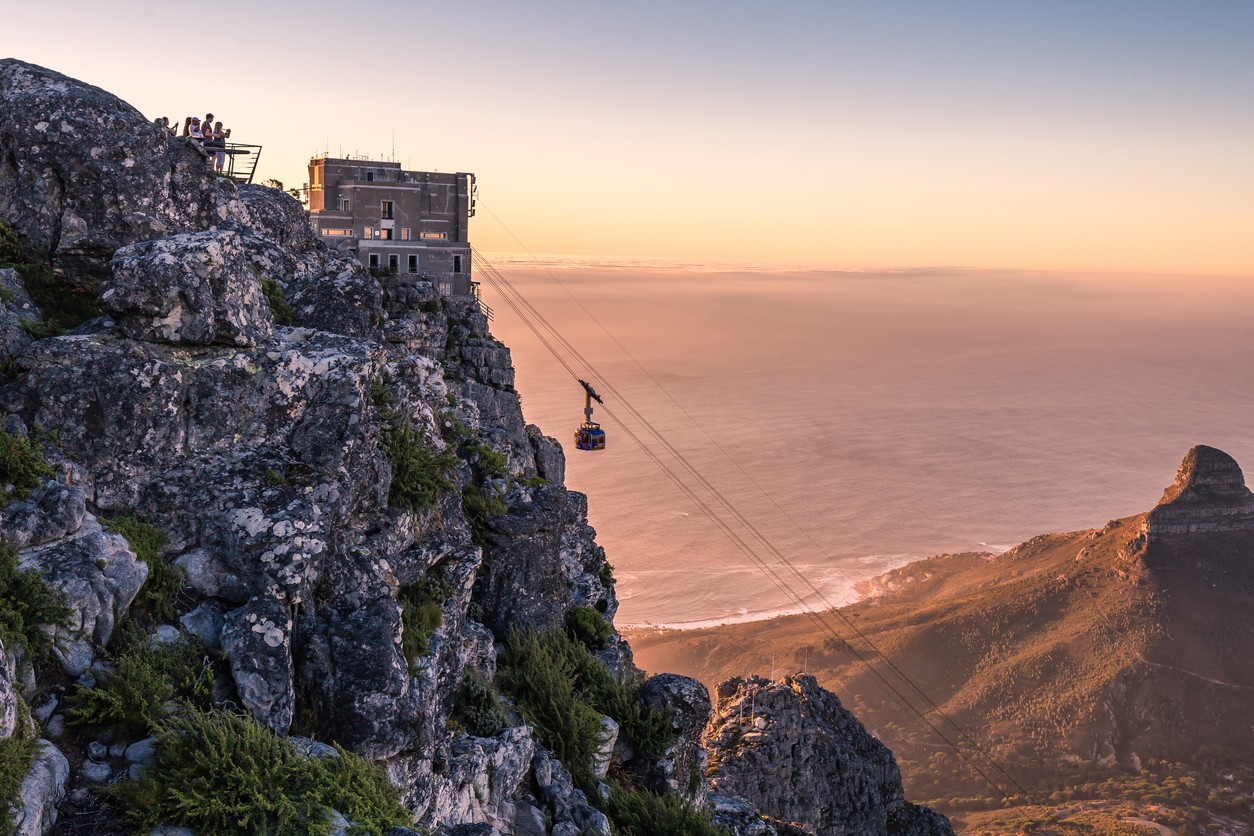
Photo: On a clear day, a cable car ride up Table Mountain in Cape Town is well worth it
Your itinerary: Days 1 to 3 · 3 nights
Hardly any other South African city blends urban life and nature as seamlessly as Cape Town. Table Mountain towers over the city, whilst just a few kilometres away lie the Atlantic beaches and the rugged Cape Peninsula. On a clear day, a cable car ride up Table Mountain is well worth it; those who prefer to walk can experience Cape Town from a different perspective on a hike up Lion’s Head. Afterwards, the paths lead to the colourful Bo-Kaap, the V&A Waterfront or the Kirstenbosch National Botanical Garden. You should set aside a whole day for the Cape Peninsula – with its small coastal villages, Cape Point and the penguins at Boulders Beach.
Special tip: Don’t plan your visit to Table Mountain for a specific day. Clouds and wind can affect the cable car service – so if visibility is good, it’s worth spontaneously changing your other plans.
Hotel tip: Right in the city centre, the Gorgeous George combines two historic buildings with South African design, art and a modern, slightly whimsical interior. On the roof, you’ll find a pool, restaurant and bar – a lovely retreat after a day spent between Table Mountain and the Atlantic Ocean.
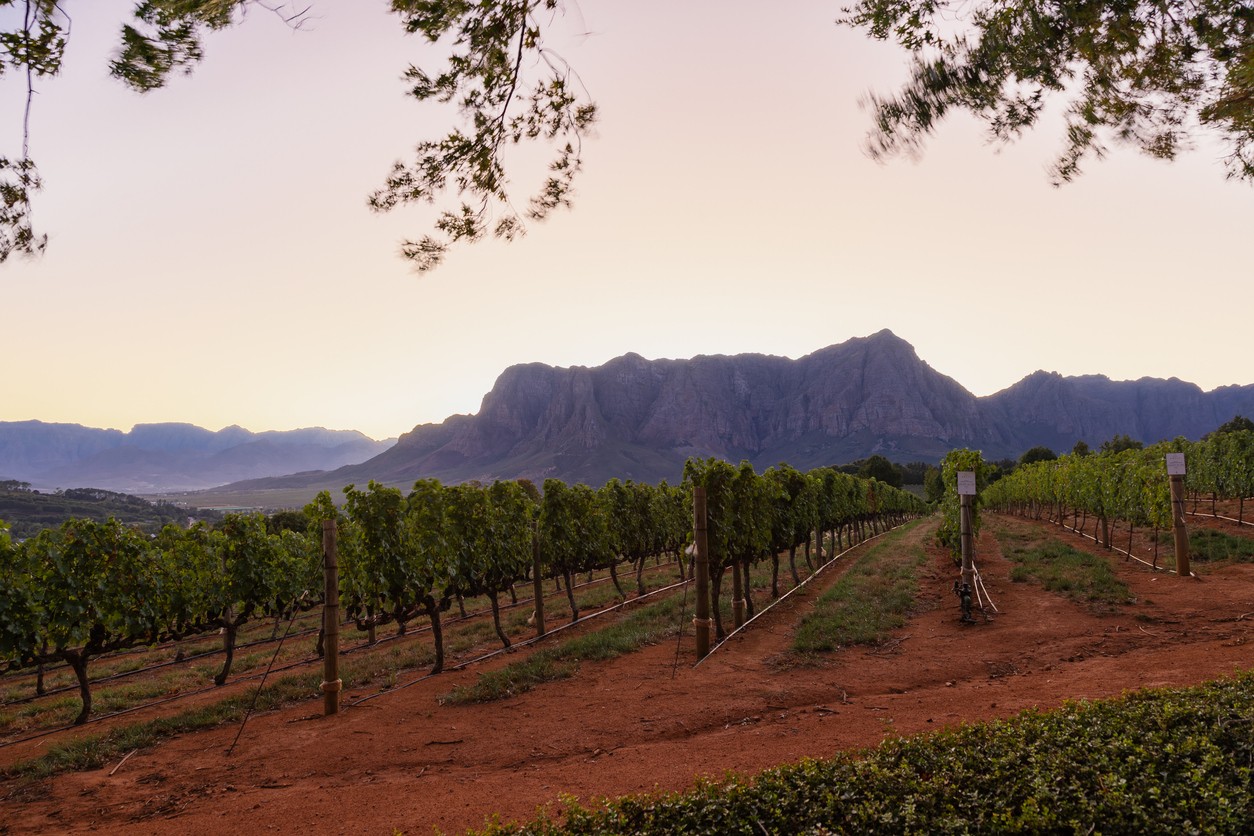
Photo: Just under an hour’s drive from Cape Town, the landscape begins to change. Vineyards stretch across rolling hills, dotted with historic wine estates and the two most famous towns in the Cape Winelands.
Your leg of the journey: Day 4 · 1 night · approx. 50 km from Cape Town
The landscape begins to change just under an hour’s drive from Cape Town. Vineyards stretch across rolling hills, interspersed with historic wine estates and the two most famous towns in the Cape Winelands. Stellenbosch charms visitors with its old houses, shaded streets, cafés and galleries, whilst Franschhoek has a smaller, quieter feel and is particularly well-known for its restaurants and wine estates. Rather than trying to tick off as many as possible in a single day, it’s worth carefully selecting two or three and allowing time in between for a leisurely lunch or a stroll.
Top tip: In Franschhoek, the Wine Tram connects various wineries. It’s particularly handy if you want to visit several wineries without having to drive yourself in between.
Hotel tip: The Oude Werf Hotel is situated right on Church Street in the historic centre of Stellenbosch. Behind the bustling street lies a peaceful courtyard with a swimming pool; the rooms blend historic features with contemporary design. Cafés, galleries and restaurants are all within easy walking distance.
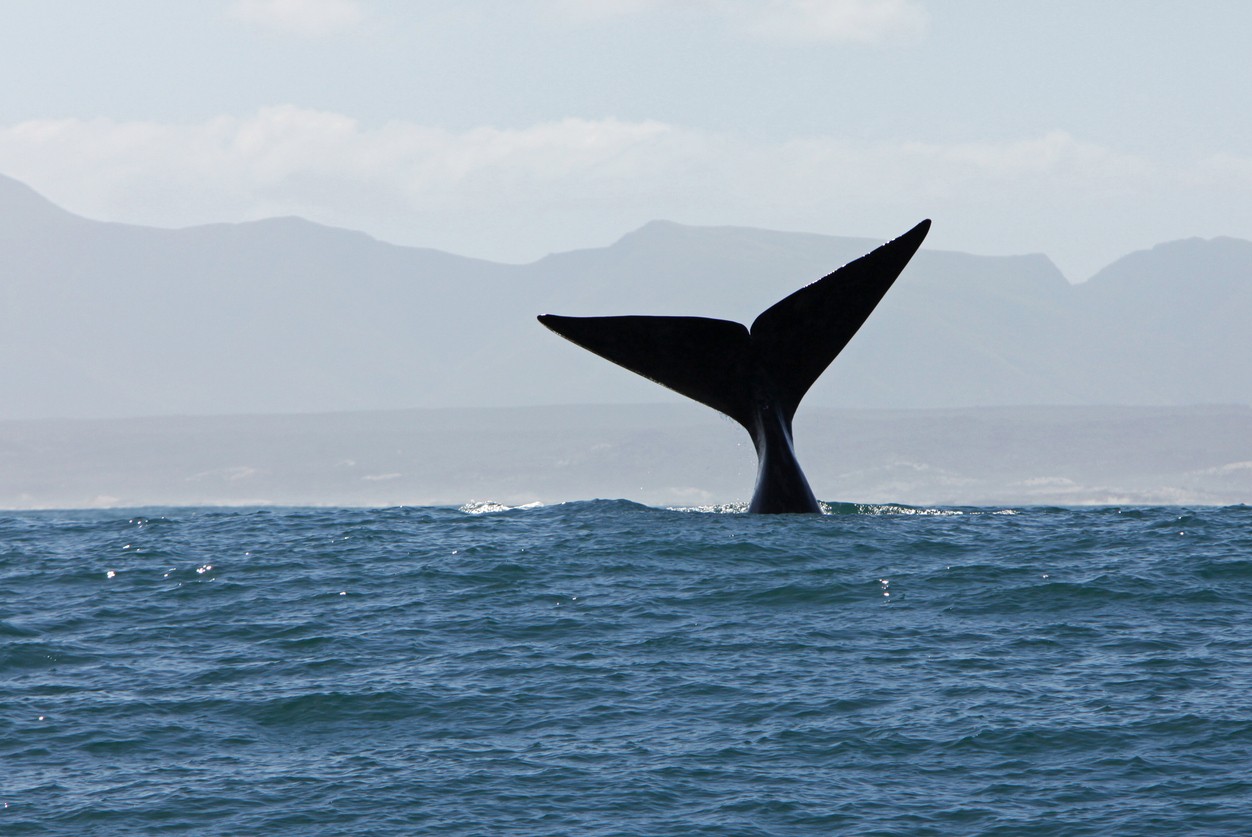
Photo: Hermanus is situated on Walker Bay and is best known for its whales, some of which can be spotted from the shore during the season.
Your leg of the journey: Day 5 · 1 night · approx. 100 km from Stellenbosch
The round trip takes you back from the vineyards to the sea. Hermanus is situated on Walker Bay and is best known for its whales, some of which can be spotted from the shore during the season (roughly June to November). But even outside the whale-watching season, it’s well worth a stop: the approximately twelve-kilometre-long Cliff Path follows the rugged coastline and offers frequent unobstructed views across the bay. If you have more time, you can go hiking in the Fernkloof Nature Reserve or visit the vineyards of the nearby Hemel-en-Aarde Valley.
Special tip: Between around June and November, the chances of spotting whales are particularly good. Hermanus even has a ‘Whale Crier’, who traditionally uses a horn to alert people to sightings.
Hotel tip: The Marine Hermanus is situated right on the famous Cliff Path and, from its elevated position, overlooks Walker Bay. This historic boutique hotel combines classic elegance with a spa and swimming pool – and, with a bit of luck, you might even spot whales from the hotel itself during the whale-watching season.
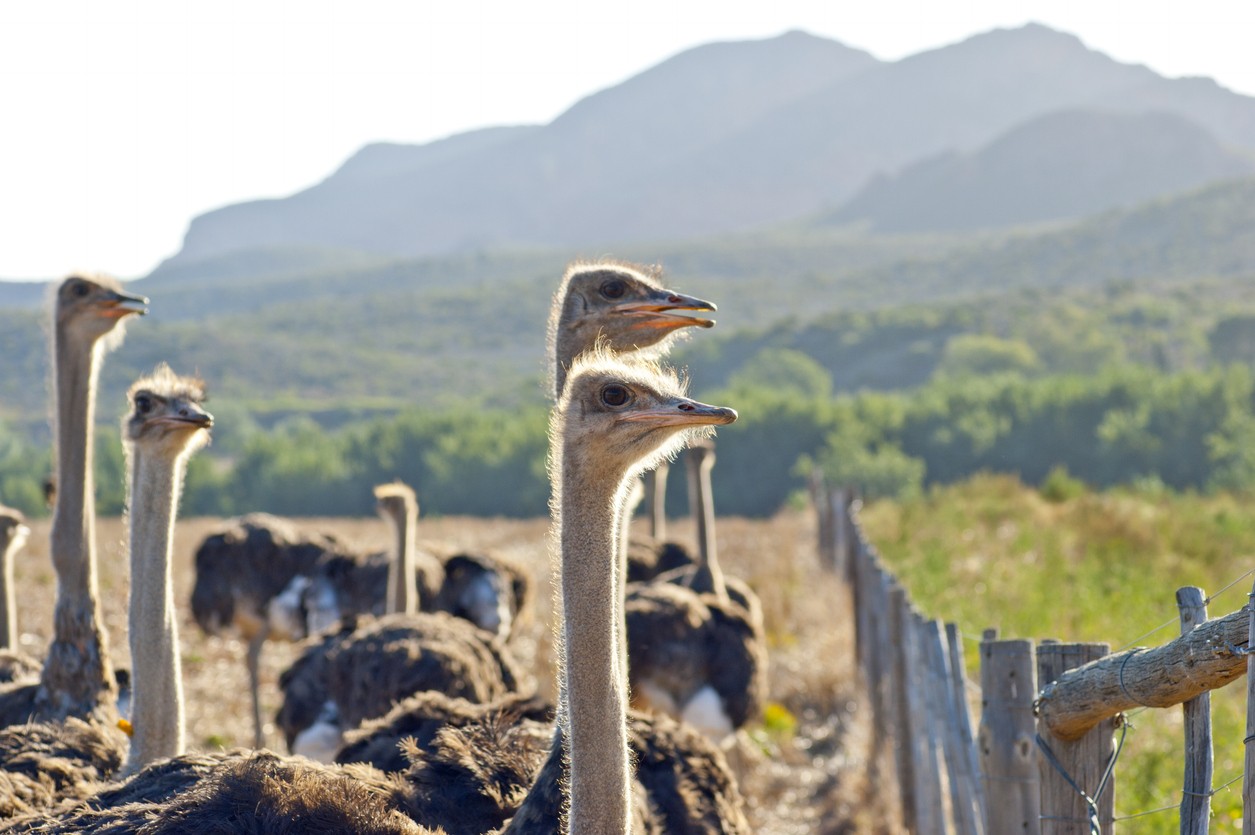
Photo: Around Oudtshoorn, the landscape becomes drier and more expansive, whilst mountains frame the open plains – the region is known, amongst other things, for its ostrich farms
Your leg: Day 6 · 1 night · approx. 360 km from Hermanus
The longest driving leg takes you away from the coast and into the Little Karoo. Around Oudtshoorn, the landscape becomes drier and more expansive, with mountains framing the open plains. The region is famous for its ostrich farms and the Cango Caves, an extensive cave system to the north of the town. If you have enough time, you should also plan a detour to the Swartberg Pass: the historic mountain pass winds its way through an impressive mountainous landscape and reveals yet another completely different side to South Africa.
Special tip: Make the journey itself part of the experience. Set off early and allow time for viewpoints and spontaneous stops – that way, even the longest leg of the round trip won’t feel like a day spent purely driving.
Hotel tip: The Rosenhof Country House is situated just outside the centre of Oudtshoorn; with its garden and peaceful atmosphere, it perfectly complements the vastness of the Little Karoo. The property features a swimming pool, a small spa area and a restaurant.
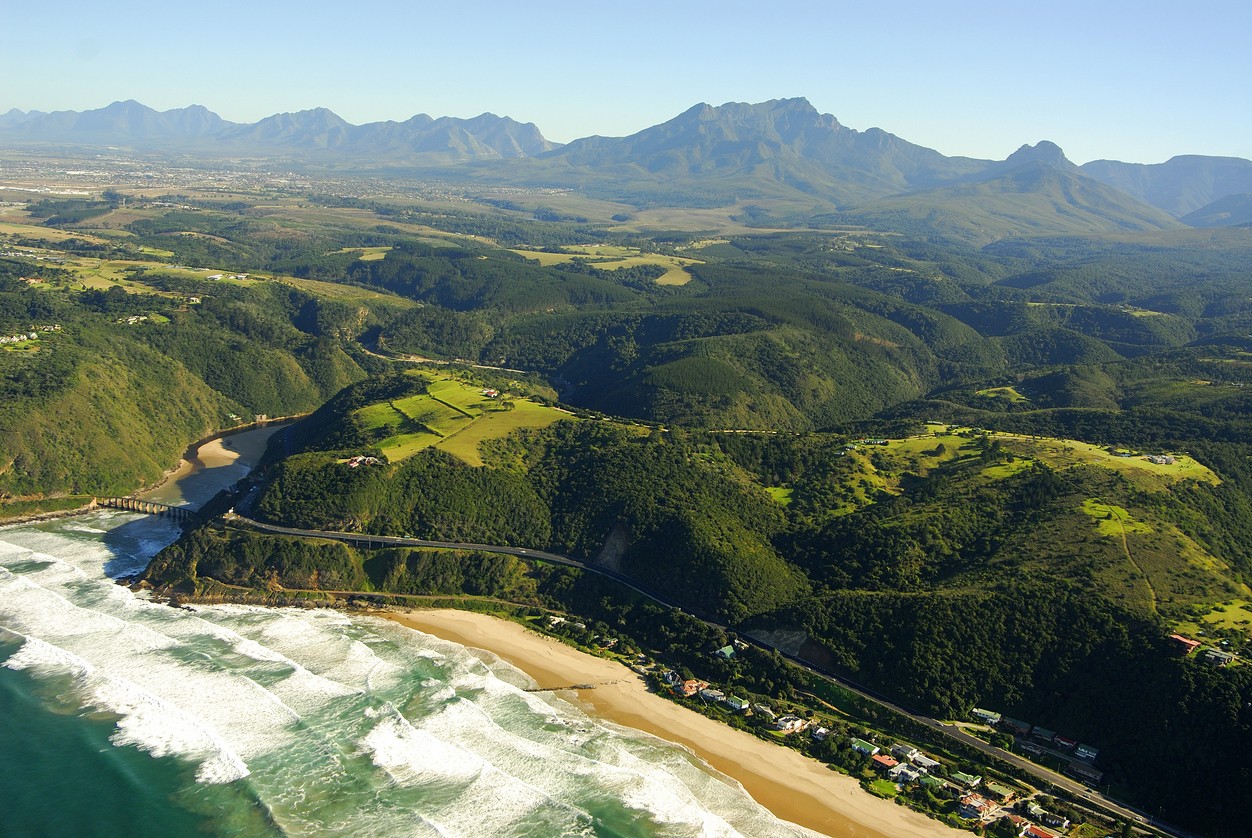
Photo: The surroundings in the Wilderness Section of the Garden Route National Park are particularly beautiful.
Your stage: Day 7 · 1 night · approx. 70 km from Oudtshoorn
Beyond the Outeniqua Mountains, a completely different landscape awaits. Wilderness lies amongst wooded hills, lakes, the Touw River and a kilometre-long sandy beach on the Indian Ocean. The surroundings are particularly beautiful in the Wilderness Section of the Garden Route National Park: walking trails lead along the river through dense woodland, or you can explore the landscape from the water. Those who prefer a more leisurely pace can simply spend the afternoon on the vast Wilderness Beach.
Special tip: Drive to the ‘Map of Africa’ viewpoint above Wilderness. From here, the Kaaimans River winds its way through the wooded landscape, tracing – with a little imagination – the outline of the African continent.
Hotel tip: The Views Boutique Hotel & Spa is situated directly above the beach. Large windows and terraces offer views of the Indian Ocean; there’s also a spa and a pool. The location overlooking the long Wilderness Beach is a real highlight, especially in the morning or at sunset.
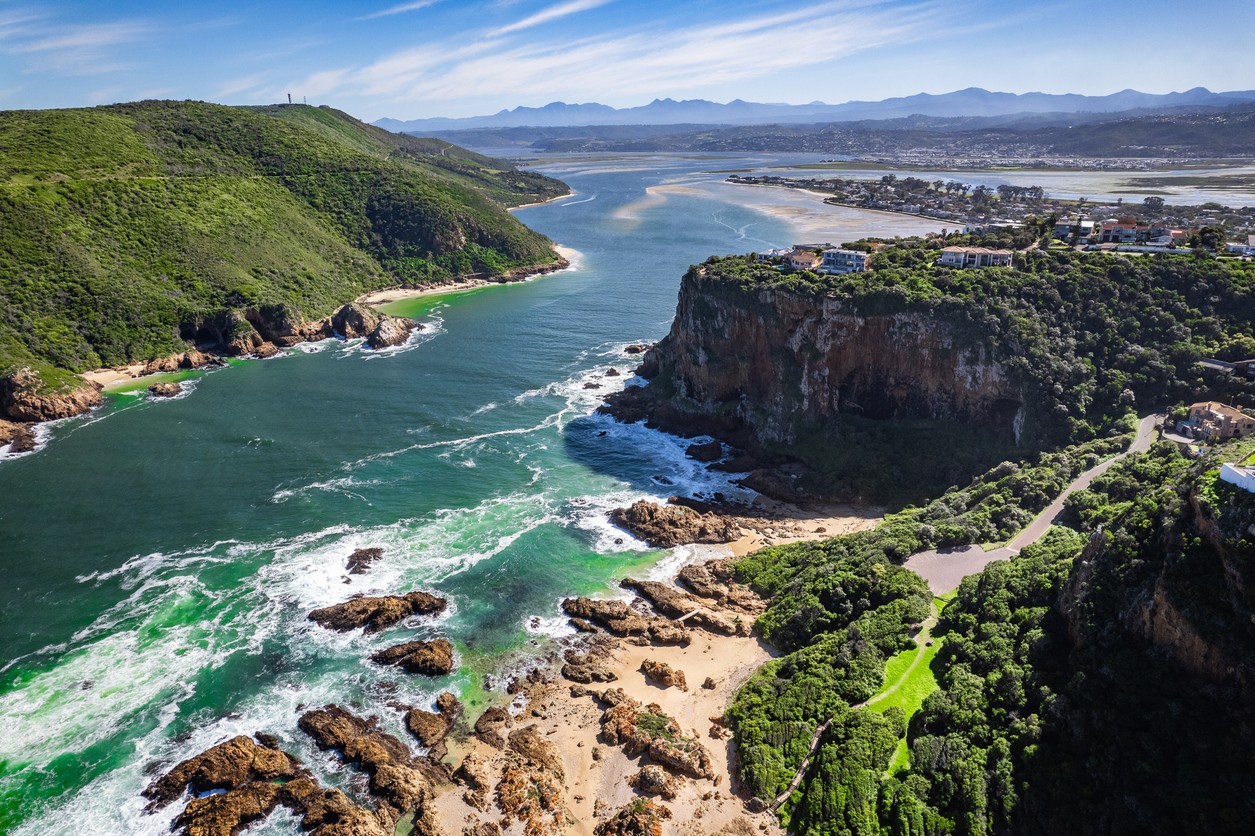
Photo: At the heart of Knysna lies the large lagoon, which is connected to the Indian Ocean by the two striking Knysna Heads.
Your stage: Day 8 · 1 night · approx. 45 km from Wilderness
At the heart of Knysna lies the large lagoon, which is connected to the Indian Ocean by the two striking Knysna Heads. Start the day at the viewpoint overlooking the Heads and later head out onto the water: boat trips offer a more tranquil perspective of the wooded hills and bays. Knysna is also famous for its oysters, which you can sample around the waterfront and on Thesen Island. Precisely because the journey here is short, you’ll have plenty of time to enjoy the Garden Route without a packed daily schedule.
Special tip: Take a stroll across Thesen Island in the late afternoon. Amidst the waterways, small shops, cafés and restaurants, the atmosphere is particularly lovely as the light over the lagoon softens.
Hotel tip: The Turbine Hotel & Spa transforms Knysna’s industrial history into an unusual design hotel. It is situated in a former power station on Thesen Island; old turbines and machine parts are still incorporated into the rooms. It also features a spa, restaurants and views over the canals.
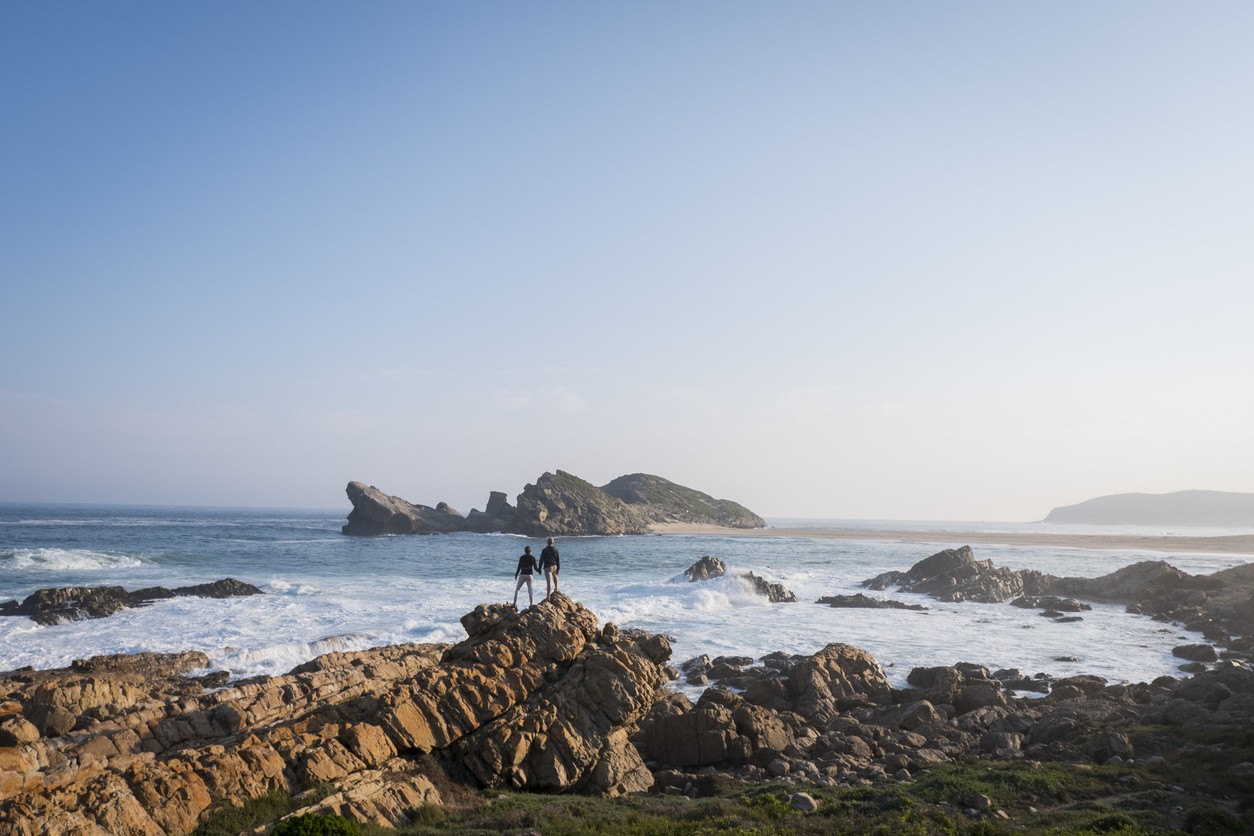
Photo: Plettenberg Bay is one of those places where spending an extra day is well worth it – long sandy beaches meet wooded hills and the vast Indian Ocean.
Your stage: Days 9 to 10 · 2 nights · approx. 35 km from Knysna
Plettenberg Bay – known as ‘Plett’ for short – is one of those places where spending an extra day quickly pays off. Long sandy beaches meet wooded hills and the vast Indian Ocean. The Robberg Nature Reserve to the south of the town is particularly impressive: Several walking trails lead over rocks and dunes, past small coves and repeatedly to spectacular viewpoints. Afterwards, there’s time for an afternoon on the beach or a detour to the small wine region around Plettenberg Bay, which is known for its cooler coastal climate.
Top tip: If possible, set off on hikes in the Robberg Nature Reserve in the morning. It’s usually quieter then, and you’ll have plenty of time for the longer routes before the sun gets too strong.
Hotel tip: The Plettenberg is perched on a rocky headland overlooking the sea and combines one of the town’s most beautiful locations with two swimming pools, a spa and a restaurant offering views across the bay. The beaches and town centre are still just a few minutes’ walk away.
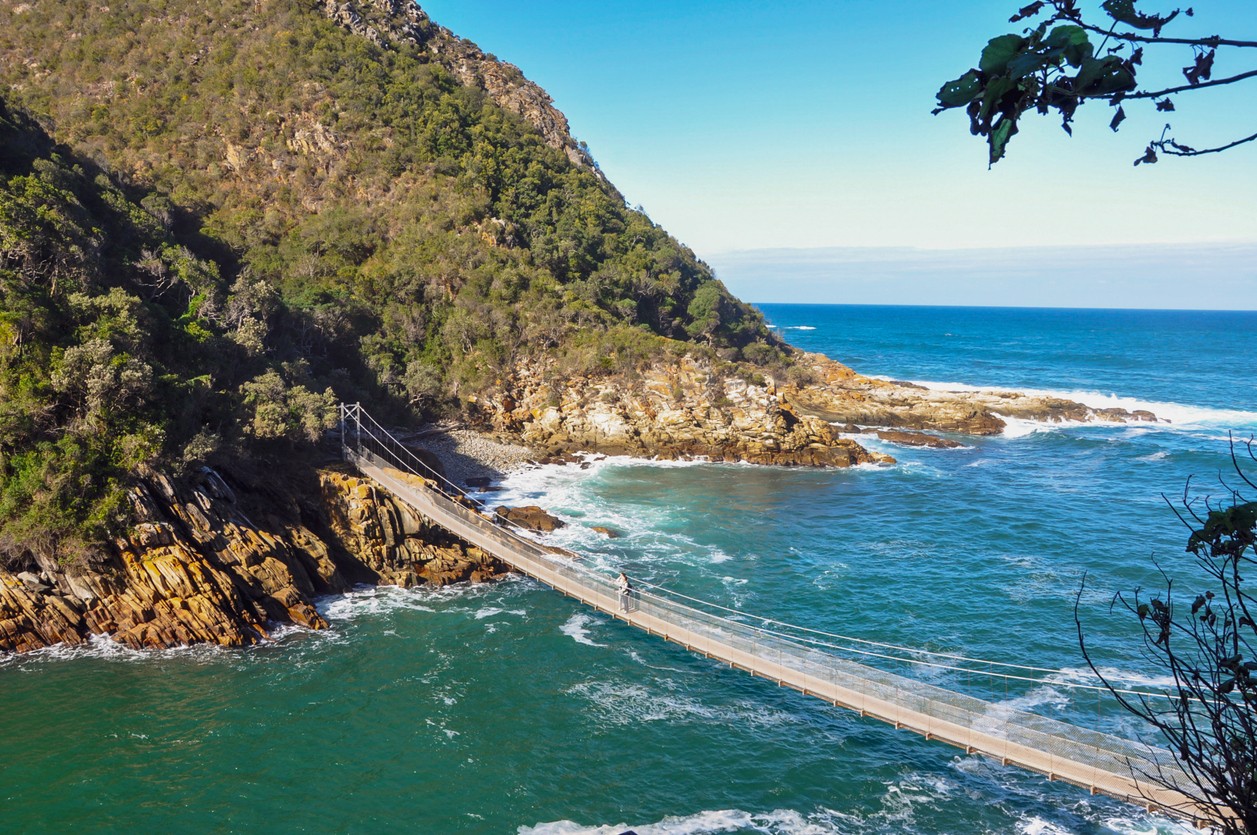
Photo: In the Tsitsikamma Section of the Garden Route National Park, ancient forests stretch almost to the sea, whilst waves crash against dark rocks.
Your stage: Day 11 · 1 night · approx. 65 km from Plettenberg Bay
The further east the route takes you, the wilder the coast becomes. In the Tsitsikamma section of the Garden Route National Park, ancient forests stretch almost to the sea, whilst waves crash against dark rocks. The popular Mouth Trail leads through the coastal forest to the suspension bridge spanning the mouth of the Storms River. Those looking for a more active experience can choose a longer hiking trail or explore the river from the water on a kayaking or lilo tour between towering rock faces.
Special tip: Stay overnight in, or as close as possible to, the natural surroundings rather than just passing through. Once the day-trippers have gone, Tsitsikamma becomes much quieter – and the next morning you can set off early onto the walking trails.
Hotel tip: The Fernery Lodge & Spa is situated slightly off the beaten track from the classic Garden Route stops, nestled amongst woodland, gorges and coastal scenery. The lodge offers sweeping views of the surrounding area; its pool and spa make it a peaceful retreat after a day exploring the Tsitsikamma region.
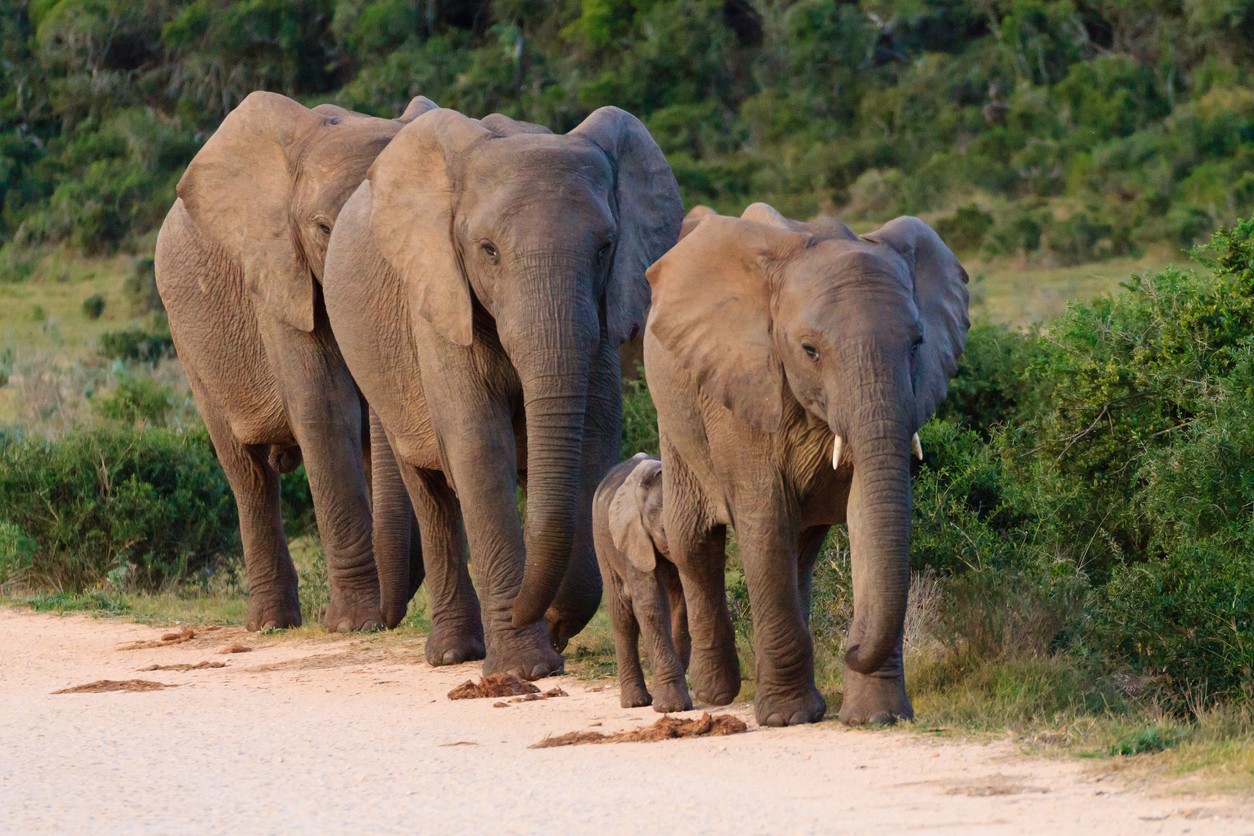
Photo: As well as the elephants for which it is named, Addo Elephant National Park is home to lions, buffalo, rhinos, kudus and numerous species of bird, amongst others.
Your itinerary: Days 12 to 14 · 2 nights · approx. 200 km from Tsitsikamma
After beaches, vineyards and coastal forests, a completely different side of South Africa awaits you to round off your trip. Addo Elephant National Park is home not only to the elephants that give it its name, but also to lions, buffalos, rhinos, kudus and numerous bird species. For the safari, you can choose between guided game drives and exploring in your own hire car. A combination of both is particularly appealing: guides help you spot the animals and provide background information, whilst you can then explore individual routes and waterholes again at your own pace. Two nights allow plenty of time for several drives in the early morning and late afternoon.
Special tip: Do try staying a little longer at the waterholes. Especially during drier periods, different species of animals arrive at the water one after the other – and sometimes more happens if you don’t keep driving on all the time.
Hotel tip: If you’d like to round off your tour with a special overnight stay, the Gorah Elephant Camp is an exceptional choice, situated right within the Addo Elephant National Park. Luxurious tented suites are situated in the heart of the reserve; there’s a waterhole in front of the historic main building, and guided game drives are an integral part of the safari experience.
Conclusion: Driving through vineyards in the morning, standing by the Indian Ocean in the afternoon and watching elephants at a waterhole just a few days later: on hardly any other round trip do the landscapes change as rapidly as in southern South Africa. And it’s not just the well-known highlights that leave a lasting impression, but also the journeys in between – a deserted beach near Wilderness, the view from a mountain pass into the Little Karoo, or a spontaneous stop along the Garden Route. If you have at least two weeks to spare, you’ll experience a journey between Cape Town and Addo that wonderfully combines city life, indulgence, nature and safari.

© Swiss Bankers 2026


 Compare cards and conditions

