


Important information:
Am 10. April 2024 wurden das Kundenportal sowie der Web-Zugriff auf das Kartenkonto eingestellt. Bitte laden Sie die Swiss Bankers App herunter, um weiterhin uneingeschränkten Zugriff auf alle Dienste zu haben.
Are you a Swiss Bankers sales partner?
Hier geht es zum Partnerportal.
Cape Town feels like several trips in one: a morning stroll through the city’s markets, galleries and cafés; a road trip along dramatic coastlines at lunchtime; a sunset over the Atlantic in the evening – and, in between, that ever-present backdrop of mountains and sea. This guide shows you how to plan your trip to Cape Town with ease, which neighbourhoods are worth exploring, and how to best combine the highlights, sights and day trips – including practical tips.
 08.02.2026
 Miryana
Contents:

Photo: Cape Town, South Africa – Aerial view at dusk.
Money & Payment: In Cape Town, you can pay by card almost everywhere – but it’s still worth carrying a small amount of cash for markets, tips and spontaneous little treats. This also applies to parking: there are often ‘parking attendants’ on site who’ll give you brief parking instructions or keep an eye on your car, and they expect a small tip in return. You can conveniently order South African rand in advance in Switzerland via the Swiss Bankers banknote delivery service.
Important information before your trip: For a quick check, you’ll find everything you need to know about entry requirements/visas, safety, health, payment methods and further travel tips on our country information page for South Africa – ideal before you set off.
Cape Town is charming all year round – but it’s at its most relaxed during the shoulder months (September–November and March–May): pleasantly warm, often with clear skies and significantly fewer crowds than in the height of summer – ideal for Table Mountain, Bo-Kaap and trips along the coast. December to February offers that pure summer feeling with long evenings, but is also the liveliest time of year and the quickest to sell out. June to August boasts a peaceful atmosphere and lush green landscapes, though it brings cooler evenings and more frequent rain.
Cape Town is more spread out than many European cities – which makes it all the more important to choose a neighbourhood that suits your travel style and offers short distances, a pleasant atmosphere and the right mix of tranquillity, vibrancy and proximity to key attractions.
Green Point (our personal recommendation): If you ask us for the best ‘base camp’, we’d choose Green Point. The neighbourhood is pleasantly quiet and considered safe, with plenty of modern flats and Airbnbs in new buildings (often with parking and security). At the same time, bars, small shops and cafés are just round the corner. Best of all: you can easily reach the V&A Waterfront, one of Cape Town’s most popular attractions, on foot – it’s almost always bustling there, with plenty of shops, a lovely shopping centre area, restaurants and that harbour/yachting atmosphere.
Hotel recommendation: Hotel Lola – a stylish, modern hotel with a relaxed vibe, ideal as a base for exploring the city and going on day trips.
Sea Point: Perfect if you’d like to combine Cape Town with a seaside feel: the promenade is ideal for walks, a jog or a sundowner, and there are plenty of cafés and restaurants all around. A neighbourhood with a laid-back, ‘holiday-like’ feel – perfect for winding down at the end of the day. Hotel recommendation: Home Suite Hotels Sea Point – very pleasant and practical, with comfortable suites and apartments and a prime location for everyday life by the sea.
City Bowl / Gardens: A very practical choice if you want to stay centrally and do plenty of sightseeing on foot or with short journeys. Many restaurants, bars and cultural attractions are within easy reach. Hotel recommendation: Botany House Boutique Retreat – a charming boutique retreat with plenty of atmosphere, perfect for unwinding after a busy day of sightseeing. Alternatively: iGadi House Boutique Hotel – a stylish boutique hotel in a quiet location, ideal as a relaxing retreat whilst still being very well connected.
De Waterkant: Stylish, compact and ideal if you like boutique shops, design and a good bar scene. The neighbourhood is particularly pleasant if you like to stay ‘close by’ in the evenings whilst still having a lovely selection of places for drinks and dinner. Hotel recommendation: The Capital Mirage – modern, spacious suites with urban comforts, ideal if you’re looking for a touch of ‘city-chic’.
Bo-Kaap: One of Cape Town’s most distinctive neighbourhoods – known for its brightly coloured houses, steep alleyways and unique cultural atmosphere. The best way to explore Bo-Kaap is on foot: stroll through the narrow streets, enjoy the views towards the City Bowl and take your time to snap some photos (it’s usually quietest in the morning and the light is at its best). As one of the city’s most popular attractions, it’s perfect for a visit, although it’s not really recommended as a place to stay overnight.
Unlike in many European cities, Cape Town’s highlights aren’t all concentrated in a single historic centre – instead, you’ll discover sights, architecture and green oases ‘in stages’, spread across various neighbourhoods. That’s precisely what makes it so appealing: you can combine city experiences, viewpoints and the coast in a flexible way – depending on the weather, your mood and the time of day.
Cape Town is spectacular even within the city itself – but the real ‘wow’ factor often lies right on your doorstep: on a day trip, you can combine coastal panoramas, penguins, wine-growing regions and some of the region’s most beautiful sights in a relaxed way.
The Cape Peninsula as a dream route (outward journey): Turn your day trip to the Cape Peninsula into a short coastal circuit – with stops that link up perfectly: Muizenberg (surfers’ paradise & iconic beach huts), St James (colourful beach huts), Kalk Bay (harbour charm & little shops), on to Simon’s Town and from there to Boulders Beach – penguins included. Set off early to allow plenty of time for viewpoints and spontaneous breaks.
Chapman’s Peak Drive (return journey): On your way back to Cape Town, you really must take Chapman’s Peak Drive – considered by many to be the region’s most scenic panoramic road. Steep cliffs on one side, the ocean on the other: this route isn’t just a means of transport, but a highlight in its own right, with photo spots and viewpoints.
Robben Island: A striking change of perspective – not the classic ‘wow-view’ highlight, but one of the most memorable experiences. If you’d like to visit the prison where Nelson Mandela was imprisoned for 27 years, be sure to book online well in advance, as tours often sell out quickly.
Winelands: If you have a day to spare, the Winelands are the most enjoyable addition to your itinerary – you’ll find all the tips and recommendations in the ‘Food and Wine’ section.
Video: Franschhoek Wine Tram
Cape Town entices visitors not only with its views but also with its flavours: in the city, you’ll discover creative cuisine and laid-back eateries – and just a day trip away, the Winelands await with vineyards, picnic spots and a relaxed atmosphere.
Cuisine in Cape Town: Cape Town boasts one of the world’s most exciting food scenes – the choice is so vast that it’s almost impossible to decide. That’s precisely why we’ve deliberately chosen to recommend just one must-visit restaurant here: Belly of the Beast – creative, seasonal and a real Cape Town highlight, with a focus on the menu and great attention to detail. Be sure to book well in advance. If you’d rather sample a variety of dishes without a long sit-down meal, the food markets are the perfect complement – you’ll find details in the ‘Shopping & Markets’ section.
The Winelands – you can hardly go wrong here: there are hundreds of wineries in the region – and whichever one you choose, the standard is usually impressive. Then there’s the atmosphere: you’ll receive a warm welcome almost everywhere, and many wineries are happy to welcome children too. If you’re looking for a particularly lovely, more boutique-style option near Cape Town, we recommend Beau Constantia for a relaxed wine tasting.
Stellenbosch – the ‘Bordeaux of South Africa’: Stellenbosch is regarded as the country’s most important wine centre. The hop-on-hop-off tractor tour is particularly charming: you’re taken from vineyard to vineyard by tractor – straightforward, original and an experience that many travellers rave about. If you’d like to turn this into a proper Winelands experience with an overnight stay, Camp Canoe is a wonderful glamping option on the Boschendal Wine Estate (between Stellenbosch and Franschhoek) – perfect for not just ‘ticking off’ the wine region, but really savouring it.
Franschhoek Wine Tram: If you’d like to experience the Winelands in a particularly relaxed way, the Franschhoek Wine Tram is a great alternative: You travel (by tram or tram-bus, depending on the route) between various wineries in the Franschhoek Valley and can hop on and off as you please – perfect if you want to enjoy wine tastings without the hassle of driving.
A picnic experience rather than ‘just’ a tasting: A real highlight are the picnic areas at many wine estates: you’ll often be given a lovingly packed box containing warm bread, cheese and other delicacies – accompanied by a glass of wine and views of the countryside – and that ‘holiday feeling’ sets in straight away.
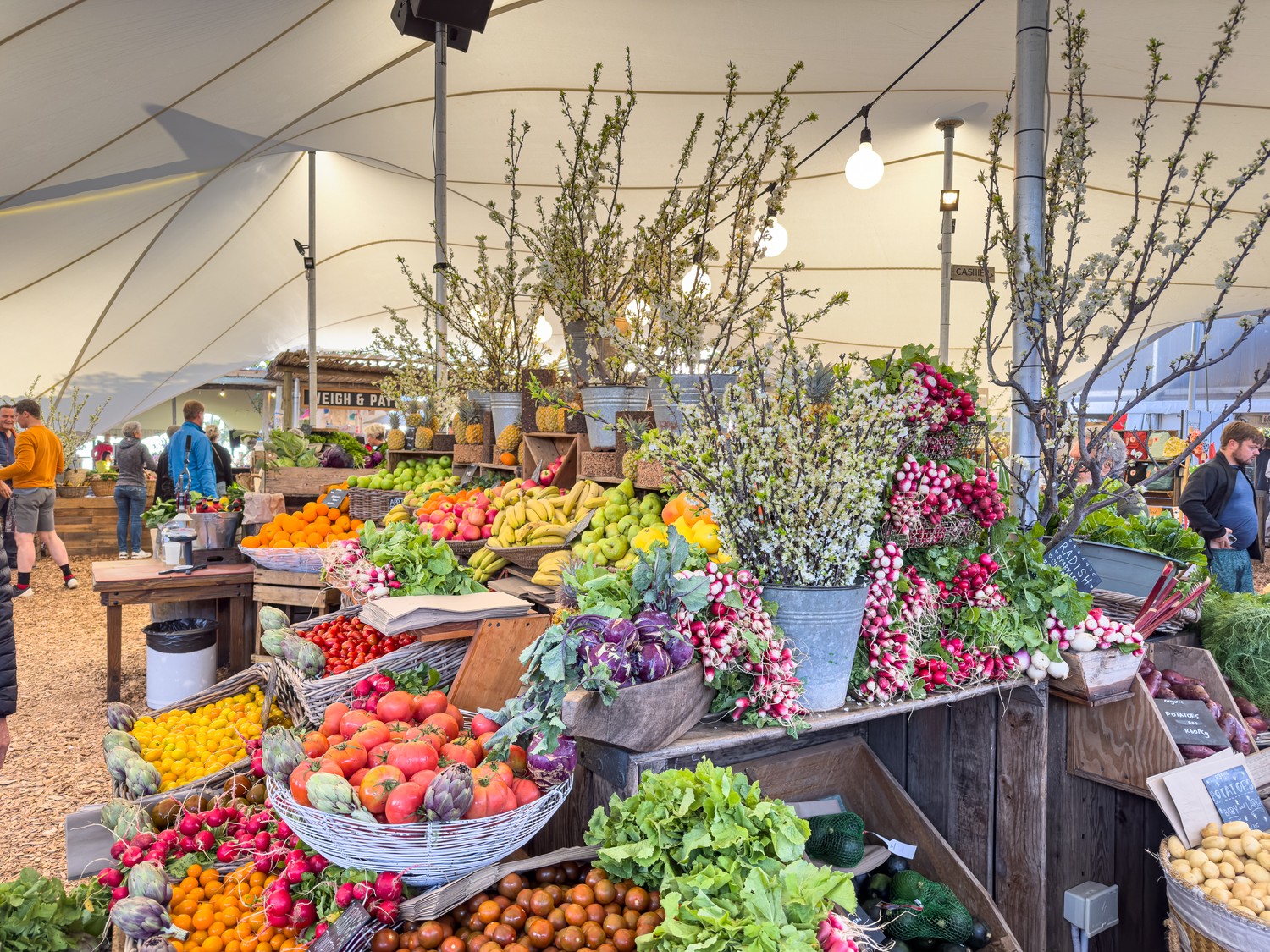
Photo: Oranjezicht City Farm Market – a lively favourite market with a really great atmosphere.
Cape Town is ideal for a stroll – sometimes stylish and urban along the Waterfront, sometimes colourful and lively at the markets, where you can sample the local cuisine and discover genuine local treasures along the way.
Shopping at the V&A Waterfront: The V&A Waterfront is Cape Town’s ‘easy place to be’: harbour charm, plenty of restaurants, bars and shops – and an area that’s almost always buzzing. It’s perfect if you don’t want to make big plans in between or if the weather takes a turn for the worse. For particularly lovely souvenirs and local design pieces, Watershed is well worth a visit: lots of South African labels under one roof – from jewellery and prints to home accessories and little ‘Cape Town’ treasures. Another handy feature is that there are plenty of places nearby to wait (over a coffee or a drink) if not everyone in your group fancies a spot of shopping.
Markets (definitely worth including in your plans): In Cape Town, the markets are more than just ‘food stalls’ – they’re an experience in their own right. Usually at the weekend, though sometimes during the week too, you’ll find freshly prepared food from all over the world, often accompanied by music and a really lively atmosphere. There are also stalls run by local producers selling jewellery, clothing, pictures/prints and accessories – perfect if you’d like to take something special home with you. Our recommendations: Neighbourgoods Market and Oranjezicht City Farm Market.
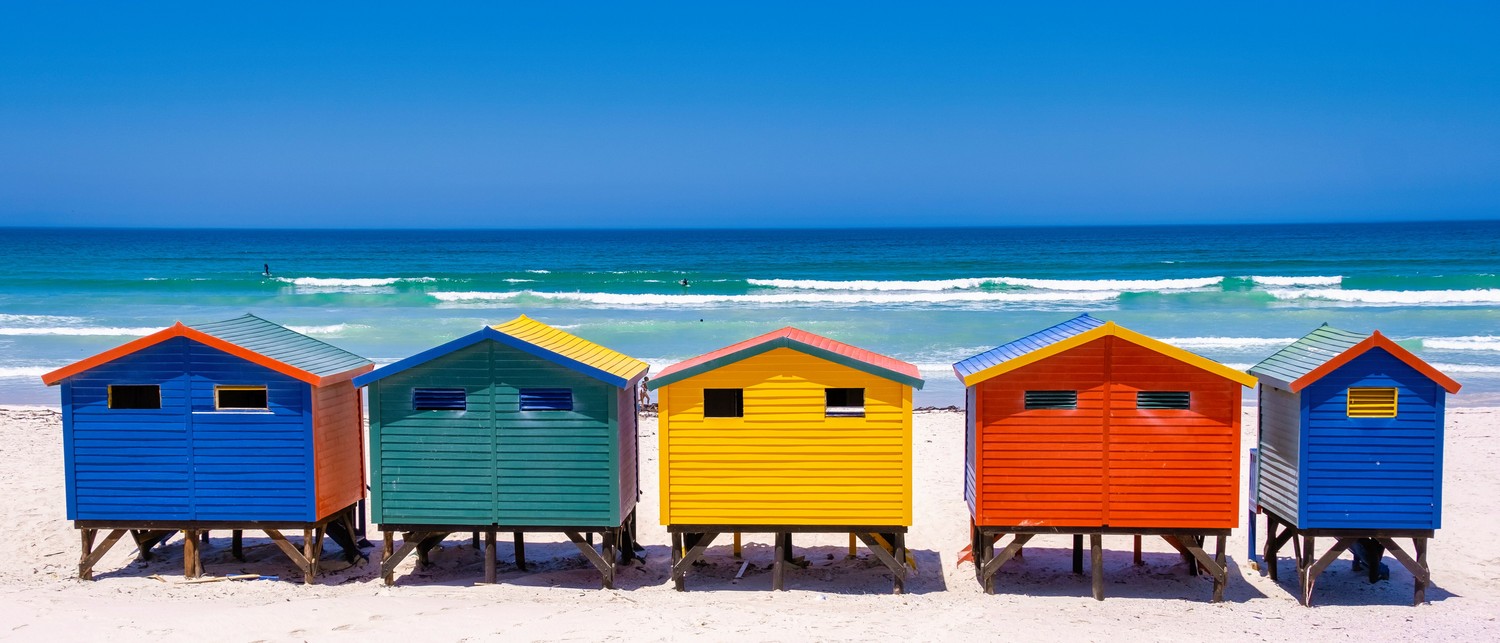
Photo: Colourful beach huts at Muizenberg Beach in Cape Town.
Cape Town offers a city break with a surprising amount of variety and a wide range of attractions: urban flair at the Waterfront, photogenic neighbourhoods, spectacular viewpoints – plus road trips along the coast all the way to the Winelands. If you choose your base wisely, book a few highlights and attractions in advance, and leave enough room for spontaneous stops, your trip will not only be efficiently planned but truly unforgettable.

© Swiss Bankers 2026


 Compare cards and conditions

