North Vietnam: amongst karst mountains, rice terraces and mountain villages

North Vietnam captivates visitors with its varied landscapes, fascinating culture and a unique atmosphere. Set against a backdrop of mountains, coastline and rural areas, the country reveals a particularly diverse side and offers numerous opportunities for experiencing nature, going on excursions and making new discoveries. We’ll show you which places are worth a visit, how the different regions can be combined, and what you should bear in mind when planning your trip.

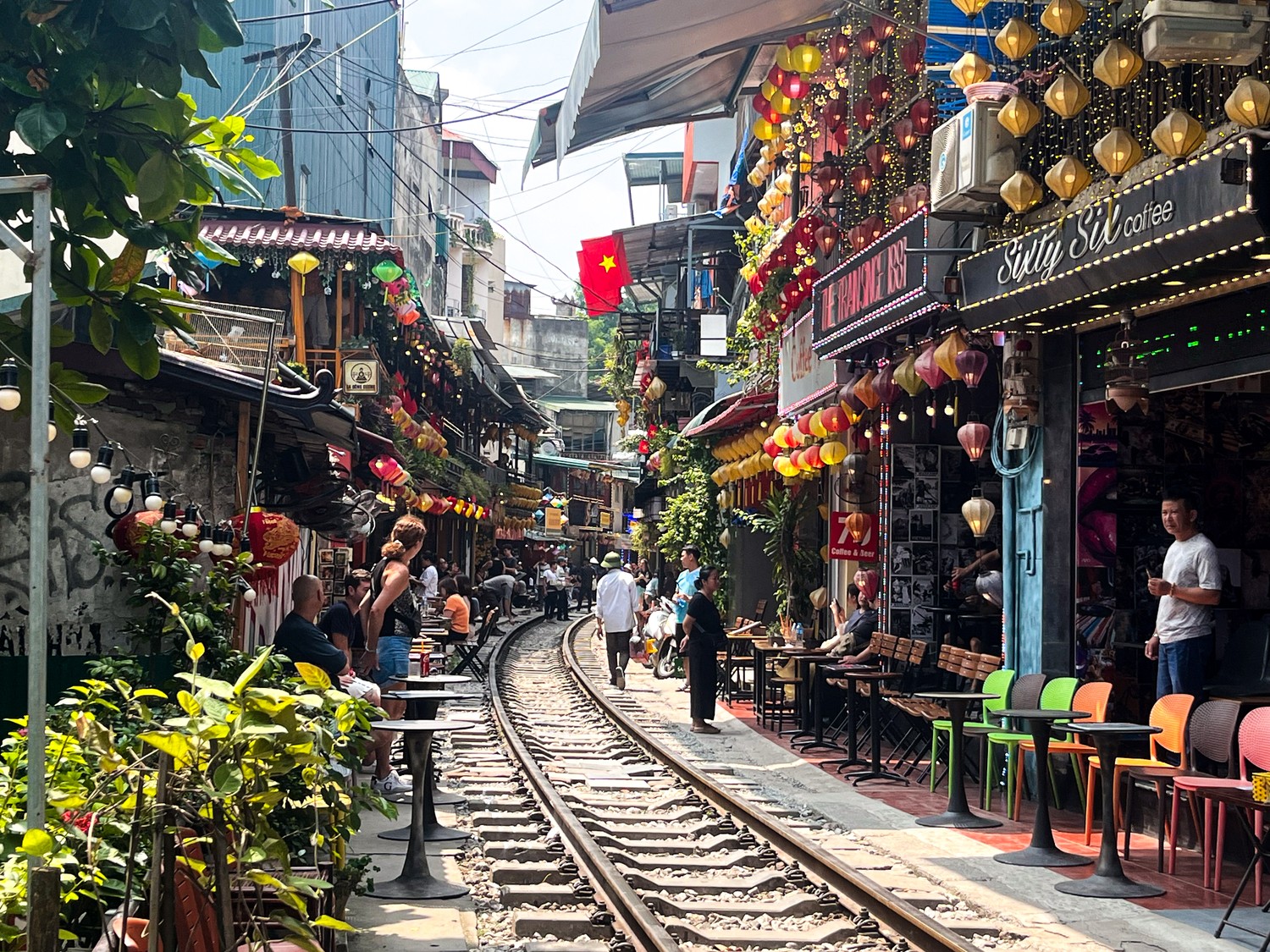
Photo: Hanoi’s famous Train Street

Hanoi – a gateway to North Vietnam

For many travellers, Hanoi is the ideal starting point for exploring Northern Vietnam. The capital is at its liveliest in the Old Quarter around Hoan Kiem Lake. In the narrow alleyways of the Old Quarter, traditional shops, small cafés and street food stalls mingle with the hustle and bustle of motorbikes and street vendors.

If you have a bit of time to spare, you should take a stroll through the Old Quarter, visit Hoan Kiem Lake and sample Hanoi’s diverse cuisine. You’ll find even more sights, restaurant recommendations and practical information in our detailed blog post “City break in Hanoi: sights, cuisine and tips for Vietnam’s capital”.

From Hanoi, you can then easily reach the main regions of Northern Vietnam.

Order Vietnamese dong. Delivered straight to your door.

More than 60 currencies at the click of a button – order today, delivered tomorrow. Secure and convenient, with no need to visit a branch. Exclusive and available to order via the app only with a Swiss Bankers card.

Find out more
Order Vietnamese dong. Delivered straight to your door.

Ha Long Bay & Lan Ha Bay – which is more worth visiting?

Both bays are part of the same spectacular karst landscape: rugged limestone cliffs rise out of emerald-green waters, interspersed with small islands, caves and hidden lagoons. Depending on traffic, the journey from Hanoi to the region takes around 2.5 to 3 hours.

Ha Long Bay is world-famous and extremely well-developed for tourism. Options range from simple day trips to luxury cruises. Consequently, the popular routes around well-known caves and viewpoints can get quite busy. Lan Ha Bay, situated to the south around Cat Ba, offers a similarly impressive landscape, but is generally less busy on the water. It is best explored by kayak or a small boat. Numerous sheltered bays, lagoons and small beaches along the way invite you to go for a swim and make longer stops.

Our tip: Instead of a large cruise, it’s worth chartering a smaller private boat or a traditional junk. This allows for a more flexible itinerary, and you can stop spontaneously along the way for kayaking or a swim. If you have more time, you can combine the tour with an overnight stay on Cat Ba. If you’re visiting the classic Ha Long Bay, you should plan to visit Sung Sot Cave as early in the day as possible, before the larger groups of visitors arrive. There is also a lovely viewpoint above the cave. Other highlights include Ti Top Island, with its small beach and panoramic views, and Luon Cave, whose lagoon can be reached by kayak or small bamboo boat through a low rock tunnel.

If you’re looking for as much peace and quiet, natural beauty and time for kayaking as possible, you should choose Lan Ha Bay. If, on the other hand, you’d prefer a wide range of tours, boats and accommodation options, the classic Ha Long Bay is the place for you.

Video: Sapa – Magic amongst the mountains and rice terraces.

Sapa – rice terraces, mountain villages and Fansipan

Sapa lies at an altitude of around 1,500 metres and is best known for its spectacular rice terraces, deep valleys and the mountain scenery of the Hoàng Liên Sơn range. The landscape is at its most impressive in September and October, when the rice fields turn a golden yellow at harvest time.

  • Through the Muong Hoa Valley: One of the most beautiful experiences around Sapa is a hike through the Muong Hoa Valley. The valley stretches south-east of Sapa and winds its way through rice terraces and several villages, including Lao Chai, Ta Van and Su Pan. Ta Van in particular is well suited for a longer stop or an overnight stay and is situated around 10 to 12 kilometres from Sapa.  We recommend hiring a local guide for the hikes. This way, you’ll also discover smaller paths off the main routes and learn more about the daily life and traditions of the Hmong, Giay and Dao along the way.
  • Our accommodation tips: If you’d prefer to stay in the heart of the countryside rather than in the centre of Sapa, you should take a look at Rock Garden Homestay Sapa. Our favourite is the Round House, with views of the surrounding mountains and rice terraces. Another recommendation is Supan Ecolodge & Spa near Su Pan – a good choice if you’re looking for peace and quiet, nature and sweeping views over the Muong Hoa Valley.
  • Waterfall, mountain villages and herbal bath: The Silver Waterfall (Thác Bạc), north-west of Sapa, is also well worth a visit. After the rainy season, the waterfall has a good flow and can easily be combined with other stops along the mountain road. After a hike, you should also try a traditional Red Dao herbal bath. The village of Ta Phin offers an authentic experience, where herbal baths form part of the Red Dao’s traditional culture. Various mountain herbs, leaves and bark are boiled for this purpose, and the warm bath is then taken in large wooden tubs. 
  • Fansipan – the roof of Indochina: at 3,143 metres, Fansipan is Vietnam’s highest mountain. A cable car now takes visitors comfortably close to the summit. Plan your trip as flexibly as possible: the weather in the mountains changes quickly and the summit can disappear into the clouds within a matter of minutes.

Our tip: We’d recommend allowing at least two to three nights in Sapa. This gives you plenty of time for a hike through the Muong Hoa Valley, a visit to Fansipan and the Silver Waterfall, and a relaxing afternoon enjoying a herbal bath or a coffee with mountain views.

Photo: Ninh Binh: Rice fields and idyllic riverside landscapes.

Photo: Tam Coc from a bird’s-eye view at sunrise.

Photo: Bai Dinh Pagoda from above – Vietnam’s impressive temple landscape.

Photo: Trang An – a spectacular karst landscape in Ninh Binh.

Photo: The Bich Dong Pagoda and boats on the water.

Ninh Binh – Karst mountains, rice fields and river landscapes

Just around 100 kilometres south of Hanoi lies Ninh Binh, one of the most beautiful scenic regions in northern Vietnam. Steep limestone mountains rise up amidst rice fields and rivers – which is why the area is often referred to as the ‘Ha Long Bay on land’.

  • Trang An, Tam Coc & Bai Dinh: The best way to explore the landscape is on a small rowing boat. Tam Coc takes you through rice paddies and caves, whilst Trang An delights visitors with longer routes, temples and impressive karst landscapes. If you only want to go on a boat trip, we’d recommend Trang An. For a spectacular view over the rice fields, it’s well worth climbing up to the Hang Mua Viewpoint afterwards. A little further north lies Bai Dinh Pagoda, a sprawling Buddhist temple complex featuring large Buddha statues, long colonnaded walkways and a 13-storey stupa. You should allow plenty of time for your visit – the complex is considerably larger than it appears in photographs. It can get very busy around the Vietnamese New Year. 
  • Exploring Ninh Binh by bike: One of our favourite ways to experience the region is by bike. One of our favourite areas is Thung Nang – the ‘Sunshine Valley’. From Tam Coc, peaceful paths lead through rice paddies and small villages towards Bich Dong and Thung Nang. The Thung Nang landscape itself is then explored by boat from the Thach Bich jetty.  On the way, it’s well worth stopping off at Dam Khe Specialty Coffee Tam Coc – a lovely spot for speciality coffee, just a little way off the hustle and bustle of Tam Coc.
  • Our accommodation tips: If you’d rather not stay right in the busier centre of Tam Coc, you’ll find charming accommodation options around the karst mountains. Our recommendations are Nature Garden Ecolodge Ninh Bình for a stay close to nature, and Lamia Bamboo Retreat with its distinctive bamboo architecture, a pool and plenty of peace and quiet.
  • Our tip: Stay in Ninh Binh for at least two nights. This will give you plenty of time for Trang An, Hang Mua, a cycle ride through the rice fields and a relaxing afternoon away from the usual day trips from Hanoi.


Photo: Mist-shrouded rice terraces in lush green during the harvest season.

Best time to visit North Vietnam

April to May and September to October are the best times to travel through Northern Vietnam. In Hanoi, Ninh Binh and along the coast, temperatures are usually around 23 to 32 °C during these months, whilst in Sapa it is significantly cooler, at around 18 to 28 °C. September and October are particularly lovely in Sapa, when the rice terraces turn a golden yellow at harvest time. From June to August, it is hot, humid and rainy, whilst between December and March it can get surprisingly cool and misty, especially in the mountainous regions.

Lightweight, breathable clothing, sturdy shoes and rainwear are recommended for the trip. For Sapa and Fansipan, be sure to pack an extra warm jacket. It’s best to dress in layers, as temperatures can vary significantly between the coast, towns and mountains.

Our tip: For the entire route, we’d recommend September or October.

Travel: The free prepaid credit card

Pay securely with the Travel prepaid credit card at over 70 million shops worldwide. Available in CHF, EUR and USD. Manage your balance via the app. Cash withdrawals at home and abroad. Order online now – no credit check required, in just 5 minutes!

Learn more

Practical tips for North Vietnam

  • In North Vietnam, you should always carry some cash in Vietnamese dong (VND) in addition to your card. Cash payments are often the norm, particularly in smaller villages, at markets or when staying with local homestays. If you’d like to have cash to hand before your trip, you can conveniently order Vietnamese dong to be delivered to your home via Swiss Bankers’ banknote delivery service.
  • For journeys in Hanoi and other larger towns, we recommend installing the Grab app before you travel. The fare and destination are displayed directly in the app, which usually makes using Grab less hassle than hailing a taxi on the spot.
  • A local SIM card or eSIM makes navigation, bookings and using Grab easier whilst travelling. For more remote regions, you should also ensure you have enough cash and an offline map on your smartphone.
  • For added peace of mind whilst travelling, it’s worth taking out travel insurance such as TravelProtect from Swiss Bankers, particularly in the event of medical emergencies or other unexpected incidents during your trip.

Conclusion: North Vietnam – amidst mountains, bays and rice fields

Northern Vietnam is best experienced as a varied round trip: from Hanoi on to the karst landscapes of Ha Long Bay or Lan Ha Bay, into the mountainous region around Sapa and finally to the rivers and rice fields of Ninh Binh. Each region has its own distinct character and is well worth more than just a brief stopover.

Make sure to allow plenty of time for boat trips, hikes, cycle rides and spontaneous stops – it is precisely this mix that makes northern Vietnam so charming.