


Important information:
Am 10. April 2024 wurden das Kundenportal sowie der Web-Zugriff auf das Kartenkonto eingestellt. Bitte laden Sie die Swiss Bankers App herunter, um weiterhin uneingeschränkten Zugriff auf alle Dienste zu haben.
Are you a Swiss Bankers sales partner?
Hier geht es zum Partnerportal.
When people think of Vietnam, they often picture Hanoi in the north and Ho Chi Minh City in the south. In between lies Central Vietnam – a region steeped in imperial history, home to centuries-old trading towns, stunning coastlines and an extraordinary cave system. In this article, we highlight the most beautiful places, experiences and travel tips for a trip through Central Vietnam.
 18.09.2026
 Miryana
Da Nang is an ideal starting point for a trip through Central Vietnam. There are currently no direct flights from Zurich. However, there are several convenient connections with just one stopover to choose from – for example, with Singapore Airlines via Singapore, with Cathay Pacific via Hong Kong, and, from December 2026, with Thai Airways via Bangkok. The international airport is just a few kilometres from the city centre. You can also reach Hoi An from here in around 45 to 50 minutes.
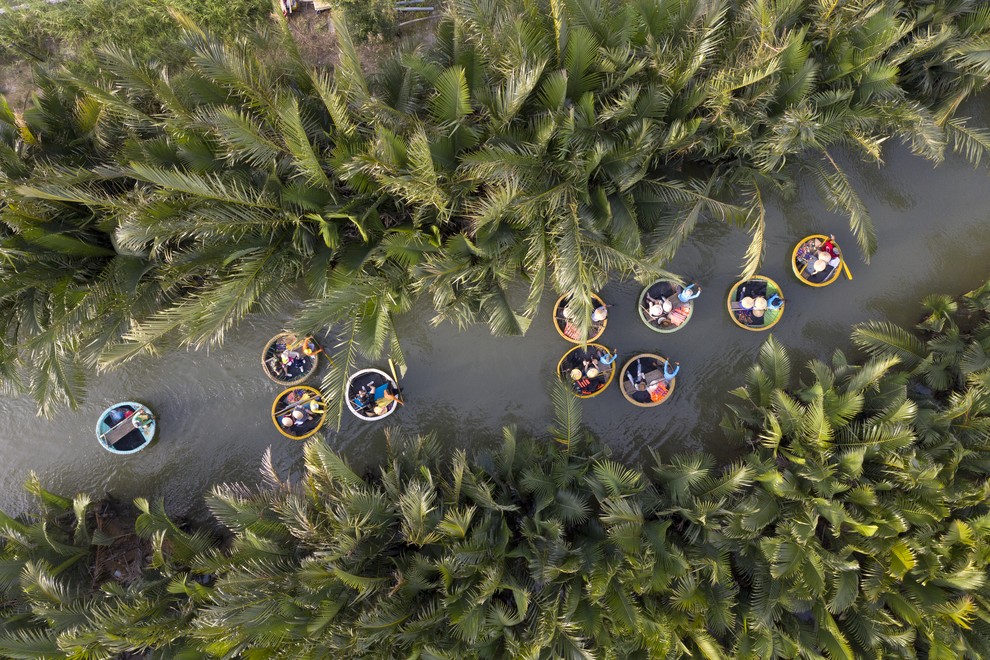
Just around 30 kilometres south of Da Nang lies Hoi An, one of the most atmospheric towns in Central Vietnam. The historic old town has been a UNESCO World Heritage Site since 1999 and is an exceptionally well-preserved example of a 15th–19th-century Southeast Asian trading port. Chinese, Japanese and European influences continue to shape the architecture and townscape to this day.
During the day, it’s well worth taking a stroll through the yellow alleyways lined with historic trading houses, Chinese assembly halls and the Japanese Bridge. Around Hoi An, flat cycle paths also wind their way through rice fields and small villages to An Bang Beach. In the nearby Cam Thanh Coconut Village, you can take a trip through the water palms in the traditional round bamboo boats. If you have an extra half-day to spare, you can also visit the My Son Sanctuary, which is about an hour away.
In the evening, countless lanterns transform the old town and the riverbank. It’s also well worth taking a stroll through the Hoi An Night Market, with its street food, small stalls and colourful lanterns.
Video: Huế – Impressions of the imperial city.
Huế was the capital of the Nguyễn dynasty from 1802 to 1945 and remains closely linked to Vietnam’s imperial past to this day. Palaces, pagodas and monumental imperial tombs line the Perfume River, lending the city a unique atmosphere.
The Imperial City is the main highlight and should ideally be visited early in the morning. Also well worth a visit, just nearby, is the Huế Museum of Royal Antiquities, which houses numerous artefacts from the Nguyen Dynasty. Just outside the city centre lie the impressive imperial tombs of Minh Mang, Tu Duc and Khai Dinh. The Thien Mu Pagoda on the Perfume River is also well worth a visit.
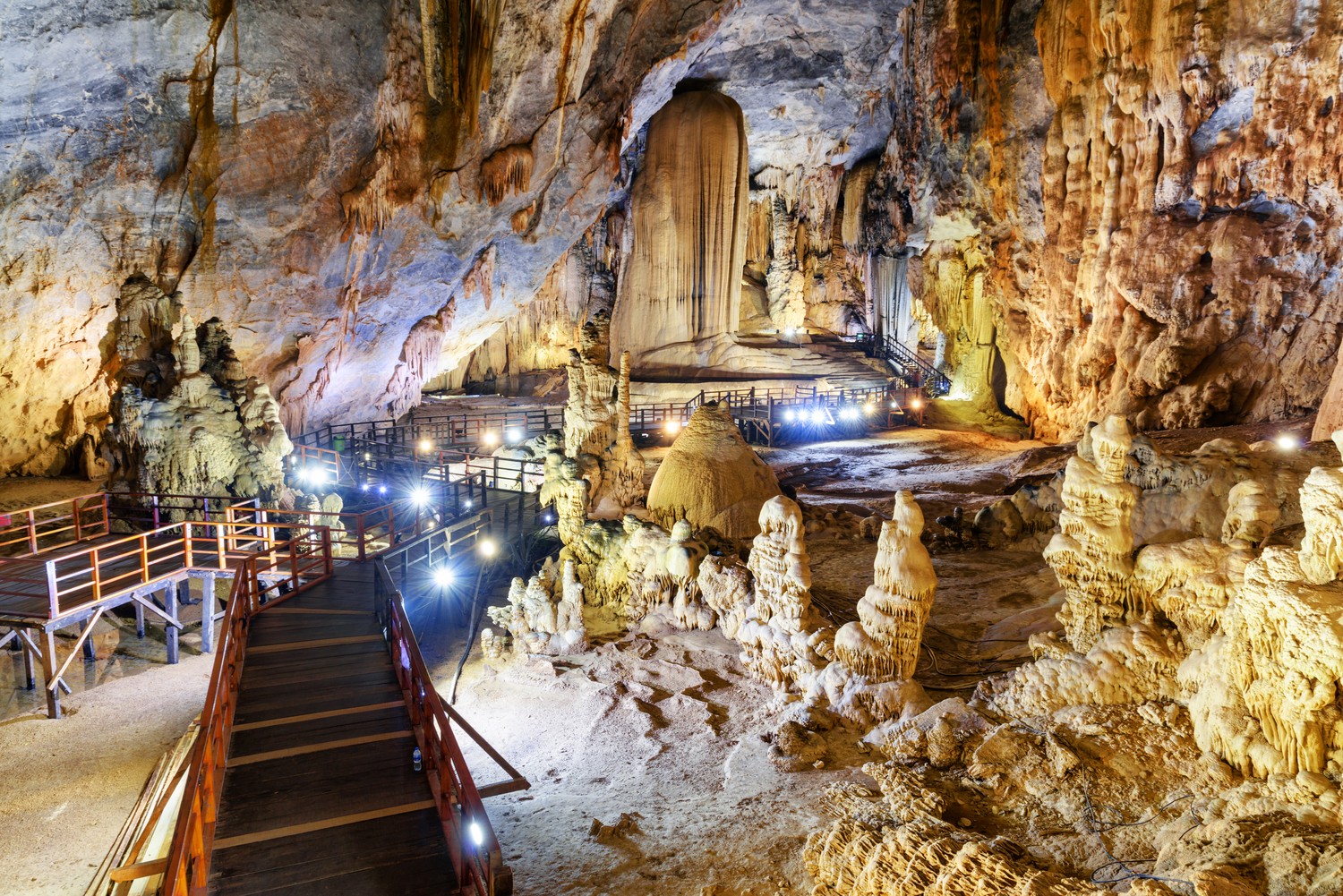
Photo: Impressive rock formations in the vast main chamber of Paradise Cave.
After the coast, the old town and the imperial city, Central Vietnam reveals a completely different side to itself in Phong Nha. The Phong Nha-Kẻ Bàng National Park is characterised by dense jungle, karst mountains, underground rivers and one of the most impressive cave systems in the world.
For a first visit, Phong Nha Cave is a good choice; it can be reached by boat across the Son River. Admission currently costs 150,000 VND per person, plus 700,000 VND per boat for up to twelve people. Small groups can share a boat. Even more impressive is Paradise Cave, with its huge chambers and stalactite formations. The section open to the public runs for around one kilometre through the cave along wooden walkways. Admission costs 250,000 VND, with the electric shuttle ride to the starting point costing an additional 20,000 VND or so.
Dark Cave, on the other hand, offers more of an adventure than a traditional cave tour: a zipline, kayaking, swimming and a mud bath are all part of the programme. At 450,000 VND for the full package, it’s straightforward to visit, but it also feels much more touristy and is staged more like an adventure park than the other caves. For those primarily interested in seeing spectacular cave formations, we’d recommend Phong Nha Cave and Paradise Cave instead.
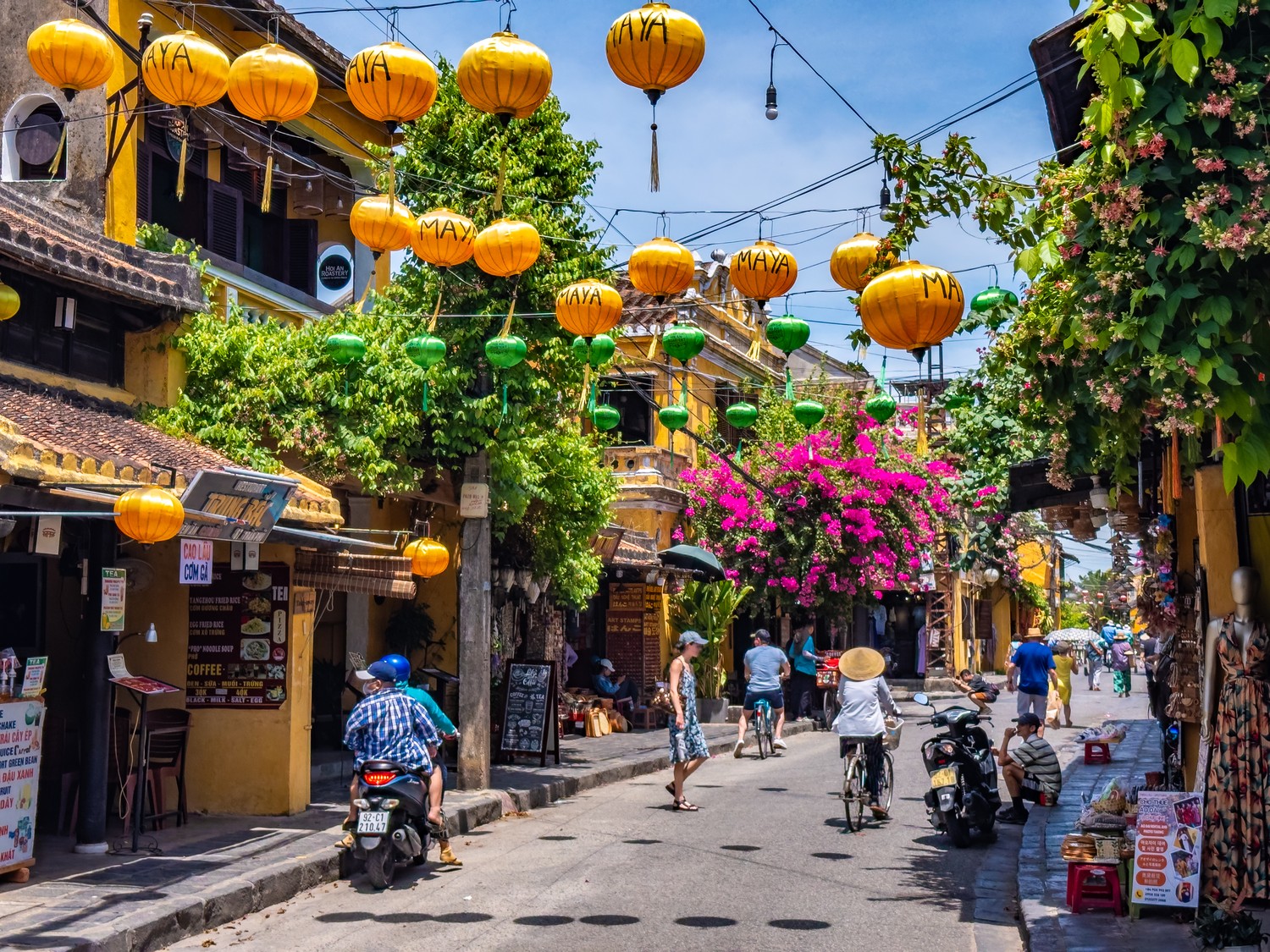
Photo: Hoi Ans’s old town in warm, sunny weather perfect for travelling.
March to May are the best months to visit Da Nang, Hoi An, Huế and Phong Nha. During this time, the weather is usually warm and sunny, but not yet as hot as in the height of summer. From June to August, temperatures frequently rise above 30 °C – ideal for days at the beach, but considerably hotter for sightseeing. From September or October onwards, the wetter season begins, bringing heavy rain, tropical storms and possible flooding.
Pack light clothing, sun protection and comfortable shoes. When visiting temples, shoulders and knees should be covered; for the caves in Phong Nha, a light jacket is also recommended.
Our tip: March or April are ideal for the entire route.
Country information on Vietnam: You’ll find a concise overview of entry requirements, safety, health, payment methods and other practical travel tips on our country information page for Vietnam – ideal for a quick check before you set off.
Central Vietnam brings together, within relatively short distances, much of what travellers would otherwise have to journey across the country to experience: imperial history in Huế, centuries-old trading culture in Hoi An, modern coastal cities such as Da Nang, and the spectacular cave and karst landscape of Phong Nha.
The short distances between the individual destinations make the region ideal for anyone wishing to experience as many different facets of Vietnam as possible within a limited time.

© Swiss Bankers 2026


 Compare cards and conditions

