


Important information:
Am 10. April 2024 wurden das Kundenportal sowie der Web-Zugriff auf das Kartenkonto eingestellt. Bitte laden Sie die Swiss Bankers App herunter, um weiterhin uneingeschränkten Zugriff auf alle Dienste zu haben.
Are you a Swiss Bankers sales partner?
Hier geht es zum Partnerportal.
A small market stall, a taxi or a restaurant that only accepts cash: even today, you sometimes still need notes and coins when you’re out and about. However, withdrawing cash from ATMs can incur additional costs – for example, through fees charged by the card issuer, the ATM operator or as a result of currency conversion. With a few simple choices, you can often reduce unnecessary costs. We explain how the fees are calculated and give you five practical tips to help you avoid costs when withdrawing cash at home and abroad.
 28.09.2026
 Miryana
Contents:
At a cash machine, you select an amount – but the final amount on your card statement may be higher. This is because, depending on your card, the cash machine and the currency, several charges may be added together.
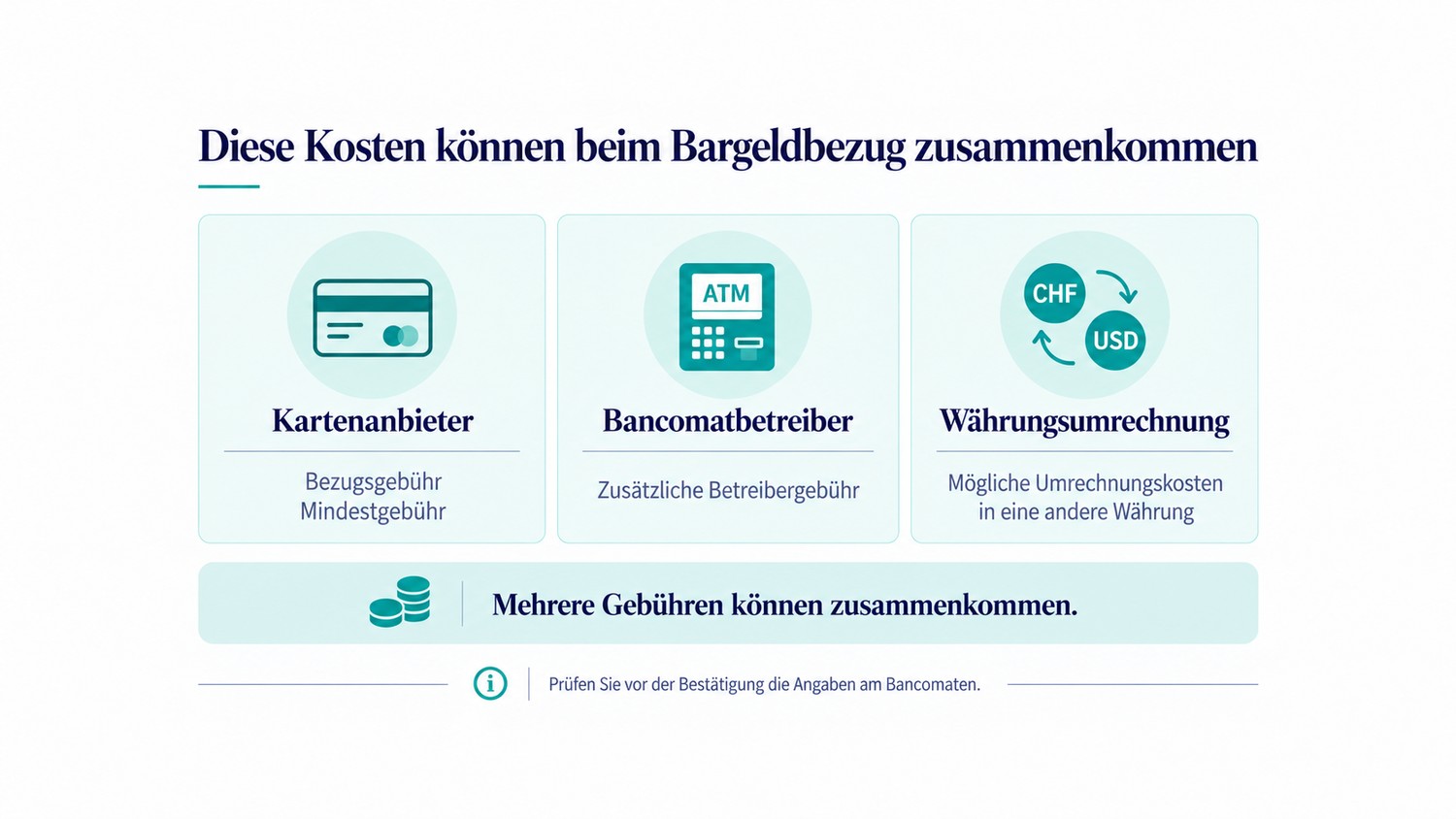
Good to know: The actual costs incurred depend on your card and the ATM you choose. A quick glance at the fees and the display on the ATM can therefore save you money.
Before you withdraw money from a cash machine, it’s worth asking yourself: do you actually need cash? In many everyday situations, you can now pay directly by card or smartphone, thereby avoiding an unnecessary cash withdrawal.
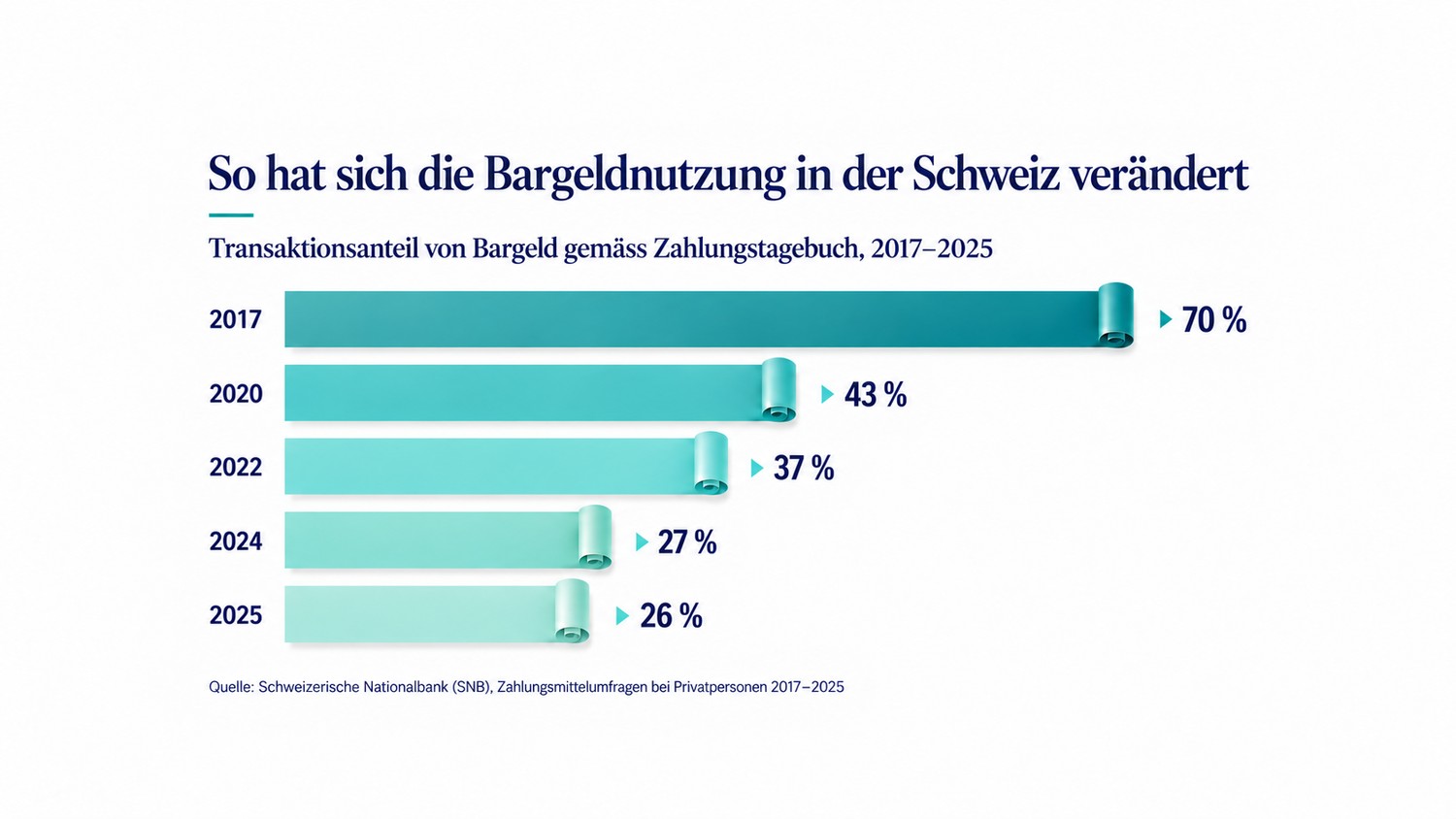
The Swiss National Bank’s survey on payment methods shows just how much payment behaviour has changed: according to the payment diary, the proportion of cash transactions recorded fell from 70 per cent in 2017 to 26 per cent in 2025.
In other European countries, too, cash now plays only a minor role in everyday life in some cases. In the Netherlands, just 17 per cent of payments at shop checkouts were made in cash in 2025. In Norway, the proportion of cash payments at physical retail outlets was as low as 3% in the spring of 2026. The figures are taken from recent surveys by De Nederlandsche Bank and Norges Bank.
However, it is not possible to go entirely without cash everywhere. For smaller shops, markets or situations where card payments are not widely accepted, it can therefore be a good idea to carry some cash with you.
The cost of a cash withdrawal depends heavily on the card you use. Some providers charge a fixed amount, others a percentage of the withdrawal amount, or a combination of the two plus a minimum fee.
For Swiss Bankers’ Life, Life Digital, Travel and Prime prepaid cards, the withdrawal fee is currently 2 per cent of the amount. The minimum fee is 2.00 in Switzerland and 7.50 abroad, in the respective card currency (CHF, EUR or USD). As terms and conditions are subject to change, you can find the latest information in Swiss Bankers’ fees overview.
If you use a different card, it is particularly worth checking:
Tip: Before you travel, do a quick calculation to work out how much a typical cash withdrawal with your card would cost. This will help you better assess what withdrawal amounts make sense.
Not every fee is charged by your card provider. Some banks or independent ATM operators may also charge their own fee for cash withdrawals. Under the Swiss Bankers’ scheme, such fees charged by the ATM operator may be passed on to cardholders.
In many countries, such an additional fee is displayed on the ATM screen before you confirm the transaction. You should therefore read the information on the screen carefully and, if necessary, cancel the withdrawal if the additional costs seem too high.
Tip: In addition to the operator’s fee, your card’s transaction fee may also apply. This means that, particularly for small amounts, multiple fees can add up significantly.
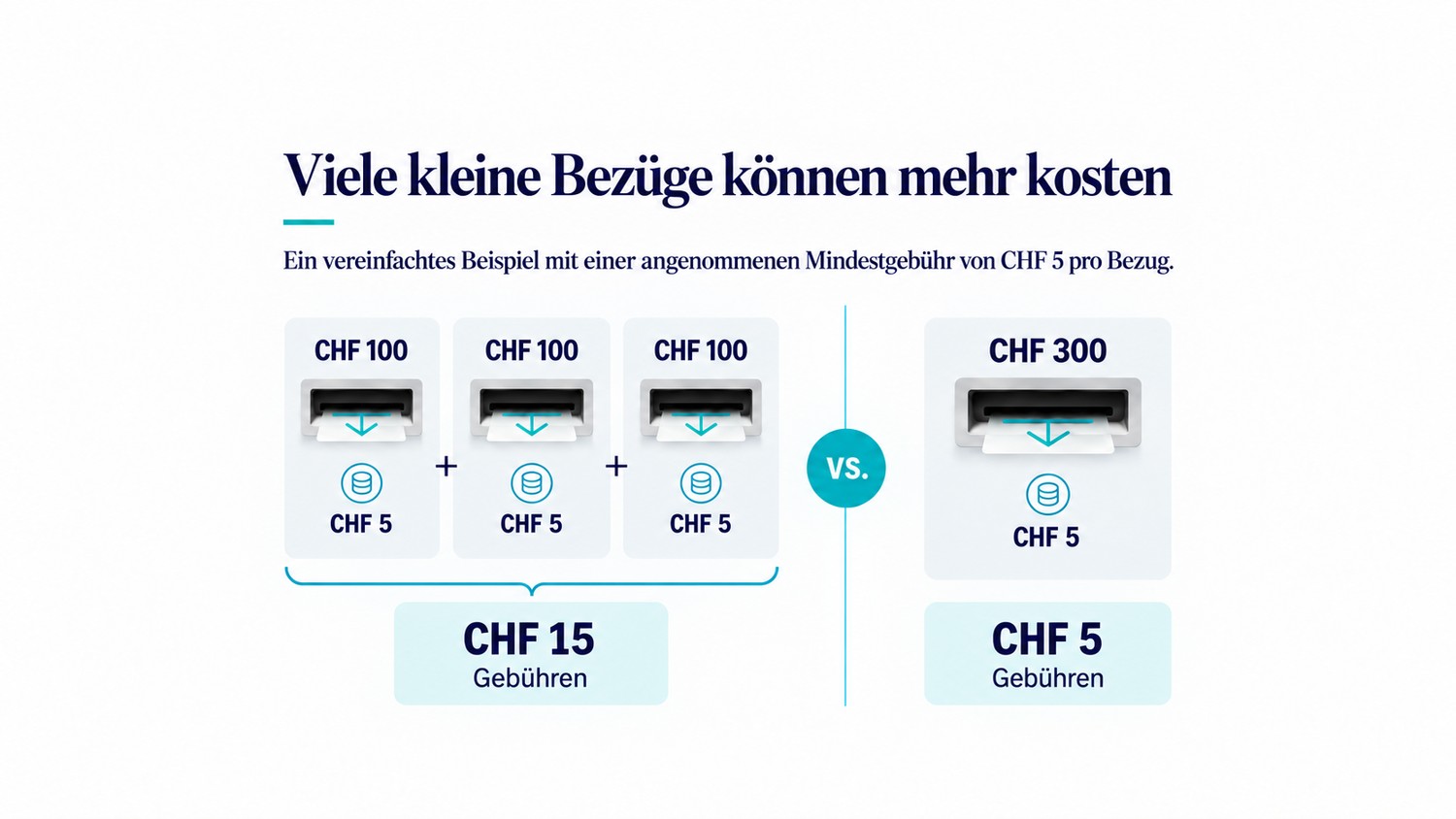
Making several small withdrawals can cost more than a few larger ones – especially if your card charges a minimum fee per cash withdrawal.
A simplified example: suppose a card charges a minimum fee of CHF 5 per withdrawal. Three separate withdrawals of CHF 100 each would cost a total of CHF 15. If, on the other hand, you withdraw the CHF 300 in one go, the minimum fee is charged only once. If the ATM operator also charges its own fee, this may be added on top for each individual withdrawal. Once the percentage-based fee comes into play, making an even larger withdrawal offers no further benefit in proportional terms.
Tip: Try to estimate your cash requirements in advance wherever possible. This way, you can avoid making an unnecessarily large number of small withdrawals without carrying more cash than you need.
When using a cash machine abroad, you will often be asked whether the transaction should be settled in Swiss francs or in the local currency. Where possible, choose the local currency – for example, baht in Thailand or euros in Spain.
If you choose to be charged in Swiss francs, the ATM operator may carry out the conversion themselves. This so-called dynamic currency conversion (DCC) may involve a less favourable exchange rate or additional costs. You should therefore choose the local currency whenever possible when making payments or withdrawing cash abroad.
Tip: Before confirming the transaction, check not only the fees displayed but also the selected currency.
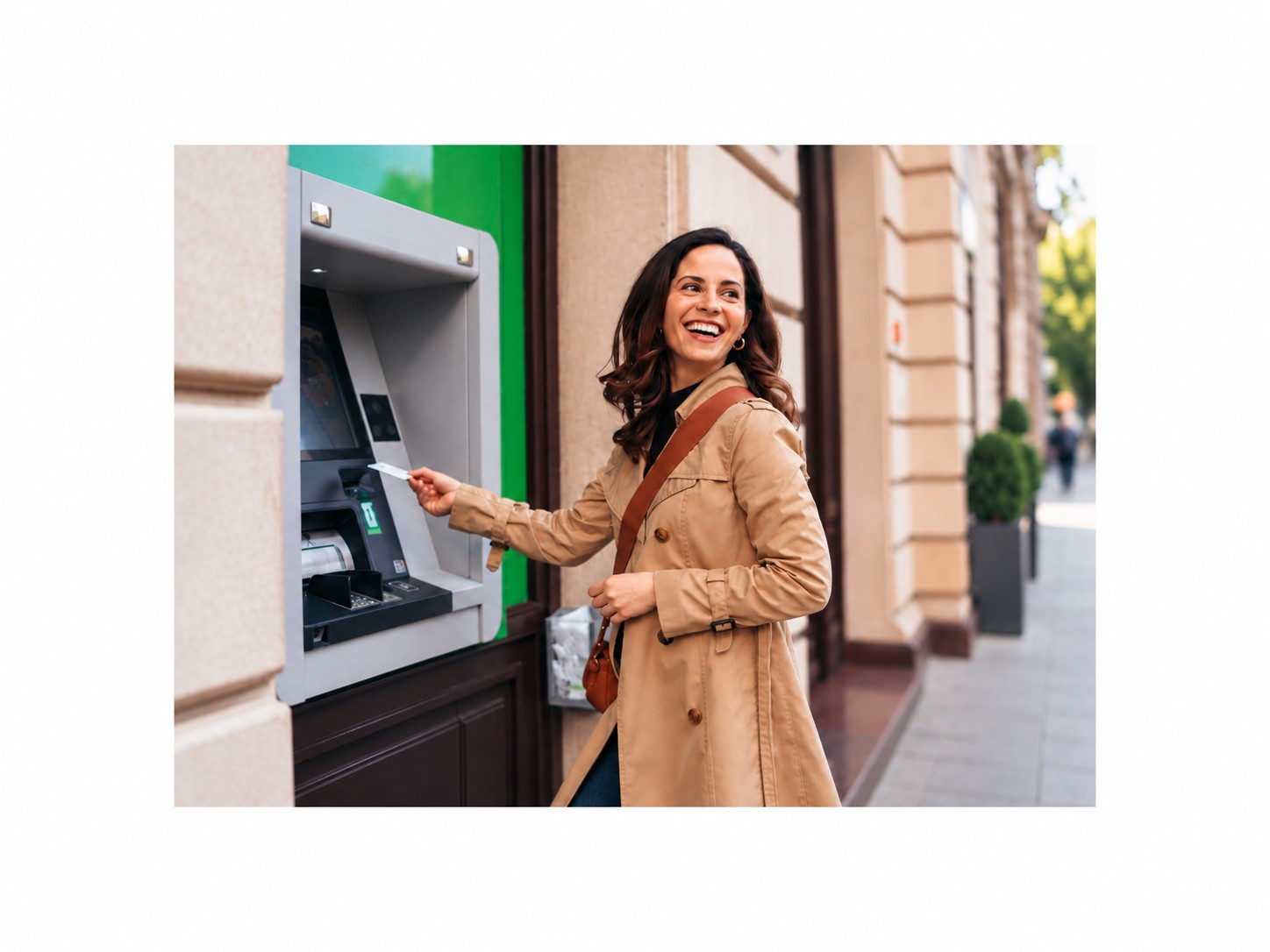
It is not always possible to avoid withdrawing cash whilst travelling. However, if you know before you set off that you’ll need cash at your destination, you can organise some of it whilst still in Switzerland. This means you won’t have to withdraw money from an ATM straight after arrival and can avoid any operator fees or unfavourable exchange rates.
With Swiss Bankers, you can conveniently order foreign currencies and have them delivered directly to your home address in Switzerland. The exchange rate and fees will be shown to you before you complete your order.
Cash remains practical in many situations – but withdrawing cash from an ATM can incur additional costs. If you know the fees charged by your own card, check the operator’s fees, avoid making an unnecessarily large number of small withdrawals and choose the local currency when abroad, you can significantly reduce these costs. This way, you can keep track of your cash withdrawals and avoid any unpleasant surprises.

© Swiss Bankers 2026


 Compare cards and conditions

