


Important information:
Am 10. April 2024 wurden das Kundenportal sowie der Web-Zugriff auf das Kartenkonto eingestellt. Bitte laden Sie die Swiss Bankers App herunter, um weiterhin uneingeschränkten Zugriff auf alle Dienste zu haben.
Are you a Swiss Bankers sales partner?
Hier geht es zum Partnerportal.
Colourful façades glisten in the sun, shady courtyards open up between ancient walls, and the water of a cenote shimmers behind the green foliage of the trees. The Yucatán Peninsula combines impressive Mayan sites with vibrant towns, dense mangrove forests and charming coastal villages. For those wishing to discover Mexico beyond Cancún, here are eight special destinations for a journey combining culture, nature and relaxing days by the water.
 01.10.2026
 Eliza
Contents:
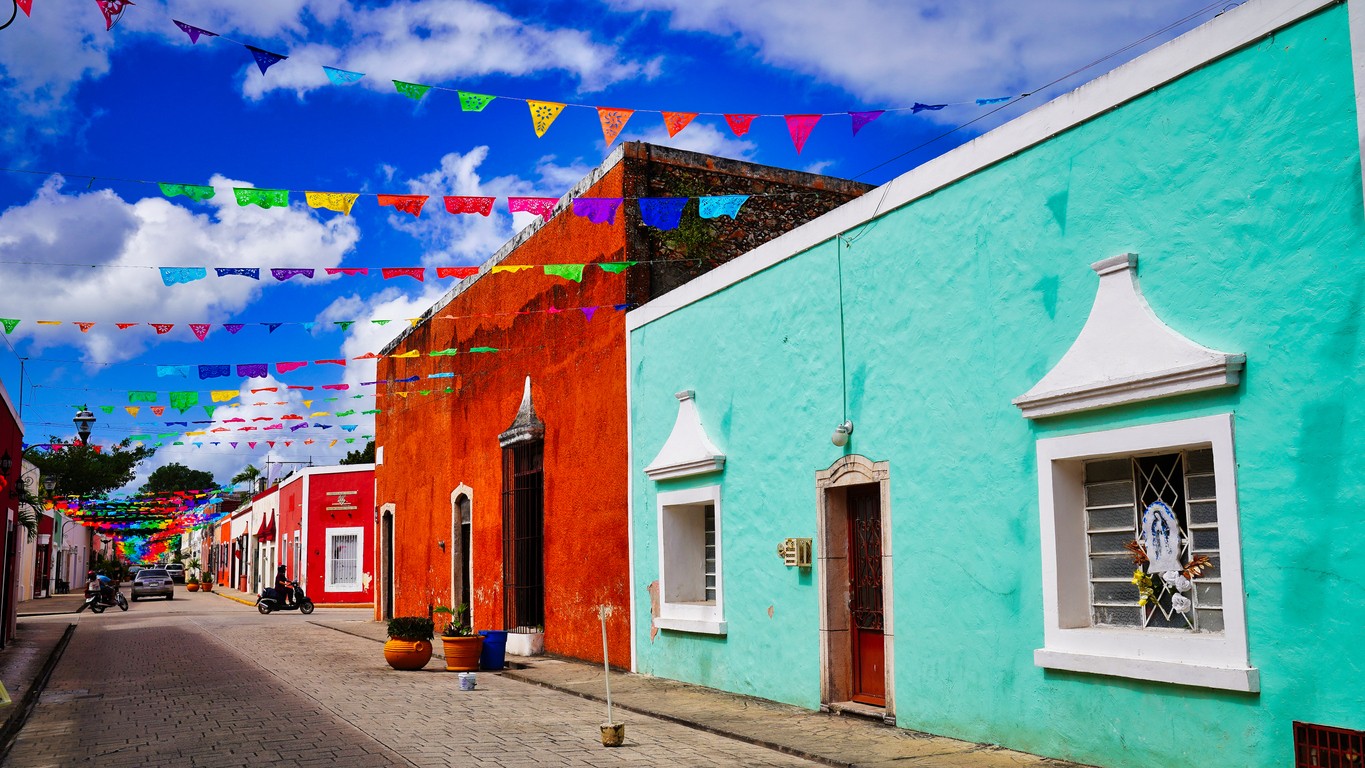
Photo: December to April are the best months for a trip combining city breaks and days at the beach.
The Yucatán Peninsula lies between the Gulf of Mexico and the Caribbean Sea, stretching from south-eastern Mexico to Belize and Guatemala. Its Mexican part comprises the three states of Yucatán, Campeche and Quintana Roo. The well-known holiday resort of Cancún is also situated in Quintana Roo.
Tropical vegetation, coastlines and cenotes characterise the region’s landscape. These natural, water-filled depressions in the limestone are among the peninsula’s most unique natural attractions.
December to April are particularly suitable for a trip combining city visits and days spent at the beach. The drier season generally begins in November; however, the official Atlantic hurricane season also lasts until the end of November. During the winter months, cool northerly winds can occasionally affect the weather.
If you’re travelling via Cancún, you can explore the places featured on the peninsula from there. Larger towns can be reached by long-distance coach; a hire car can be handy for smaller coastal towns and trips inland. Choose a few places to stay and allow plenty of time in between for exploring.
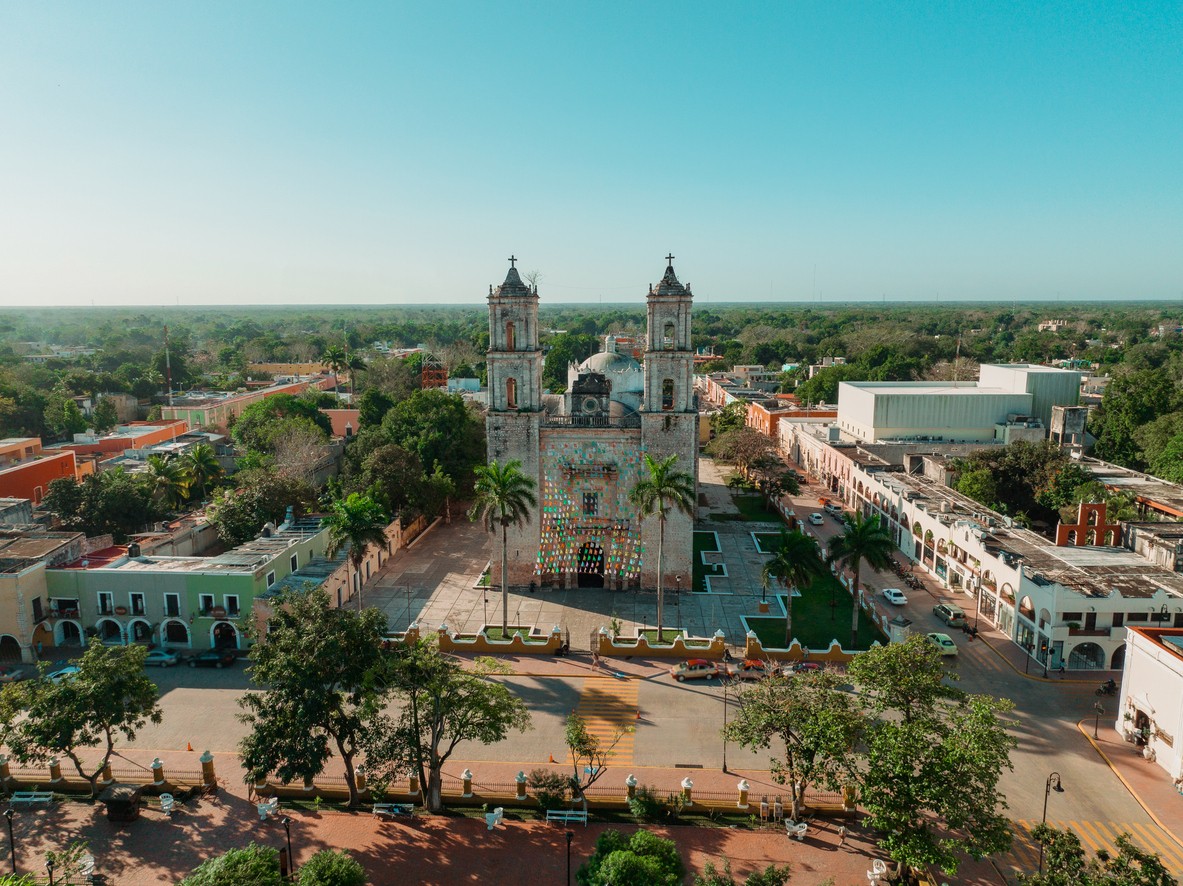
Photo: Around the central Parque Francisco Cantón Rosado, Valladolid unfolds with a church, shaded benches and colourful façades.
In the shade of the trees on Valladolid’s main square, you can watch city life unfold at a leisurely pace. The Church of San Servacio and colourful house façades frame the square. From here, a stroll takes you to the Calzada de los Frailes: along the historic houses, small cafés and craft shops invite you to browse and linger. If you continue along the street, you’ll reach the former monastery of San Bernardino de Siena.
Between walks, it’s well worth a trip to the cenotes – natural pools in limestone, some of which are open-air and others located in caves. The Zací cenote is one such aquatic wonder right in the heart of Valladolid: beneath a partially open cave ceiling, the water shimmers between steep rock faces. Further cenotes can be discovered around the town, such as Samulá and Oxmán.
Special tip: Plan a stroll along the Calzada de los Frailes in the late afternoon. Afterwards, there’ll be time for dinner featuring regional dishes such as lomitos, a pork dish in tomato sauce.
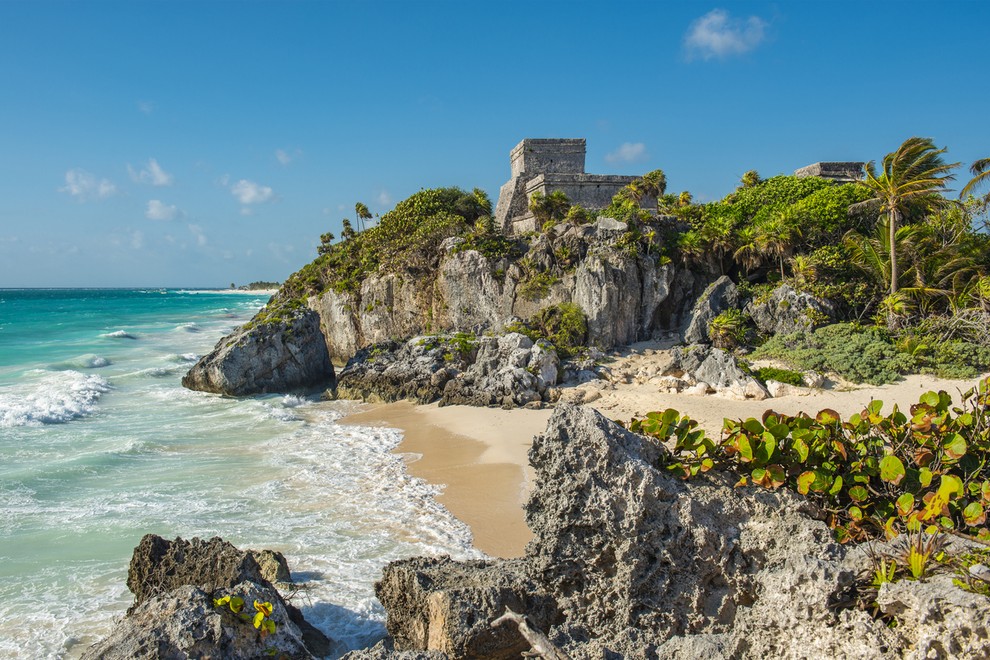
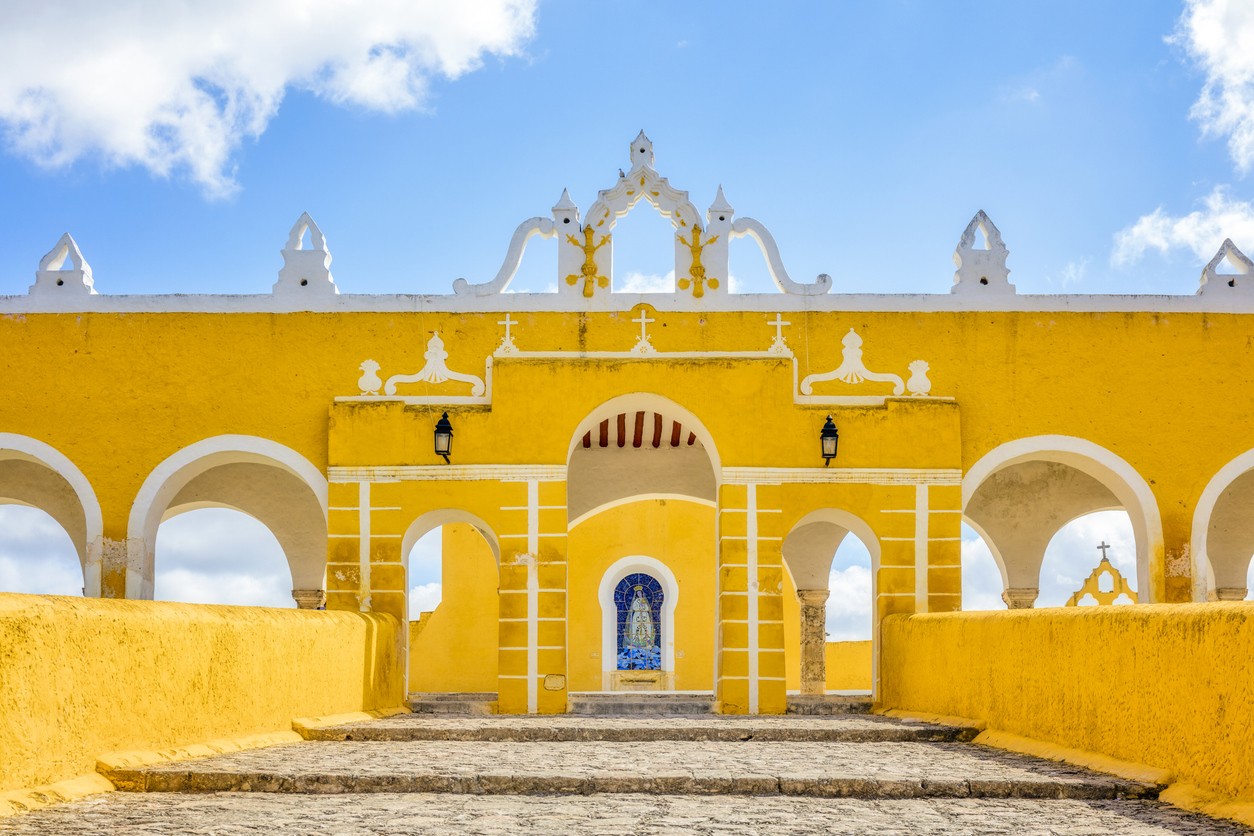
Photo: In Izamal, yellow and white set the tone. These colours are seen on houses, walls and arcades.
In Izamal, yellow and white set the tone. These colours cover the houses, walls and arcades, lending the historic centre an unusually cohesive appearance. At the heart of it all stands the Franciscan monastery of San Antonio de Padua, with its spacious forecourt framed by arcades. Here, it’s well worth putting your camera down for a moment and letting your gaze wander along the arcades.
At the same time, the historical traces extend far beyond the Spanish colonial period. The Mayan pyramid of Kinich Kakmó rises within the town limits, demonstrating that Izamal was an important place long before the monastery was built. Today, small shops and squares are nestled amongst archaeological monuments, churches and residential buildings.
A special tip: explore Izamal on foot and venture beyond the immediate vicinity of the monastery. In the side streets, the yellow house façades, doors and everyday scenes really come into their own.
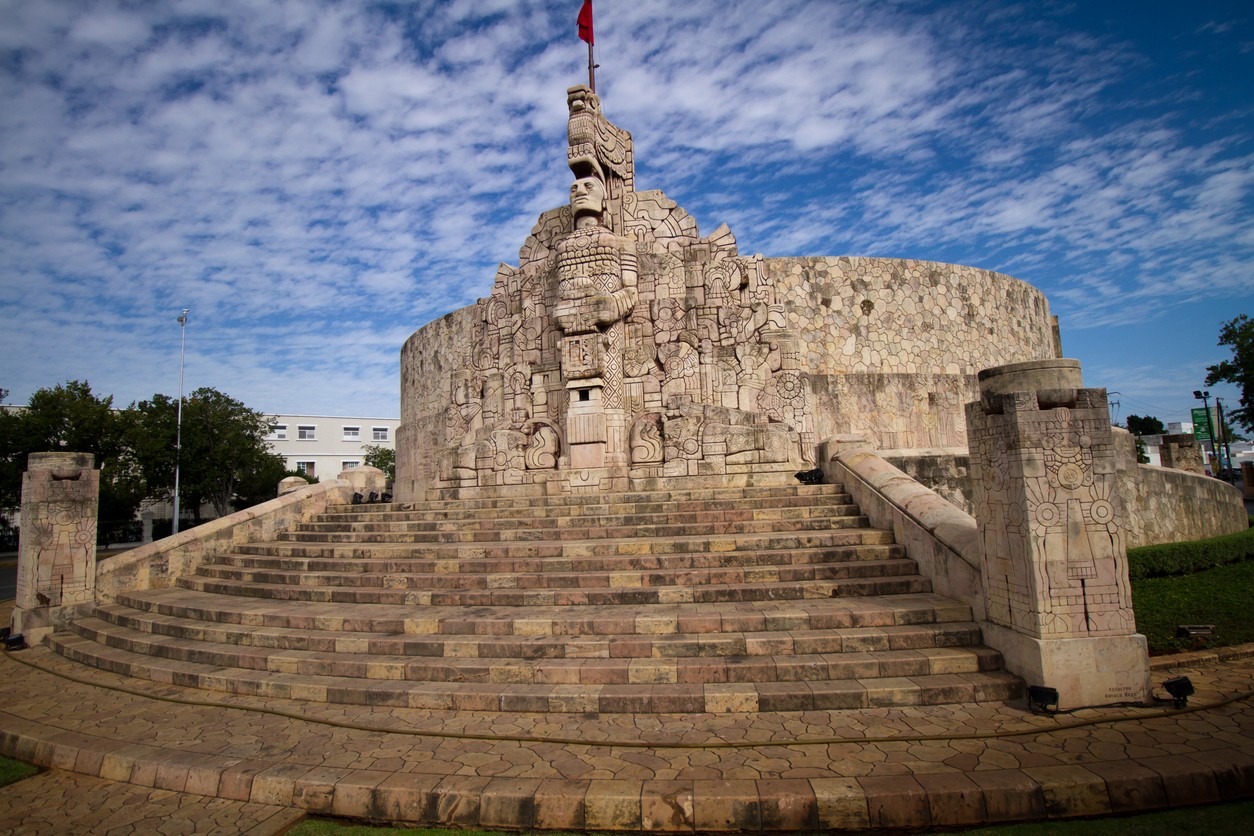
Photo: The Monumento a la Patria is a striking landmark on the Paseo de Montejo.
Mérida, the capital of the state of Yucatán, combines historic architecture with a vibrant cultural and culinary scene. Start at the Plaza Grande and then explore the streets around Santa Lucía. On the Paseo de Montejo, stately villas bear witness to a bygone era of the city. Some of these historic houses now house museums, such as the Palacio Cantón. Along this magnificent avenue, the Monumento a la Patria also catches the eye: its intricately designed stone reliefs tell the story of Mexico.
To experience Yucatecan cuisine, a visit to the Museo de la Gastronomía Yucateca – MUGY for short – is well worth it. The restaurant combines regional dishes with insights into their cultural roots. You can try, for example, cochinita pibil – slow-cooked pork – or sopa de lima, an aromatic soup with lime. In this way, a meal also serves as an introduction to the region’s culinary traditions.
Hotel tip: The Decu Downtown is housed in a restored 19th-century mansion. Historic mosaic floors and high-ceilinged rooms blend with contemporary design; a swimming pool and spa round off your stay in the city centre.
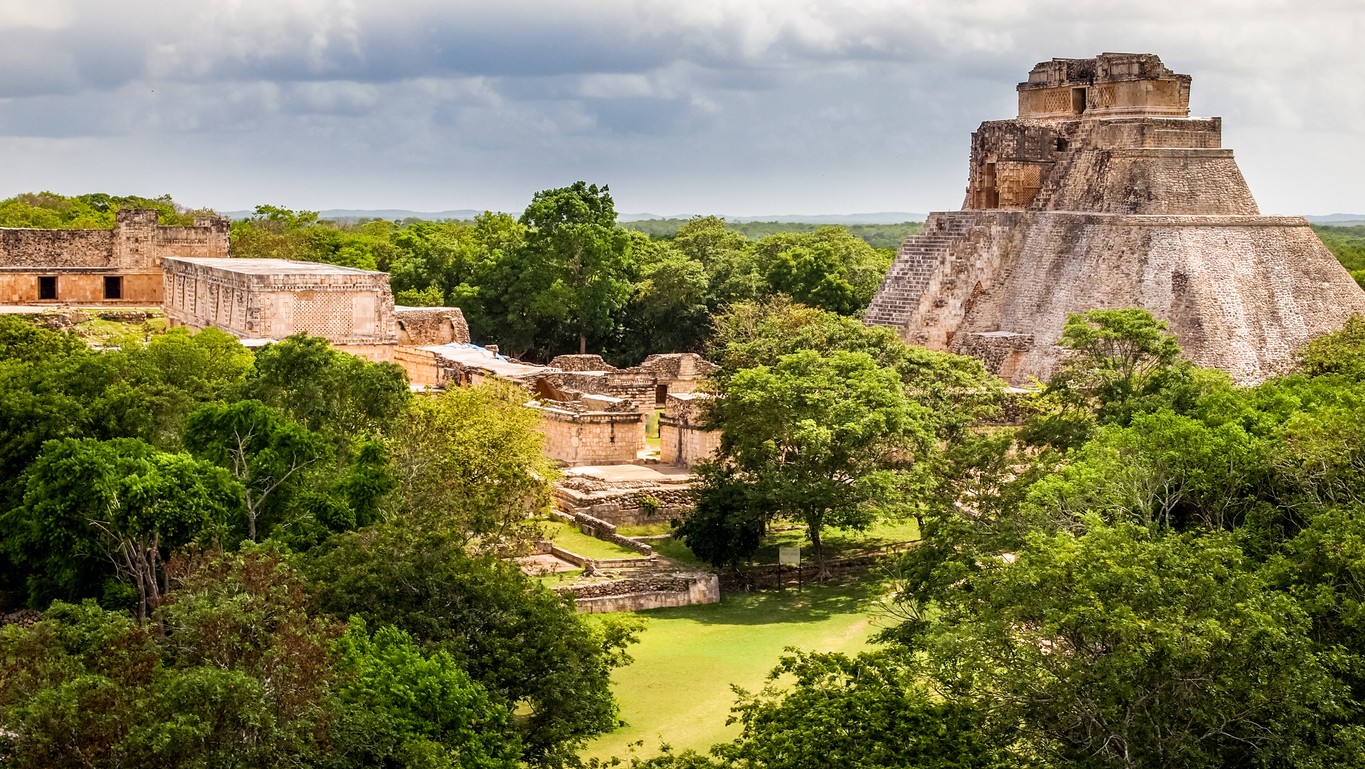
Photo: The Pyramid of the Seer in Uxmal is a UNESCO World Heritage Site and is one of the most significant examples of Mayan culture in Yucatán.
Surrounded by tropical greenery, the Pyramid of the Seer soars skywards. Its stone steps and unusually rounded shape make Uxmal instantly recognisable at first glance. The archaeological site is a UNESCO World Heritage Site and ranks among the most significant examples of Maya culture in Yucatán.
As well as the Pyramid of the Seer, there are other impressive structures to discover in Uxmal. A closer look at the façades of the so-called ‘Nuns’ Quadrangle’ and the Governor’s Palace reveals the characteristics of the Puuc style: relatively simple lower sections and richly decorated upper sections. Masks of the rain god Chaac, geometric patterns and meticulously carved stones give an idea of the vast amount of knowledge and precision craftsmanship that went into these buildings. If you take your time, you’ll discover far more than just monumental structures set against a backdrop of tropical greenery.
Top tip: If possible, visit Uxmal in the morning and make sure to take plenty of water and sun protection with you. A local guided tour will help you better understand the significance of the façades and the connections between the individual buildings.
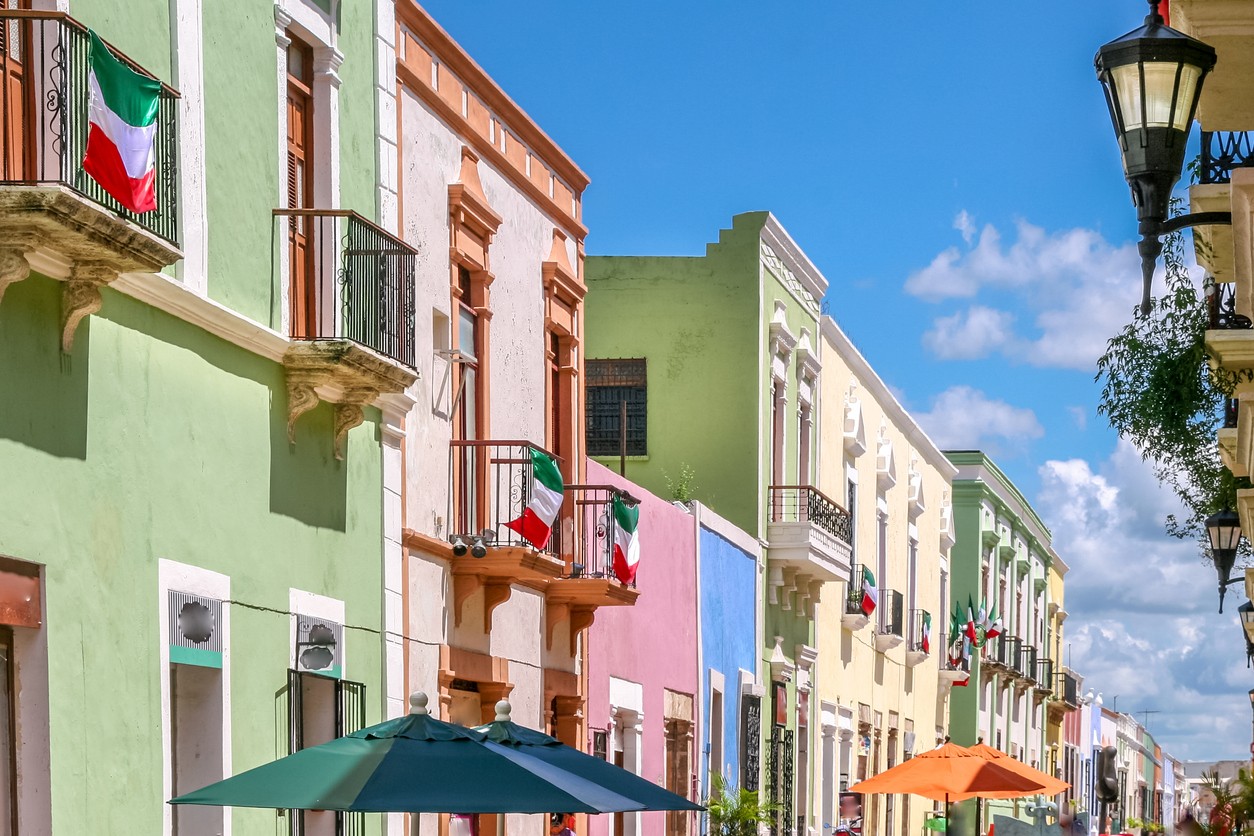
Photo: Pastel-coloured houses line the streets of Campeche, whilst preserved sections of wall, bastions and city gates serve as a reminder of the port’s former importance.
Behind the old city walls of Campeche, the houses glow in delicate shades of blue, pink and yellow. The old town on the west coast of the peninsula is a UNESCO World Heritage Site and is wonderful to explore on foot. From the main square with its cathedral, the narrow streets lead to Calle 59, where restaurants and small craft shops are nestled amongst the colourful façades.
Preserved sections of the walls and bastions serve as a reminder of the time when Campeche had to protect its harbour from attacks from the sea. As evening falls, the low-hanging sun bathes the pastel-coloured façades of the old town in warm light. This is the perfect time for a stroll to the Malecón, Campeche’s seafront promenade on the Gulf of Mexico. Afterwards, round off the day with a meal in the old town.
Hotel tip: Casa Don Gustavo is situated directly on Calle 59 in a restored historic townhouse. Ten individually designed suites, antique furniture and a courtyard capture the atmosphere of the old town. Many attractions are within walking distance from here.
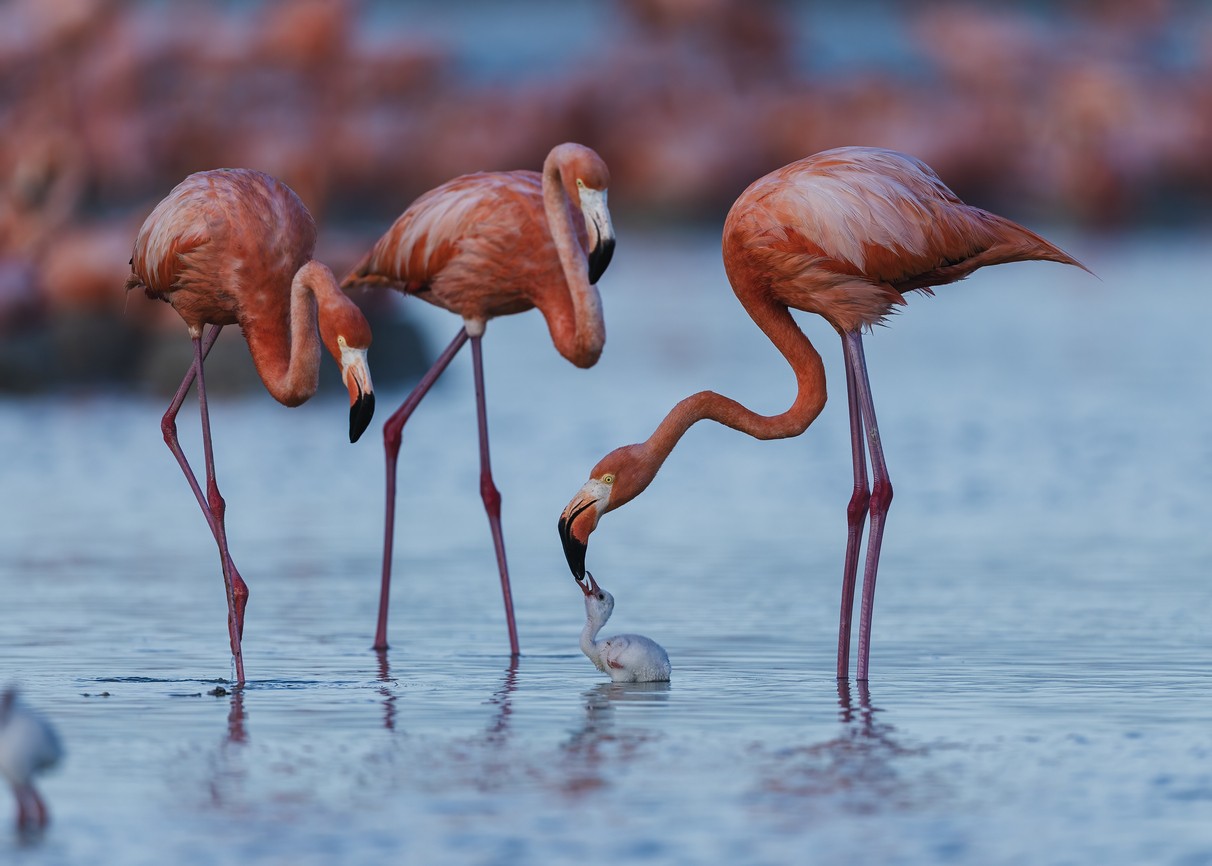
Photo: The Ría Celestún Biosphere Reserve is an important habitat for numerous bird species – the flamingos are particularly well known,
Near Celestún, west of Mérida, boats glide through narrow waterways, over which the branches of the mangroves form green tunnels. Beyond them lie the shallow waters of the Ría Celestún Biosphere Reserve. Particularly during the winter months, large flocks of pink flamingos can often be seen here, foraging for food in the shallow water.
A guided tour on the water gives you time to observe the mangroves’ tangled roots up close and listen to the birds’ calls. Afterwards, there’s time to enjoy Celestún’s beach – perhaps for a stroll along the water’s edge or a meal at one of the beachside restaurants.
Special tip: The Guardianes de los Manglares de Dzinintún offer guided canoe and kayak tours through the mangroves. This local co-operative is committed to protecting these forests. Binoculars are provided on the tours – ideal for observing the birds from a distance.
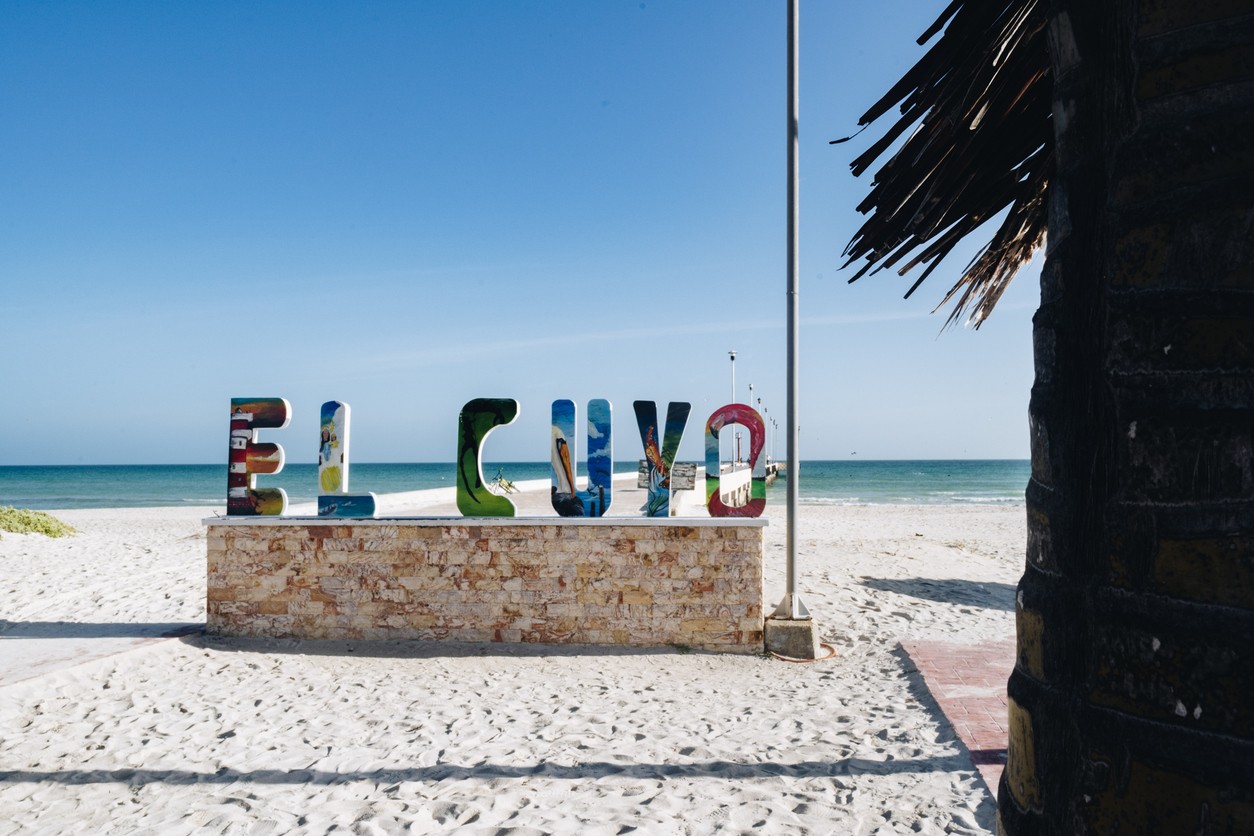
Photo: El Cuyo is situated on the north-east coast of the peninsula and offers a different kind of beach holiday.
El Cuyo is a small fishing village on the north-east coast of the peninsula, where life revolves largely around the sea. You can spend a relaxing day on the long sandy beach, with time for a swim and walks along the water’s edge. In between, it’s worth taking a detour into the village: colourful murals adorn the houses, and the small restaurants serve local fish dishes.
When the wind picks up, the colourful kites of the kitesurfers can be seen off the coast. For anyone wishing to try the sport for themselves, local schools offer courses. On days with little wind and calm seas, you can explore the sea on a guided kayak or SUP excursion.
Special tip: Ask locals for a lovely spot to watch the sunset and plan your walk along the beach for the late afternoon. Afterwards, there’ll be time for dinner in the village.
Hotel tip: For a break close to the beach, the LunArena Barefoot Comfort is a lovely choice. The LunaMar suites are particularly charming: from the private terrace with its hammock, the view sweeps out over the sea. The hotel’s own restaurant serves Mexican and Italian dishes made with locally sourced ingredients.
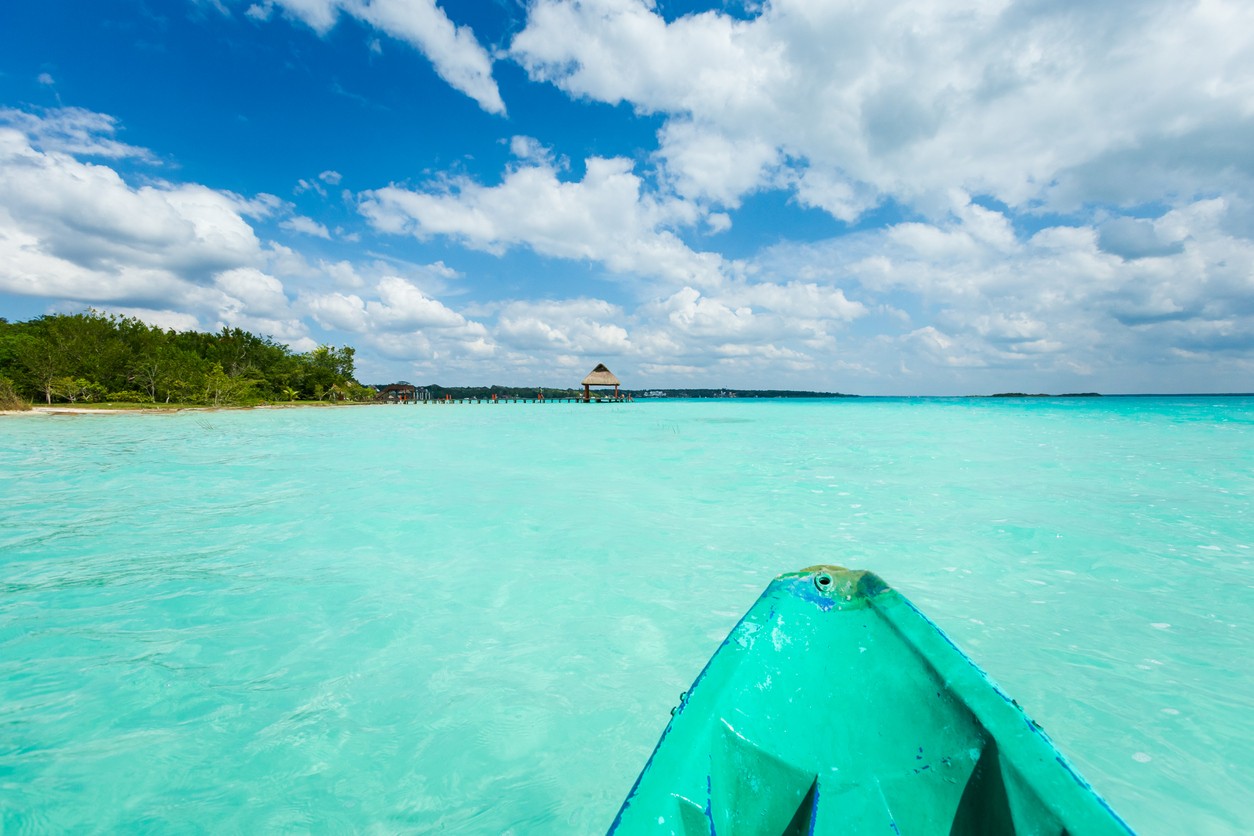
Photo: In the south of Quintana Roo, Bacalar lies on a freshwater lagoon whose blue colour shifts between light and dark shades depending on the light and the depth of the water.
In the south of Quintana Roo, Bacalar lies on a freshwater lagoon that shimmers in different shades of blue depending on the light and the depth of the water. It owes its name, the ‘Lagoon of the Seven Colours’, to this play of colours. Along the shore, swimming spots invite you to cool off, but it’s also well worth heading out onto the water. On a kayaking or sailing trip, you can explore the lagoon at your leisure, with sweeping views across the blue waters to the wooded shore.
For a break from the water, a stroll through Bacalar is well worth it. Cafés and restaurants line the streets around the town centre, and Fort San Felipe offers insights into the town’s history. This makes it the perfect place to spend a few peaceful days, combining trips out on the lagoon with a stroll through the narrow streets and a leisurely meal.
Hotel tip: At Boa Boa Bacalar, you’ll stay in individually designed cabañas. The accommodation in the ‘Boa Laguna’ area, situated right by the water’s edge, is particularly lovely for a break by the lagoon. Deckchairs are provided on the private jetties; hammocks also offer a spot to take a break with a book.
Conclusion: The most beautiful places in Yucatán can be combined to suit your own interests. Those seeking culture and regional cuisine can combine Mérida, Izamal and Valladolid. Uxmal adds Mayan architecture to the itinerary, whilst Celestún offers nature watching. For days by the water, El Cuyo and Bacalar offer contrasting landscapes. It’s essential to allow plenty of time between sightseeing stops – for a courtyard, a good meal or an afternoon with no set plans.

© Swiss Bankers 2026


 Compare cards and conditions

