City break in Ho Chi Minh City: sights, street food and tips for Saigon

Ho Chi Minh City – still affectionately known as Saigon by many locals – is a city of contrasts. French colonial buildings stand side by side with modern glass skyscrapers, whilst centuries-old pagodas are just a stone’s throw away from trendy third-wave cafés. Amidst it all, traffic flows seemingly chaotically through the streets. Anyone travelling through Vietnam should not miss this vibrant metropolis. Here are our top tips for a few unforgettable days in Saigon.

Photo: The historic Independence Palace in the heart of Ho Chi Minh City.

Photo: War Remnants Museum – a moving account of the Vietnam War.

Photo: Notre-Dame Cathedral – a piece of French colonial heritage in the heart of the city.

Photo: The impressive interior of the Saigon Central Post Office, with its colonial charm.

Photo: Museum of Fine Arts – Ho Chi Minh City’s most important art museum.

Photo: Pink Church – the pink Tân Định Church, one of Saigon’s most striking photo opportunities

Photo: Jade Emperor Pagoda – an atmospheric Buddhist-Taoist temple.

The main attractions in Ho Chi Minh City

Many of the main attractions are centrally located and can easily be visited in combination. Historic buildings, temples, markets and modern architecture ensure there is plenty of variety.
  • Reunification Palace: The Reunification Palace is one of the city’s most historic sites. On 30 April 1975, a North Vietnamese tank broke through the gate of what was then the Presidential Palace. Inside, the reception halls, government offices and the underground bunker remain largely intact.
  • War Remnants Museum: The War Remnants Museum presents the Vietnam War from a Vietnamese perspective. Photographs, documents and military vehicles make for a powerful and, at times, harrowing visit – an absolute must for history enthusiasts.
  • Notre-Dame Cathedral & Central Post Office: Two landmarks from the French colonial era stand right next to one another: Notre-Dame Cathedral with its red-brick façade and the magnificent Central Post Office with its high vaulted ceilings and historic details.
  • Museum of Fine Arts: The Museum of Fine Arts is well worth a visit, and not just for its collection of Vietnamese art. The yellow-and-white colonial villa itself, with its balconies, tiled floors and sweeping staircases, is a sight to behold.
  • Pink Church: With its bright pink façade, Tân Định Church – better known as the Pink Church – is one of the city’s most striking photo opportunities. Directly opposite is the local Tân Định Market.
  • Jade Emperor Pagoda: The Jade Emperor Pagoda is one of the city’s best-known Buddhist-Taoist temples. Incense sticks, ornate statues and small inner courtyards create a special atmosphere – a lovely contrast to the hectic traffic outside the gates.

Order Vietnamese dong. Delivered straight to your door.

More than 60 currencies at the click of a button – order today, delivered tomorrow. Secure and convenient, with no need to visit a branch. Exclusive and available to order via the app only with a Swiss Bankers card.

Find out more
Order Vietnamese dong. Delivered straight to your door.

Experience Saigon: markets, city life and cafés

Ho Chi Minh City comes alive on the streets – in bustling markets, along wide boulevards and in old apartment blocks, where cafés and small boutiques are now tucked away.

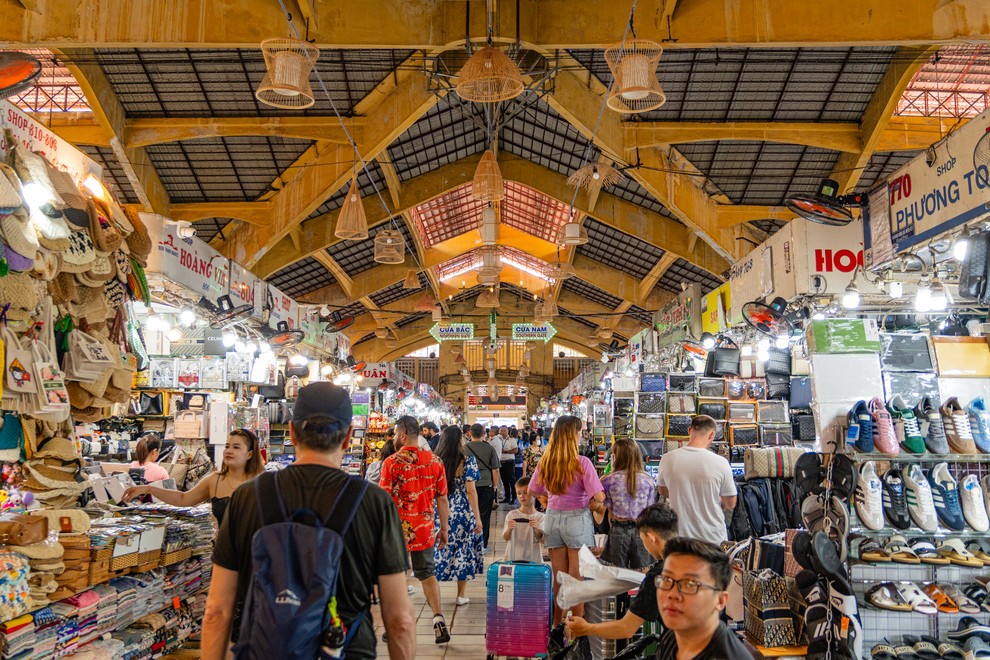
  • Bến Thành Market: Bến Thành Market is one of the city’s best-known markets. Amidst spices, coffee, street food, clothes and souvenirs, there’s a bustle of activity almost all day long.
  • Nguyễn Huệ Walking Street: In the evening, Nguyễn Huệ Walking Street becomes a popular meeting place for locals and visitors alike. The apartment block at 42 Nguyễn Huệ is particularly well-known; its former flats now house numerous cafés and small shops.
  • 26 Lý Tự Trọng: 26 Lý Tự Trọng is a little more hidden away. Behind the unassuming façade of the old apartment block lies a small labyrinth of staircases and corridors featuring independent cafés, vintage shops and local fashion labels – perfect for discovering the creative side of Saigon.
  • Hạnh Thông Tây Night Market: Anyone wishing to experience Saigon away from the tourist markets should visit the Hạnh Thông Tây Night Market in the evening. Around the market in Gò Vấp, numerous stalls selling affordable fashion, shoes and accessories line the streets, alongside street food and plenty of local life. It gets particularly lively between 6 pm and 11 pm. 

  • Saigon’s café culture: Saigon has a surprisingly diverse café scene – from hidden cafés in old apartment blocks to minimalist speciality coffee bars. Our favourites include Nicotin Tearoom & Coffee, Nha Ba Teria, Dabao Concept, Nhâm Café, Ngâm Café and XLIII Specialty Coffee. Gốm Sài Gòn is also particularly lovely, where coffee and Vietnamese ceramic art come together.

  • Our tip: Make sure you take enough cash with you – card payments are often not accepted, particularly at local markets, street food stalls and in smaller cafés.
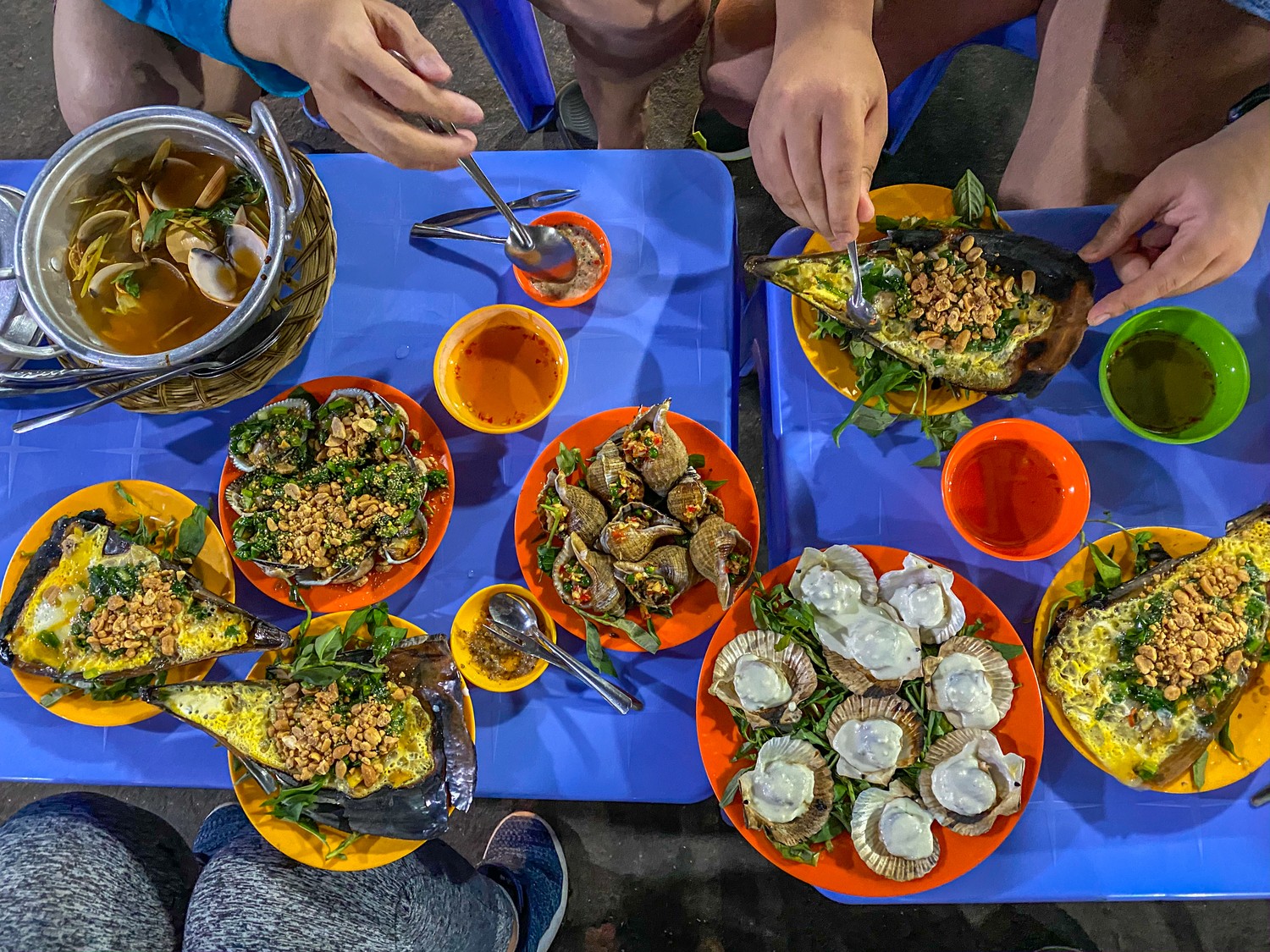
Photo: Classic street food in the bustling streets of Ho Chi Minh City.

Eating in Ho Chi Minh City: Street food & restaurant recommendations

Ho Chi Minh City is a paradise for foodies. From simple street stalls and bustling food streets to creative fine-dining concepts, you’ll find practically everything here – and often, both worlds are just a few streets apart.

If you want to sample Saigon’s street food, don’t miss Hồ Thị Kỷ Food Street. In the narrow alleys around the famous flower market, numerous small stalls line up side by side in the evening. On offer are Vietnamese classics as well as Cambodian-influenced specialities, kebabs, seafood and desserts. It gets particularly lively in the late afternoon and evening.

Our restaurant recommendations:

From affordable street food to a special dinner, our selection is deliberately diverse. For cocktails and international cuisine, Layla – Eatery & Bar is a lovely spot in the city centre. Things get a bit more sophisticated at Mía Dining, which serves modern Asian cuisine. Sol Kitchen & Bar brings Latin American flavours to Saigon, whilst Quince Saigon impresses with Mediterranean cuisine, open-fire cooking and an elegant ambience.

If you’re looking for authentic Vietnamese cuisine, Mặn Mòi is the place to go. The menu combines specialities from various regions of Vietnam. For a decidedly more down-to-earth experience, Bánh Canh Cua Bà Ba is well worth a visit: here, almost everything revolves around bánh canh cua, a hearty noodle soup with crab meat – and the place is even recommended by the Michelin Guide as a street food spot.  Another true street food classic is Bún Thịt Nướng Chị Tuyền. For around 30 years, almost everything here has revolved around bún thịt nướng – rice noodles with grilled pork, herbs, pickled vegetables and crispy spring rolls. Vegetarians will also find plenty to enjoy in Saigon. Chay Garden serves Vietnamese-inspired vegetarian cuisine in a green, peaceful setting – a lovely change from the hustle and bustle of the city.

A quick language guide for the menu:

  • cơm – rice
  • thịt – meat
  • gà – chicken
  • bò – beef
  • heo – pork
  • cá – fish
  • rau - vegetables
  • chay – vegetarian / meat-free

Photo: The Myst Dong Khoi

Photo: Fusion Original Saigon Centre

Photo: ANIMA Vietnamese Contemporary Art Boutique Hotel 

Photo: Mia Saigon – Luxury Boutique Hotel

Photo: MEANDER Saigon

Where to stay in Ho Chi Minh City? Neighbourhoods and hotel tips

Ho Chi Minh City is huge – and every neighbourhood has its own character. For a first city break, a central location is particularly convenient, but there are also exciting alternatives just outside the city centre.

  • District 1: The best choice for a first visit. Around Nguyễn Huệ, Đồng Khởi and Bến Thành, there are plenty of sights, restaurants, rooftop bars and cafés, all just a few minutes’ walk from one another.
  • District 3: A bit quieter and more local, yet still very central. Tree-lined streets, lovely cafés, small restaurants and historic buildings create a more relaxed atmosphere.
  • Thảo Điền: Green, relaxed and international. This neighbourhood on the Saigon River is known for its concept stores, cafés and good restaurants – ideal for anyone looking to escape the hustle and bustle of the city centre.
  • Chợ Lớn: The historic Chinatown lies just outside the immediate city centre, in the area of the former District 5 – about 15–20 minutes from District 1, depending on traffic. Pagodas, traditional shops and markets such as the Bình Tây Market reveal a very different, distinctly more local side to Saigon here.

Good to know: Since the 2025 administrative reform, the former districts no longer officially exist in the same form. However, names such as District 1, District 3 or District 5 are still frequently used for guidance.

Our hotel recommendations:

The Myst Dong Khoi combines modern design with Vietnamese touches and is perfectly situated in the heart of the city centre for sightseeing. Also very centrally located is the stylish Fusion Original Saigon Centre, situated right in the Saigon Centre and surrounded by restaurants, shops and many attractions.

Art and design enthusiasts should check out ANIMA. This boutique hotel combines striking interior design with contemporary Vietnamese art. Those who prefer a quieter stay will find Mia Saigon, an elegant boutique hotel right on the Saigon River – with a pool, plenty of greenery and an almost resort-like atmosphere.

MEANDER Saigon offers a slightly different kind of accommodation. Its modern concept combines accommodation with co-working, lounge and communal areas – ideal for solo travellers, digital nomads and anyone who enjoys working in a relaxed atmosphere whilst on the move or meeting new people.

Video: Cần Giờ Biosphere Reserve – Mangrove forests and nature on Saigon’s doorstep

Day trips from Ho Chi Minh City

If you have an extra day or two to spare, you can escape the hustle and bustle of Saigon and discover some of southern Vietnam’s most exciting destinations.
  • Củ Chi Tunnels: The famous Củ Chi tunnel system lies around 70 kilometres north-west of the city centre. This extensive underground network played a vital role during the Vietnam War and today offers a fascinating insight into life underground at that time. You can explore some sections of the tunnels yourself – you should allow about half a day for the trip.
  • Mekong Delta: The Mekong Delta, with its rivers, small canals and coconut groves, offers a fascinating contrast to the hustle and bustle of Saigon. Bến Tre in particular, around two hours from Ho Chi Minh City, is ideal for boat and cycle tours through the lush countryside. Our tip: When booking organised day trips, it’s worth taking a closer look – many of the cheap standard tours are very touristy and include several shopping stops. If you have more time, it’s best to stay overnight in Bến Tre or Cần Thơ and experience the delta at a much more leisurely pace.
  • Cần Giờ Mangrove Reserve: A lesser-known alternative is Cần Giờ, south of the city. This UNESCO Biosphere Reserve protects extensive mangrove forests and offers a stark contrast to city life – ideal for anyone seeking nature rather than traditional sightseeing.


Getting there, getting around and practical tips

Tân Sơn Nhất International Airport (SGN) is just a few kilometres from the city centre. There are currently no direct flights from Zurich, but Ho Chi Minh City is easily accessible via numerous major Asian and international hubs with a stopover.

From the airport to the city centre: The most convenient way to get into the city centre is by Grab. Your destination and fare are displayed before you book – depending on traffic, the journey to the city centre takes around 25 to 45 minutes. Money-saving tip: Public bus route 152 connects the airport with the city centre and stops at Bến Thành, amongst other places. The journey is currently even free of charge: from July until the end of December 2026, Ho Chi Minh City is covering the fares for numerous city bus routes, including route 152. (As of September 2026)

Getting around Saigon: Many of the city centre’s attractions are easily accessible on foot. For longer journeys, GrabCar and GrabBike are usually the simplest solution. Another handy option is Metro Line 1, which connects Bến Thành with the east of the city and stops at the Opera House, Ba Son and Thảo Điền, amongst other places. Single journeys cost between 7,000 and 20,000 VND depending on the route, whilst a day ticket costs 40,000 VND.

Practical tips

  • Best time to visit: From December to April, the weather is usually dry and sunny. The rainy season runs from May to November – often with short, heavy afternoon showers.
  • Entry: Swiss nationals can currently travel to Vietnam visa-free for tourist stays of up to 45 days. This arrangement is currently valid until 14 August 2028.
  • Cash: Cards are accepted in hotels, shopping centres and many restaurants. However, for markets, street food, small cafés and local shops, you should always carry some cash in Vietnamese dong. If you’d like to arrive with cash already in hand, you can conveniently order Vietnamese dong via Swiss Bankers’ banknote delivery service in the app and have it delivered securely to your home in Switzerland.
  • Well insured whilst travelling: Even on a city break, the unexpected can happen quickly. For top-ups of CHF, EUR or USD 1,000 or more, TravelProtect can be activated free of charge for 12 months with the Swiss Bankers Travel Card. It is important to activate the travel cover before paying for your trip.
  • Internet: A local SIM or eSIM is well worth it, if only for Google Maps and navigation. Wi-Fi is also widely available in hotels, restaurants and cafés.
  • Crossing the road: The heavy scooter traffic can seem chaotic at first. It’s best to walk calmly and at a steady pace, avoid sudden changes of direction and, where possible, use traffic lights and pedestrian crossings.

Travel: The free prepaid credit card

Pay securely with the Travel prepaid credit card at over 70 million shops worldwide. Available in CHF, EUR and USD. Manage your balance via the app. Cash withdrawals at home and abroad. Order online now – no credit check required, in just 5 minutes!

Learn more

How much does a city break to Ho Chi Minh City cost?

Ho Chi Minh City remains affordable by Swiss standards. Street food, coffee and Grab rides, in particular, often cost just a few francs. However, you can also spend considerably more in trendy restaurants, rooftop bars and boutique hotels.

As a guide, 100,000 VND is roughly CHF 3.10.

  • Bánh mì: approx. 20,000–80,000 VND (CHF 0.65–2.50), depending on the stall and toppings
  • Phở: approx. 40,000–70,000 VND at local stalls (CHF 1.25–2.20), in restaurants approx. 60,000–120,000 VND (CHF 1.90–3.75)
  • Cơm tấm: approx. 50,000–80,000 VND (CHF 1.55–2.50)
  • Vietnamese coffee: approx. 20,000–35,000 VND (CHF 0.65–1.10)
  • Speciality coffee: approx. 50,000–90,000 VND (CHF 1.55–2.80)
  • A meal in a good restaurant: approx. 200,000–400,000 VND per person, including a drink (CHF 6.25–12.50)
  • Upscale restaurant: around 500,000–1,000,000 VND per person (CHF 15.65–31.30)
  • Fine dining / restaurants such as Quince: depending on your choice, around 1,000,000–2,500,000 VND and more per person (CHF 31–78+)
  • GrabBike: short journeys approx. 20,000–50,000 VND (CHF 0.65–1.55)
  • GrabCar in the city centre: approx. 50,000–120,000 VND (CHF 1.55–3.75)
  • Metro: 7,000–20,000 VND per journey (CHF 0.20–0.65)
  • 3-star hotel: approx. 750,000–1,300,000 VND per night (CHF 23.50–40.70)
  • 4-star or boutique hotel: approx. 1,400,000–3,200,000 VND per night (CHF 43.80–100.00)
  • 5-star hotel: from around 3,400,000 VND per night (from CHF 106.50)

Our tip: Prices are often higher around tourist hotspots such as Bến Thành or Nguyễn Huệ. Just a few streets away, you can often find much cheaper places to eat and drink.

Prices: as at September 2026

Conclusion: Saigon – noisy, colourful and unforgettable

Ho Chi Minh City isn’t the place for a quiet, relaxing holiday – but it’s just the ticket for anyone looking for pure energy, fascinating history and culinary discoveries. If you’d like to combine your city break with a few relaxing days by the sea, you could then carry on to Phú Quốc or Mũi Né, for example.

Saigon is the perfect introduction to Vietnam – noisy, colourful and unforgettable.