


Important information:
Am 10. April 2024 wurden das Kundenportal sowie der Web-Zugriff auf das Kartenkonto eingestellt. Bitte laden Sie die Swiss Bankers App herunter, um weiterhin uneingeschränkten Zugriff auf alle Dienste zu haben.
Are you a Swiss Bankers sales partner?
Hier geht es zum Partnerportal.
The flight’s booked, the hotel’s reserved – and then the question arises: where can I get the local currency at the best rate? If you don’t look closely when exchanging money, you can easily end up paying unnecessary surcharges and fees. We’ll show you what matters when it comes to exchange rates and currency, and whether you’re better off exchanging your holiday money whilst still in Switzerland or waiting until you reach your destination.
 12.11.2026
 Miryana
Contents:
Understanding exchange rates: What exactly is foreign currency?
Should you exchange money before your trip or only when you arrive?
Exchange fees: Why ‘0% commission’ isn’t always the cheapest option
Exchanging money abroad: How can you tell if a bureau de change is reputable?
Should you exchange money or withdraw it from a cash machine?
Conclusion: When exchanging money, what really counts is what you actually receive
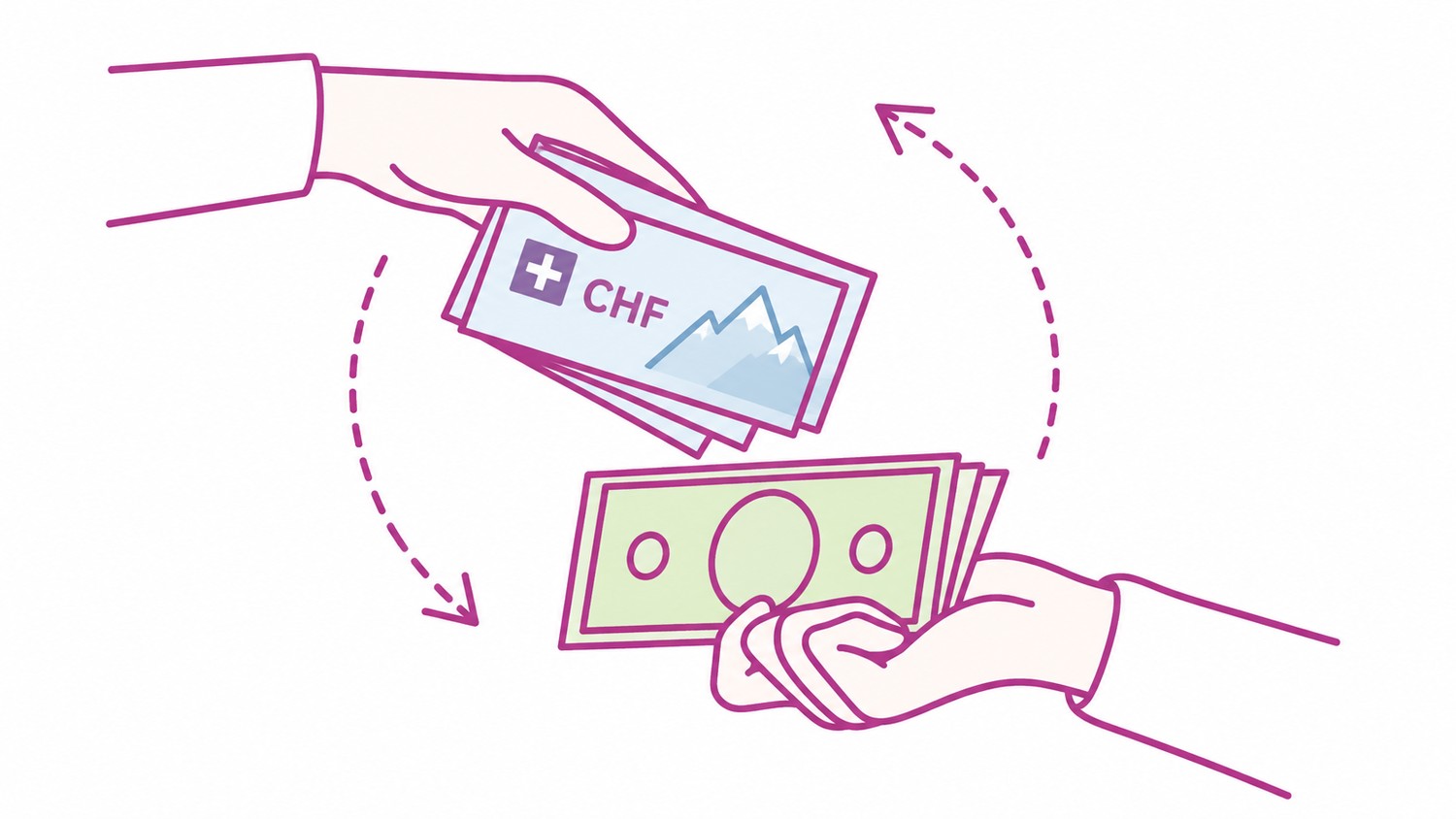
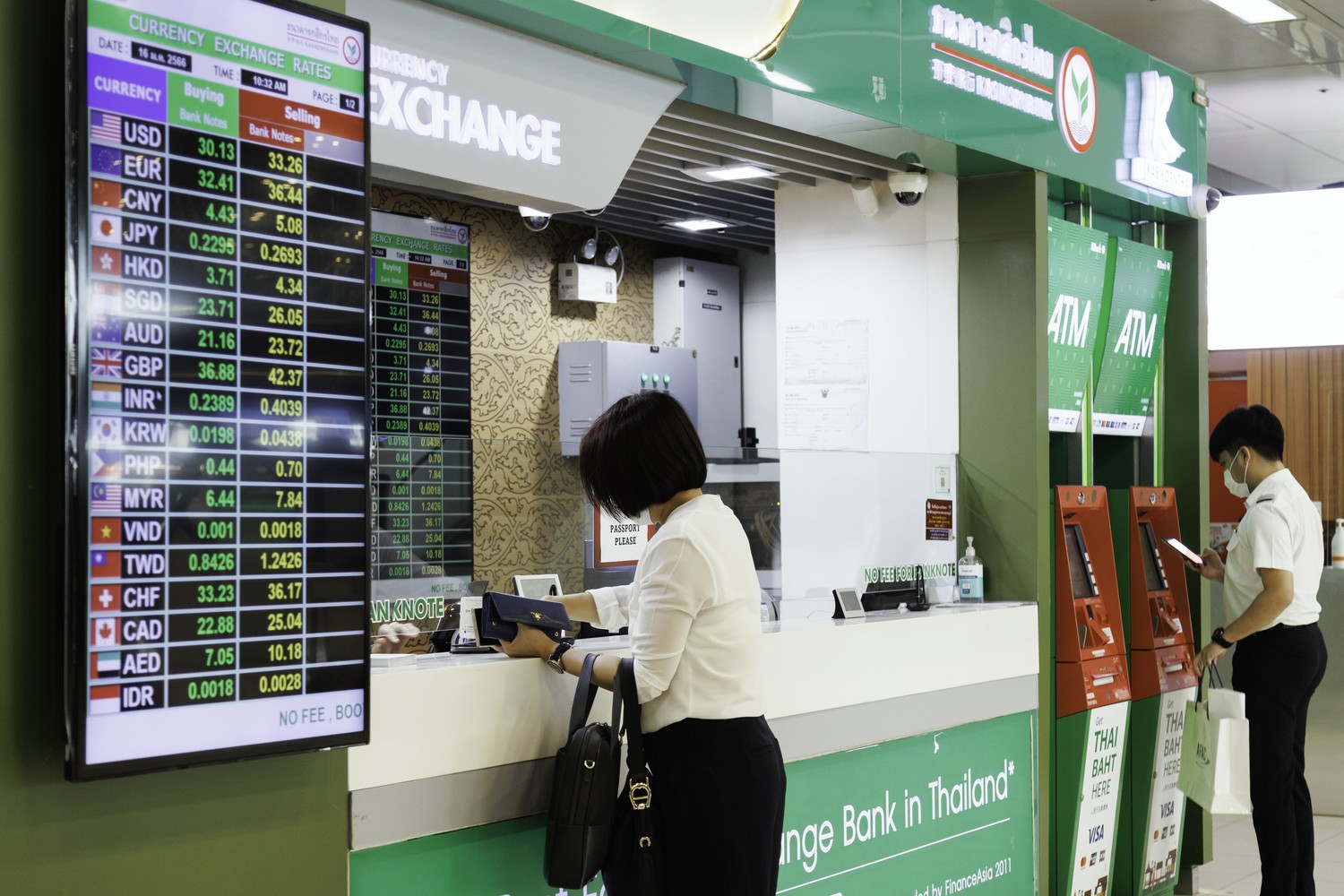
Foreign currency refers to foreign banknotes and coins – in other words, the cash you exchange for your trip. Here’s an example to show why the exchange rate at the counter may differ from the rate displayed online:
You want to exchange Swiss francs for euros before your holiday and compare the rates on Google and at your bank. You notice that the figures are different. Why is that? The rate you see on Google is usually the mid-market rate. It serves as a guide, but does not normally correspond to the rate you’ll receive when exchanging money.
Banks and bureaux de change distinguish between two rates:
Selling rate: This is the rate at which you sell foreign currency, for example, Swiss francs for euros.
Buying rate: This is the rate at which the provider buys back your foreign currency, for example after your holiday.
The difference between the two rates is called the spread. For cash, ‘cash’ or ‘banknote’ rates apply, which are often less favourable than the rates for electronic foreign currency transactions.
Our tip: Compare the rate on offer with the current mid-market rate. This will show you how much the exchange rate deviates from the reference value.

A taxi after landing, a coffee on the go or a tip at the hotel – having some cash in the local currency is often handy. But should you exchange it whilst still in Switzerland, or is it better to wait until you arrive?
That depends on your destination. Euros and US dollars are usually readily available in Switzerland. It can be more difficult with less common currencies. Exchange rates also vary depending on the provider.
Two tips to help you prepare:
Allow for a small cash reserve: this will enable you to pay for your initial expenses without having to search for a currency exchange bureau straight after arrival.
Compare exchange rates and fees: Work out how much of the local currency you’ll receive for the same amount in Swiss francs. This will help you identify which offer is actually better value.
Want to get your hands on local currency before you leave? With Swiss Bankers’ cash ordering service, you can conveniently order foreign currencies via the app and have them delivered to your home. The exchange rate and fees are displayed before you complete your order.
‘Exchange money with no fees!’ – offers like this sound tempting. But even if a currency exchange bureau doesn’t charge a commission, that doesn’t automatically mean you’ll get the best deal there. That’s because some providers make their money by offering a less favourable exchange rate.
Here’s an example: you want to exchange CHF 200 for euros and are comparing two offers:
Provider A: You receive 205 euros, with no additional fees.
Provider B: You would receive 212 euros, but a 5-euro processing fee is deducted. This leaves you with 207 euros.
So, with Provider B, you receive 2 euros more, even though a fee is charged. (Fictitious example.)
Our tip: Don’t just look at the exchange rate or the advertised commission. Before exchanging your money, ask how much of the local currency you will actually receive for your Swiss francs – after all fees have been deducted. This is the easiest way to compare offers.
Whether at the airport, in a hotel or right in the heart of a holiday resort: there are plenty of currency exchange bureaux, but not all of them offer fair rates.
How to exchange your money safely:
Choose official providers: Opt for banks or authorised currency exchange bureaux. Avoid private money changers on the street, even if they promise particularly good rates.
Check the terms and conditions: The exchange rate and fees should be clearly displayed.
Count your cash straight away: Check the banknotes you’ve received whilst still at the counter. This way, you can sort out any discrepancies straight away.
Keep your receipt: Ask for a receipt showing the exchange rate applied and any fees. This may be helpful should you have any queries later on.
Don’t let yourself be pressured. If the terms are unclear or the agreed amount suddenly changes, it’s better to refrain from exchanging money and look for another bureau de change.
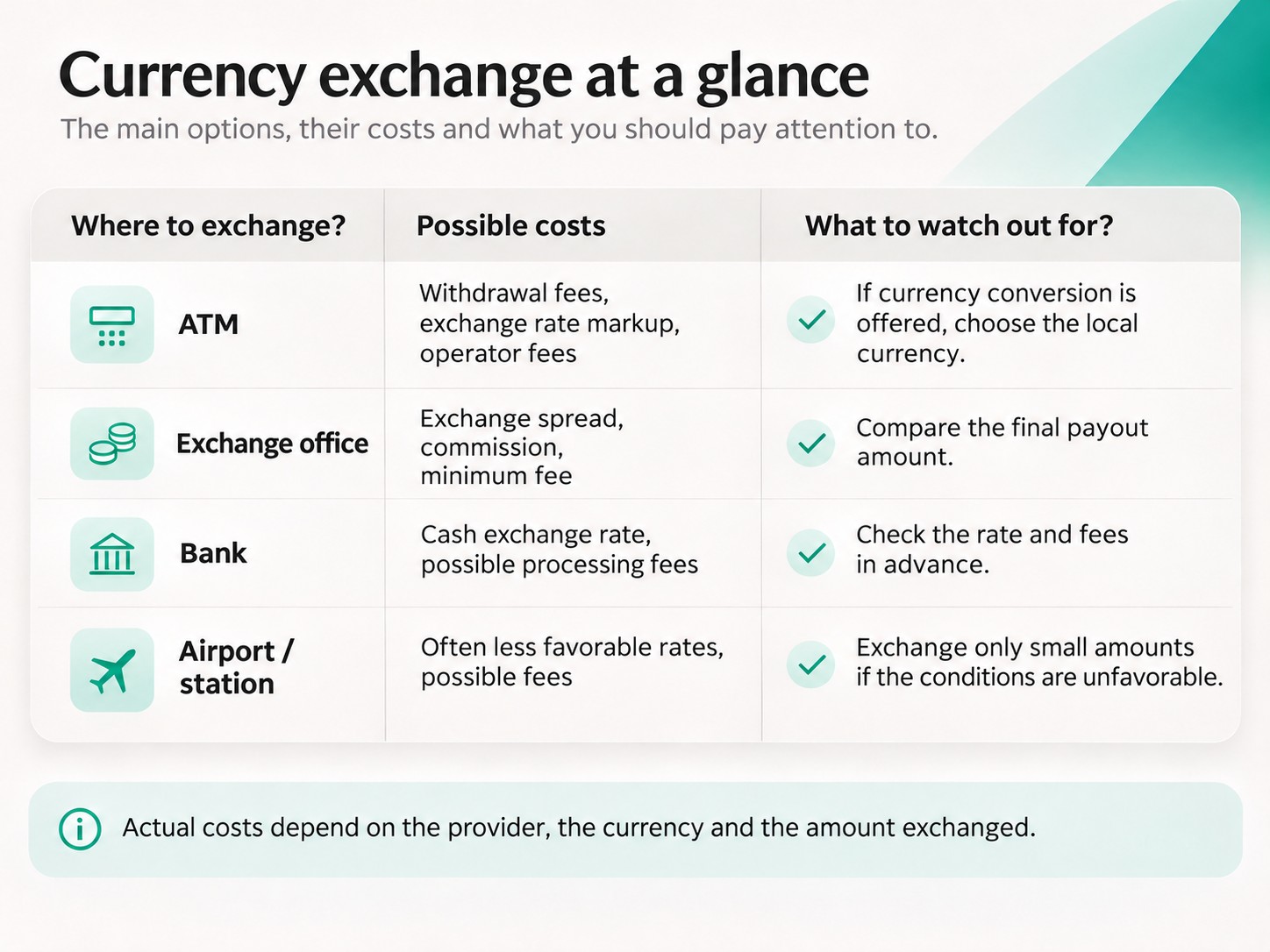
Do you need extra cash whilst on holiday? Whether a currency exchange bureau or a cash machine is cheaper depends on the exchange rate and the fees charged.
Here’s what you should bear in mind:
Compare the total costs: Currency exchange bureaux may charge a mark-up, whilst ATMs may incur additional fees from the card issuer and the ATM operator.
Choose the local currency: If you’re offered a conversion into Swiss francs, paying in the local currency is usually cheaper. This also applies when paying by card in a restaurant or shop.
Check for additional fees: If the cash machine operator charges a high fee, you can cancel the transaction before confirming it.
Security is also important: Cover the keypad when entering your PIN, avoid ATMs with conspicuous or loose parts, and keep your cash in different places wherever possible.
You can find further information in our article ‘Cash withdrawals: 5 tips to avoid unnecessary fees’.
There are almost always a few notes and coins left over after the holidays. But is it worth exchanging them back into Swiss francs?
Not necessarily. This is because an exchange rate applies again when you exchange it back, and you may incur additional fees. It’s hardly worth it, especially for small amounts. Furthermore, many bureaux de change do not accept foreign coins at all.
Here’s how to deal with leftover holiday money:
Spend any remaining cash before you leave: Use the cash for last-minute shopping or small purchases at the airport.
Keep banknotes for your next holiday: If you travel regularly to the same country, you can use the money again on your next visit.
Donate any remaining money: At Zurich Airport, you can drop coins and banknotes from all over the world into the so-called donation hearts. The money goes to various charitable organisations.
A few days before your journey home, think about how much cash you’ll still need. This will help you avoid being left with large amounts of leftover cash.
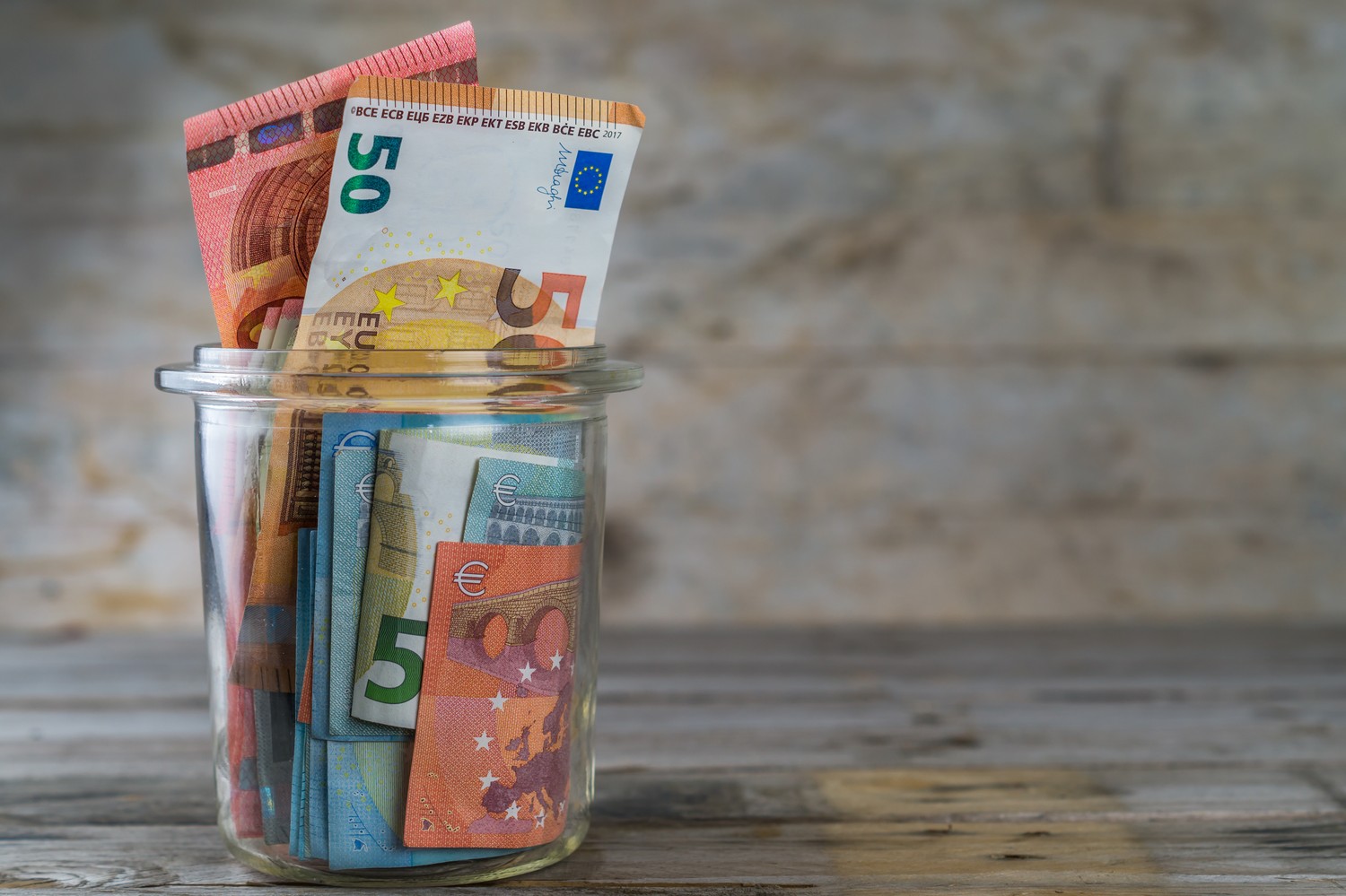
Whether you exchange your holiday money whilst still in Switzerland or only once you reach your destination: a good exchange rate alone doesn’t tell the whole story about the actual costs. What matters is how much local currency you receive after all fees have been deducted.
So, before you next exchange money, take a moment to compare two offers. Make sure you check the final amount you’ll receive. That way, you’ll avoid unnecessary costs and have more money left over for wonderful holiday experiences.

© Swiss Bankers 2026


 Compare cards and conditions

