


Important information:
Am 10. April 2024 wurden das Kundenportal sowie der Web-Zugriff auf das Kartenkonto eingestellt. Bitte laden Sie die Swiss Bankers App herunter, um weiterhin uneingeschränkten Zugriff auf alle Dienste zu haben.
Are you a Swiss Bankers sales partner?
Hier geht es zum Partnerportal.
A quick stop at a cash machine, insert your card, enter your PIN – and a few seconds later, your card details have been copied. Skimming involves fraudsters tampering with cash machines or payment terminals to read card details and, in many cases, also to spy on your PIN. Find out how skimming works, how to spot tampered machines and how you can better protect your card and your money.
 09.10.2026
 Miryana
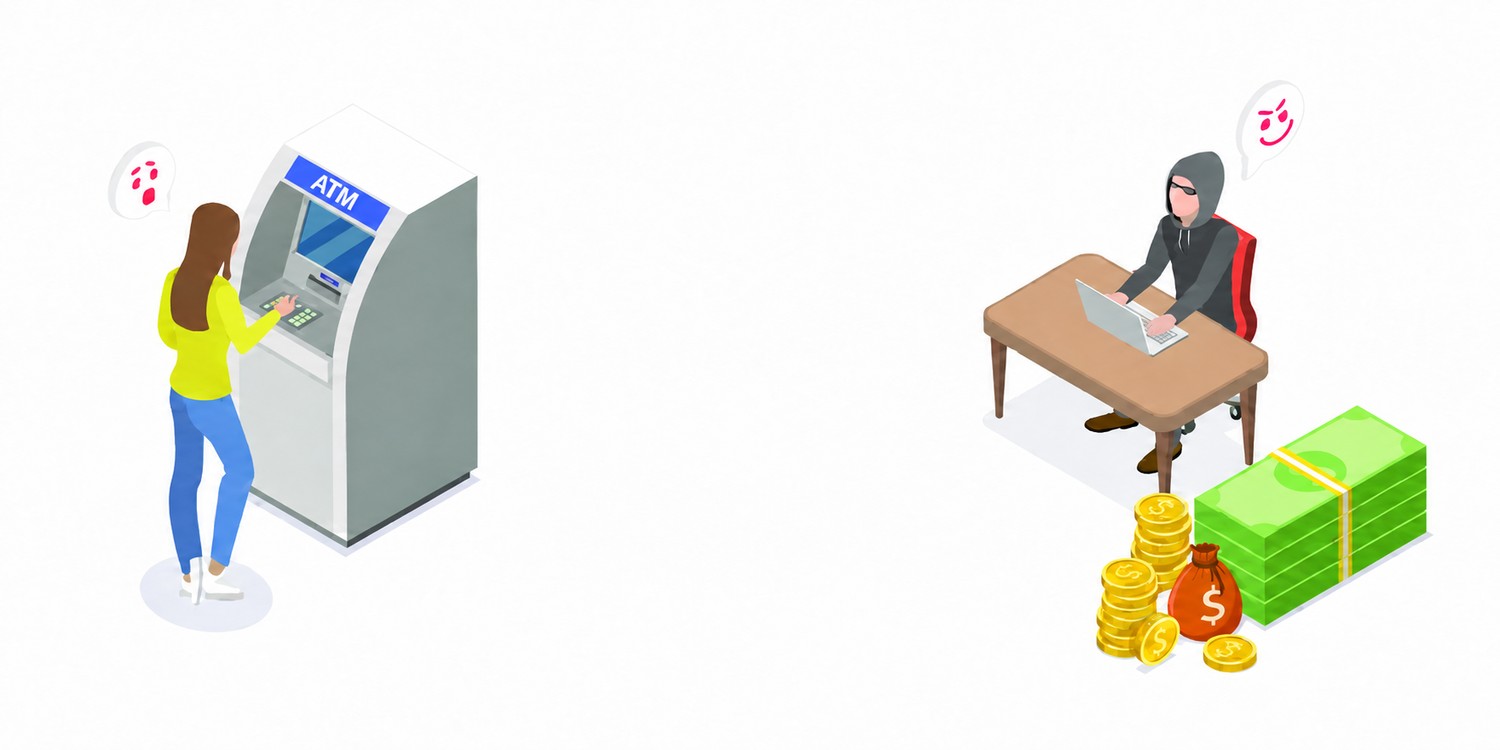
Skimming is when fraudsters attempt to read and copy card details without the cardholder’s knowledge, so that they can later misuse them for fraudulent transactions. ATMs are particularly commonly affected. However, payment terminals in shops and at petrol stations, as well as ticket and parking machines, can also be tampered with. To do this, the perpetrators attach additional card readers to the card slot, for example. These are often so cleverly disguised that they are barely noticeable. At the same time, the fraudsters try to spy on the PIN.
A typical skimming attack takes place in three steps:
Capturing card data: An additional card reader records information from the magnetic strip when the card is inserted.
Spying on the PIN: A hidden camera or a tampered keypad cover records the PIN as it is entered.
Misusing the data: Using the stolen information, fraudsters attempt to use counterfeit cards or carry out unauthorised transactions.
The attack often goes unnoticed at first: the cash machine appears to be working perfectly normally, the original card can still be used, and the fraud is frequently only discovered when an unknown transaction appears.
Good to know: Modern chip cards and contactless payments make traditional skimming much more difficult.
At first glance, a tampered cash machine often looks completely normal. However, sometimes small details give away that something is amiss. A quick look at the card slot, keypad and surrounding area can help you spot any suspicious changes.
Pay particular attention to these warning signs:
An unusual card slot: If the slot appears unusually thick, loose or different from usual, an additional card reader may have been fitted.
Tampered keypad: An unusually high, crooked or poorly secured keypad may indicate a hidden attachment.
Hidden cameras: Small openings or unusual components above the keypad may be used to record your PIN entry.
Damage or traces of adhesive: Scratches, adhesive or loose covers may be signs of subsequent alterations.
Unusual resistance: If the card is difficult to insert or gets stuck unexpectedly, you should be cautious.
Noticeable differences: If an ATM looks different from similar machines at the same location, it is worth taking a closer look.
Important: Not all tampering is visible from the outside. You should therefore cover the keypad with your free hand whenever you enter your PIN.
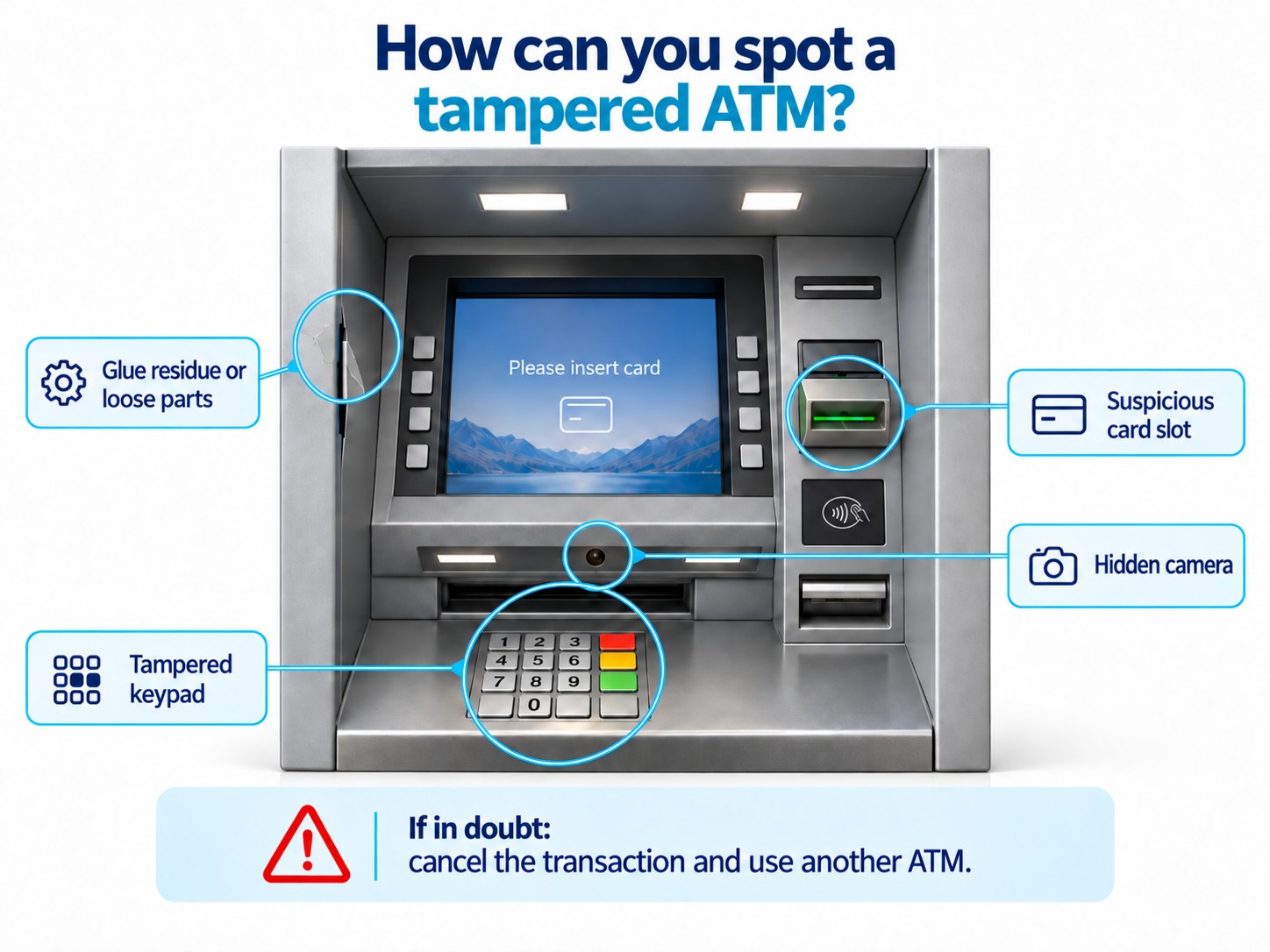
Does the card slot look unusual, is the keypad loose, or have you noticed any suspicious changes to the cash machine? If so, don’t take any risks – cancel the transaction.
Use a different cash machine: Do not insert your card or enter your PIN if anything seems suspicious.
Do not touch any suspicious parts: Do not attempt to remove any potential tampering devices yourself.
Inform the operator: Report any noticeable changes to your bank or the ATM operator.
Already used your card? Contact your card provider immediately if you suspect that your card details or PIN have been compromised. Find out whether the card should be blocked and replaced as a precaution.
Important: Even if the cash withdrawal went through without a hitch, this does not automatically mean that the cash machine was secure. If in doubt, you should protect your card and have the matter investigated.
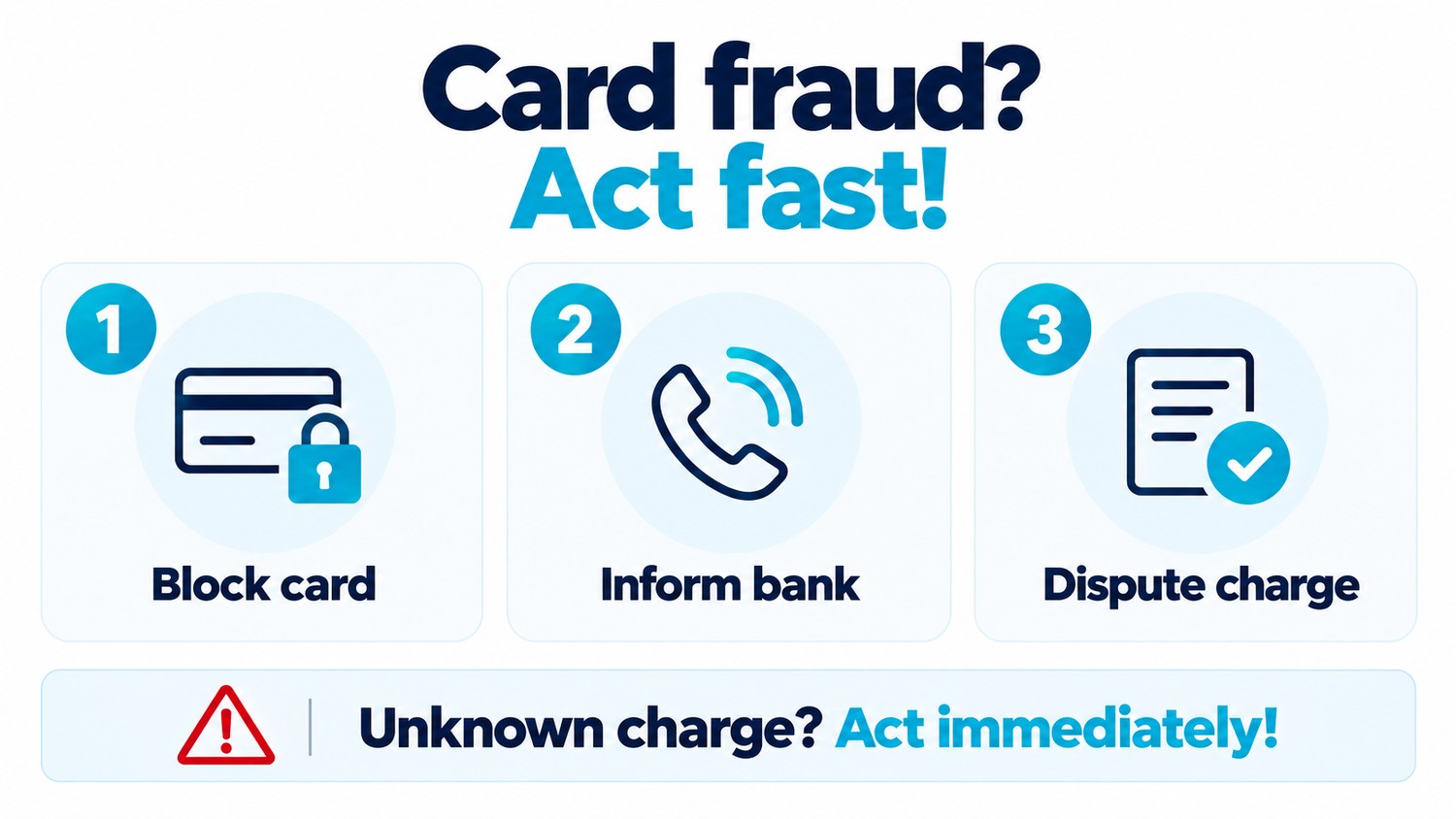
A cash withdrawal you never made, or an unknown card payment on your statement? Such transactions may indicate skimming or other forms of card fraud. One thing is crucial now: react quickly to prevent further damage.
Block your card immediately: Prevent fraudsters from making any further payments or cash withdrawals.
Contact your bank or card provider: Report the unknown transactions straight away and ask them to investigate the suspected card fraud.
Dispute unauthorised charges: Dispute the affected transactions with your card provider and enquire about the options for a refund.
Secure evidence: Keep hold of bank statements, transaction details and screenshots. Also make a note of when and where you last used your card.
Report the incident to the police: If you have suffered financial loss, you should also report the incident to the police.
Good to know: Whether a refund is possible depends on the circumstances of the fraud and the applicable card terms and conditions. That is why it is important to report any unfamiliar transactions as soon as possible.
Skimming cannot always be completely prevented. However, adopting just a few simple habits when withdrawing cash and making payments can significantly reduce the risk.
Always cover your PIN: Use your free hand to shield the keypad every time you enter your PIN – even if no one is standing nearby. This makes it harder for hidden cameras to record your PIN.
Pay contactless: Where possible, use your card’s contactless payment function or a mobile wallet. This avoids having to insert your card into a card reader that may have been tampered with.
Choose well-monitored cash machines: Where possible, use machines inside bank branches or in well-lit, busy locations.
Keep an eye on your card: Where possible, do not let your card out of your sight when paying, and watch out for any unusual activity at the terminal.
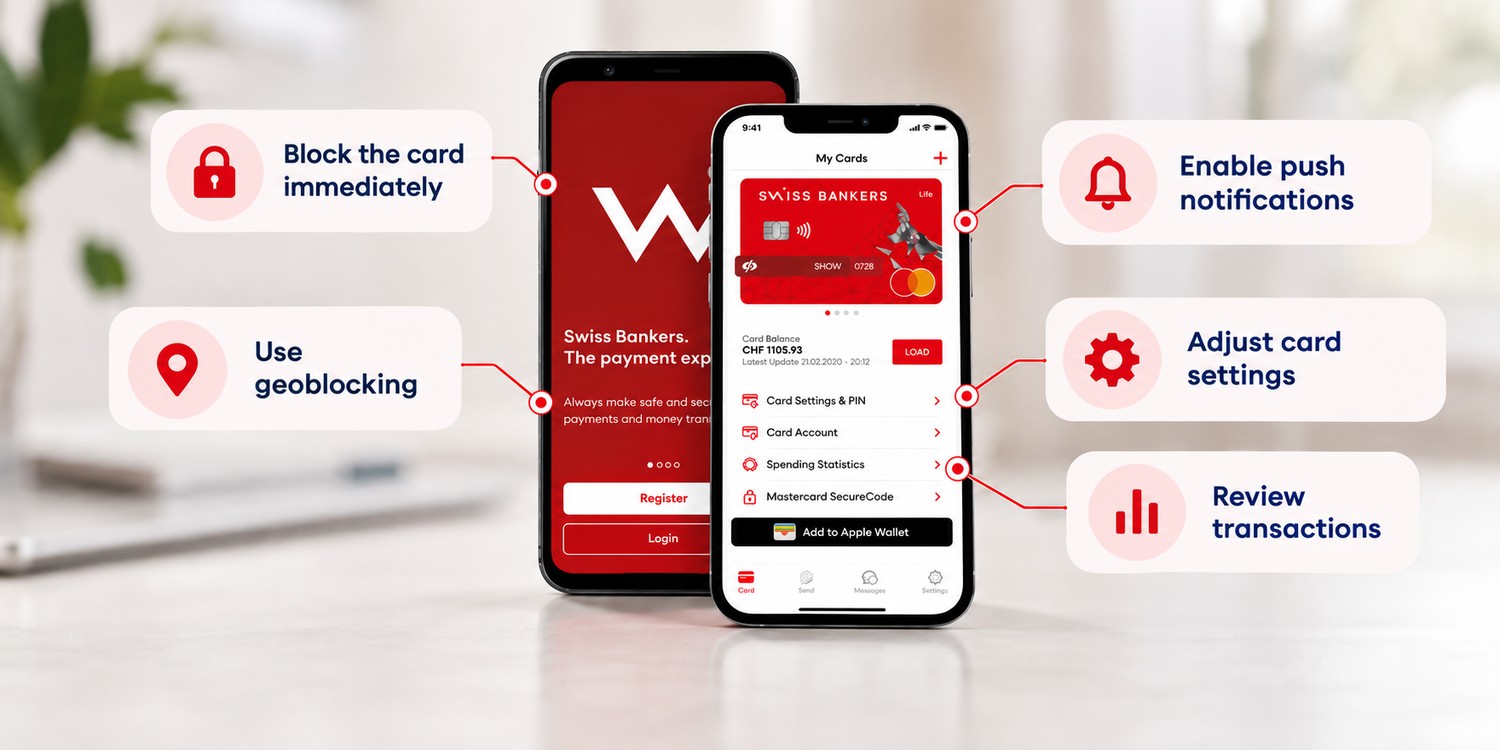
Enable push notifications: Set up notifications for card transactions. This will help you spot unauthorised charges more quickly.
Check your transactions regularly: Check your card transactions even if everything seemed to go smoothly when making a payment or withdrawing cash.
Use the Swiss Bankers app: With the Swiss Bankers app, you can enable push notifications, check your transactions and use geoblocking. If you suspect card fraud, you can immediately arrange for your affected card to be replaced via the ‘Replace card’ self-service option.
Good to know: Modern chip cards and contactless payments offer better protection against traditional skimming than using the magnetic stripe. Nevertheless, it is still important to remain vigilant.
Skimming is particularly dangerous because tampered cash machines and payment terminals often look completely normal. However, even simple precautions can significantly reduce the risk. Check the card reader, cover your PIN and keep an eye on your transactions. If anything looks suspicious, it’s best to cancel the transaction. Often, just a few seconds’ attention is enough to better protect your card details.

© Swiss Bankers 2026


 Compare cards and conditions

