


Important information:
Am 10. April 2024 wurden das Kundenportal sowie der Web-Zugriff auf das Kartenkonto eingestellt. Bitte laden Sie die Swiss Bankers App herunter, um weiterhin uneingeschränkten Zugriff auf alle Dienste zu haben.
Are you a Swiss Bankers sales partner?
Hier geht es zum Partnerportal.
Firewalls, encryption and multi-factor authentication protect technical systems. However, attackers know that the easiest route is often through people. This is precisely where social engineering comes into play. Fraudsters exploit trust, fear or time pressure to gain access to data or money. Find out how social engineering works, how to recognise attempts at manipulation and how you can protect yourself.
 07.10.2026
 Miryana
Contents:
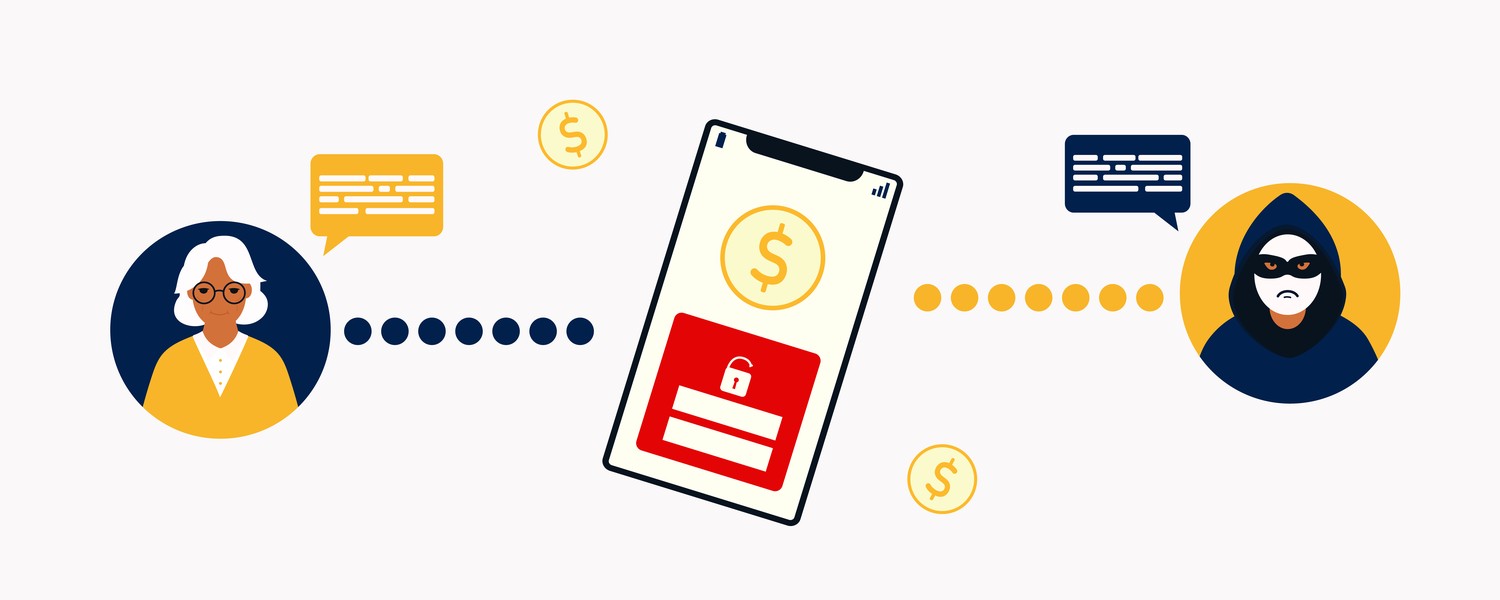
Social engineering refers to the deliberate psychological manipulation of people to persuade them to take actions that could harm themselves or their organisation: revealing passwords, transferring money, opening doors or installing malware.
In doing so, attackers deliberately exploit trust, a willingness to help, authority, fear or time pressure. Rather than looking for a technical security vulnerability, they try to get people to bypass security rules themselves.
In doing so, the attacker does not hack the system, but rather exploits trust.
Social engineering works because fraudsters deliberately exploit human reactions. They create situations in which we act quickly, offer help or place our trust in others – rather than checking things more carefully.
The more strongly a message triggers an emotional reaction, the more important it is to pause for a moment and assess the situation independently.
Social engineering takes many forms. A fraud attempt may begin via email, text message or telephone – or with a QR code, a fake website or a made-up story. Often, several methods are combined.
Social engineering often appears credible because the initial contact seems familiar, urgent or personal. It is therefore not just who is contacting you that matters, but above all what is being asked of you.
Pay particular attention to these warning signs:
Remember: the more urgent, unusual or confidential a request appears, the more important it is to verify it independently.
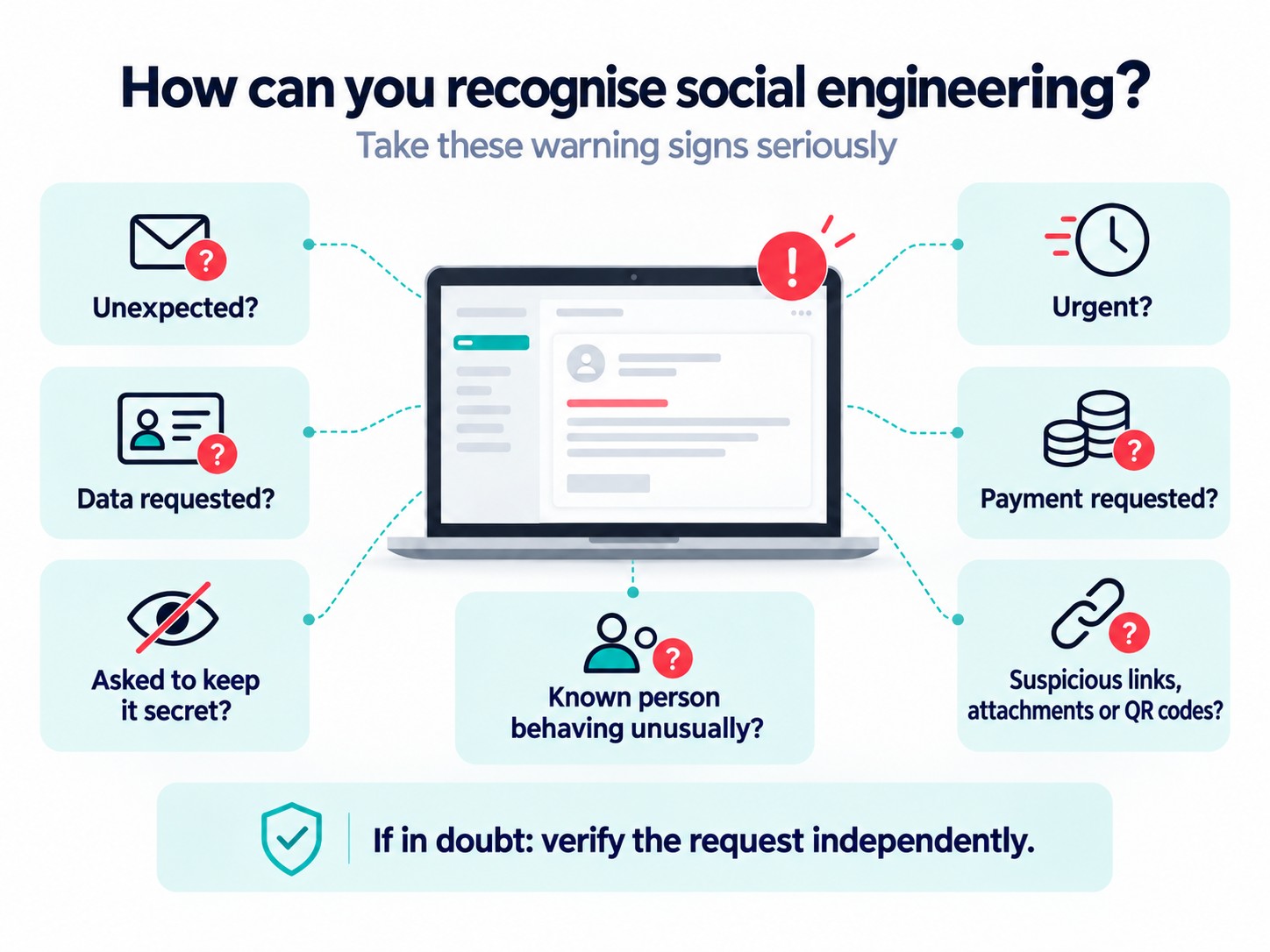
Does a message seem odd, is a caller putting pressure on you, or does a request seem out of place? If so, don’t react straight away – check it out first. Even taking a moment can help you spot an attempt at fraud.
Important: Never use the contact details or links from the suspicious message to verify anything.
A wrong click or a careless authorisation can happen in the blink of an eye. It is crucial to act swiftly now to limit any potential damage.
The quicker you react, the better you can limit further damage.
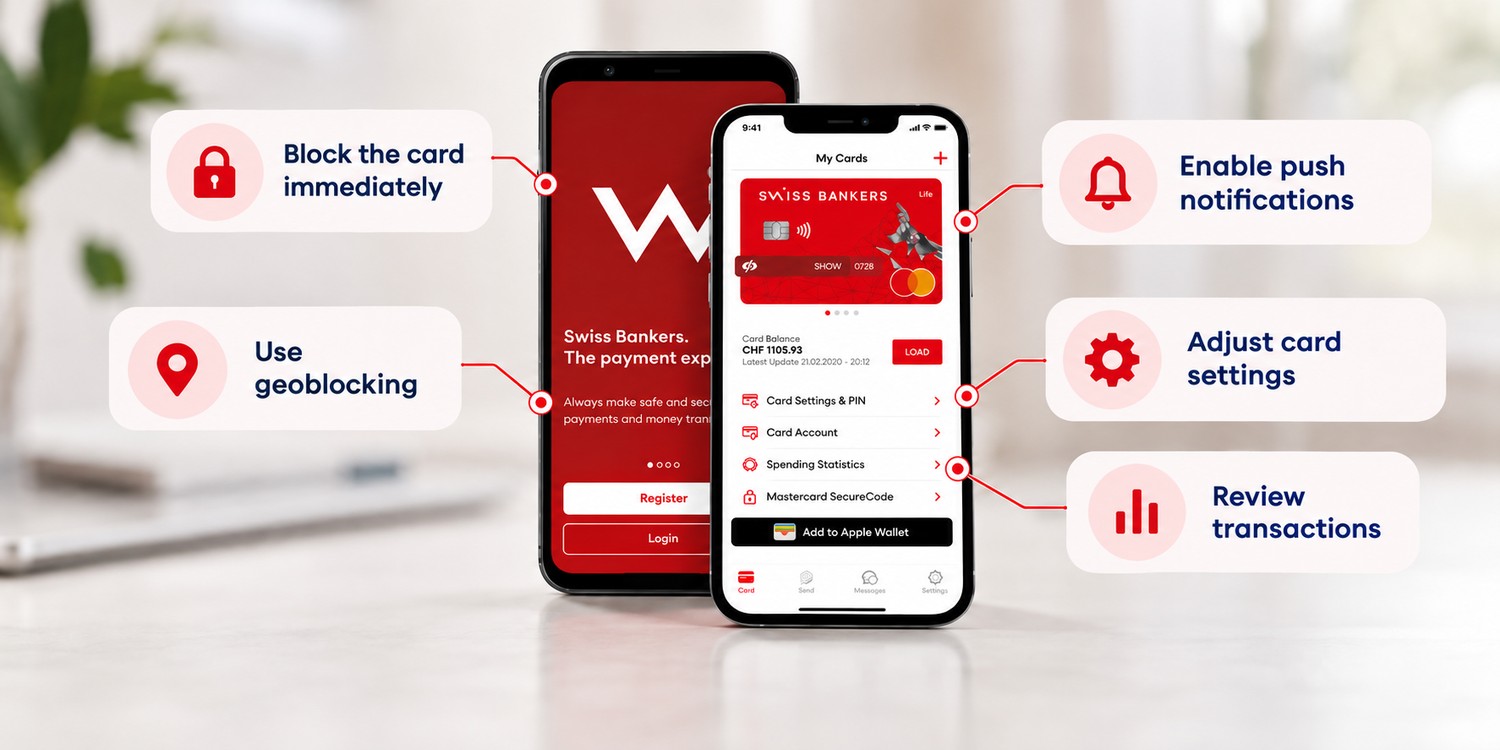
With the Swiss Bankers app, you can block your card immediately if necessary, use geoblocking, activate push notifications and check your transactions. This allows you to spot suspicious activity more quickly and limit potential damage.
Social engineering cannot be completely prevented. However, by adopting a few simple habits, you can significantly reduce the risk:
Social engineering is so successful because it exploits not technical vulnerabilities, but human traits such as trust, a willingness to help and respect for authority. This is precisely where we can make a difference: if you know the tricks, you’ll remain more vigilant. Often, simply pausing for a moment is enough to recognise and stop an attack in time.

© Swiss Bankers 2026


 Compare cards and conditions

