


Important information:
Am 10. April 2024 wurden das Kundenportal sowie der Web-Zugriff auf das Kartenkonto eingestellt. Bitte laden Sie die Swiss Bankers App herunter, um weiterhin uneingeschränkten Zugriff auf alle Dienste zu haben.
Are you a Swiss Bankers sales partner?
Hier geht es zum Partnerportal.
Volcanic landscapes, golden bays and snow-capped peaks: a tour of New Zealand brings together completely different worlds within a surprisingly small area. This three-week itinerary takes you from Auckland across the North Island, through the Marlborough Sounds and along the Southern Alps to Milford Sound – with plenty of time for hikes, short detours and quiet moments by the water.
 22.09.2026
 Eliza
Contents:
Auckland: Between volcanic hills, harbour lights and the skyline
Tongariro National Park: volcanic wilderness between fire and ice
Wellington: A creative harbour city nestled between hills and the sea
From Wellington to Nelson: Through the Marlborough Sounds to the sunny coast
Abel Tasman National Park: Golden bays in the coastal forest
Christchurch: A garden city between tradition and a new beginning
Lake Tekapo to Wānaka: Turquoise lakes against the backdrop of the Southern Alps
Queenstown: Adventure amongst the mountains and Lake Wakatipu
Te Anau and Milford Sound: In the magical realm of the fjords
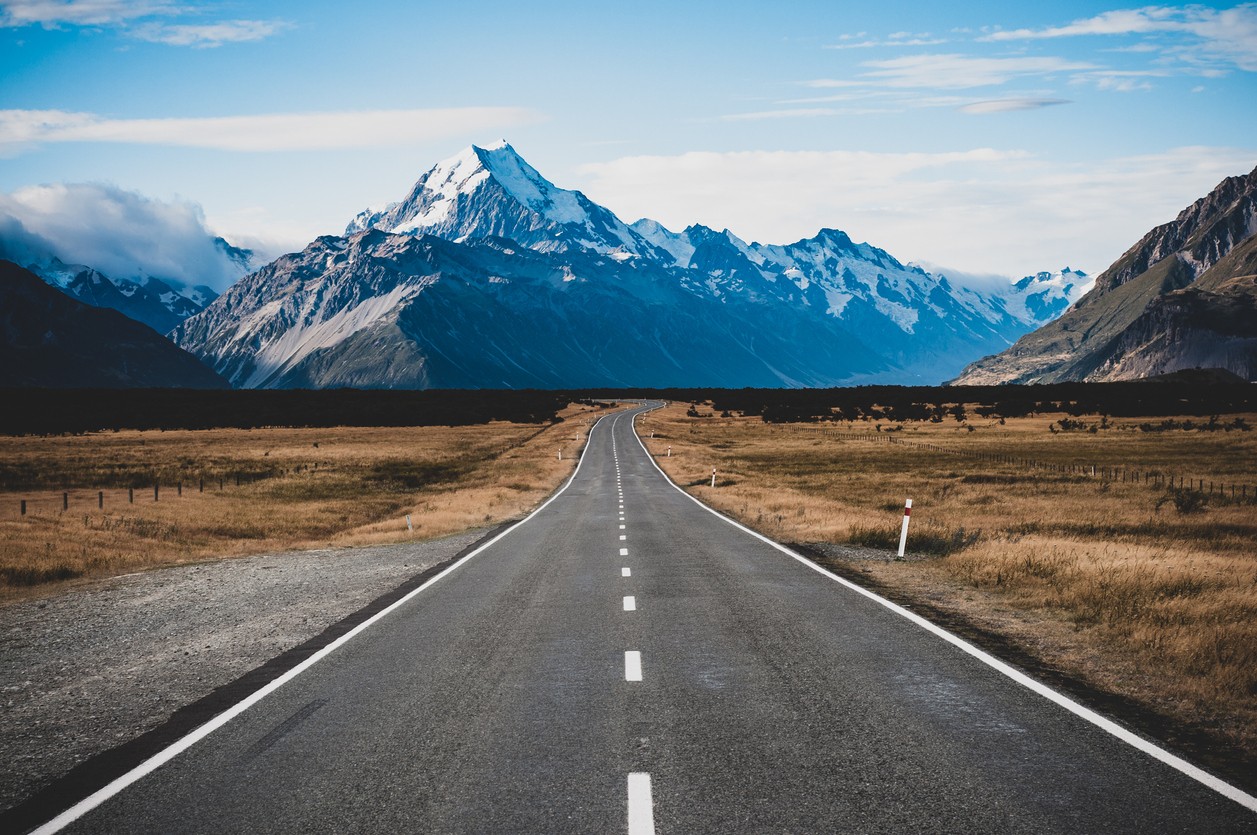
Just a few days’ travel separate steaming craters, tranquil bays and the peaks of the Southern Alps. This route connects New Zealand’s North and South Islands at a leisurely yet varied pace – taking in towns, walks and some of the country’s most beautiful scenic drives.
Route: Auckland – Rotorua – Tongariro National Park – Wellington – Abel Tasman National Park – Kaikōura – Christchurch – Lake Tekapo – Queenstown – Milford Sound
Getting there and back: There are no non-stop flights to New Zealand from Switzerland. The journey to Auckland usually takes around 24 to 30 hours, including stopovers, and often involves travelling via Asia or the Gulf region; connections via Australia or the west coast of the USA are also possible. The return flight from Queenstown usually goes via Auckland or Australia.
Recommended duration of stay: 20 days in New Zealand plus time for the journey there and back.
Getting around: The most flexible option is to travel by hire car. Campervans are available from companies such as JUCY or Britz. If you don’t have your own vehicle, InterCity and the hop-on-hop-off buses operated by Kiwi Experience offer possible alternatives, although the route may need to be adjusted in places.
Best time to visit: As New Zealand is in the Southern Hemisphere, the seasons are the opposite of those in Europe. November to early December (spring) and February and March (autumn) are particularly pleasant. From December to February (summer), the days are long, but this is also the peak season.
What to pack: Strong sun cream, insect repellent against sandflies, a windproof and waterproof jacket, layers of clothing and sturdy shoes.
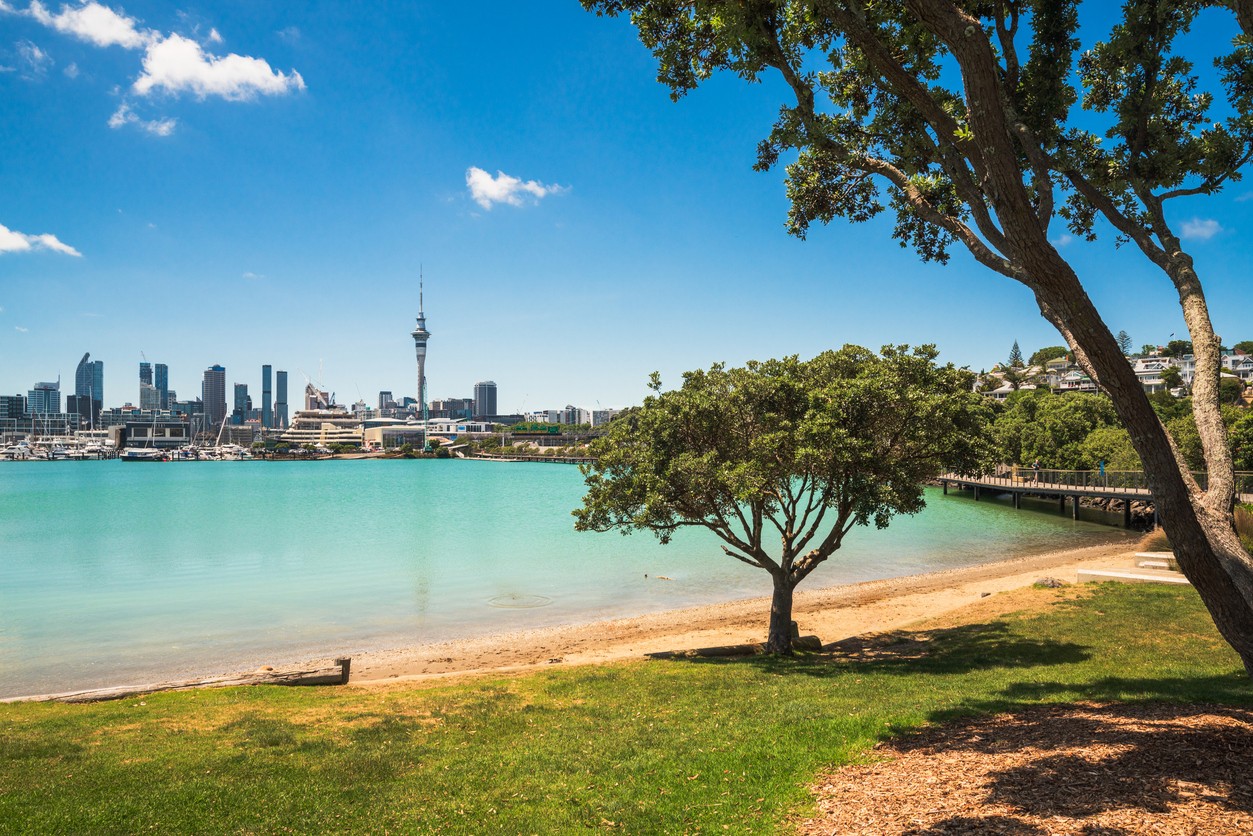
Photo: A view of the Auckland skyline – the first stop on the New Zealand road trip.
Your stopover: 2 nights in Auckland
Auckland is more than just a convenient base. New Zealand’s largest city lies between two harbours and is characterised by extinct volcanoes. After the long flight, it’s worth spending a quiet first day strolling along Viaduct Harbour and in the Wynyard Quarter. From Mount Eden – known as Maungawhau in Māori – the view stretches over the rooftops to the Hauraki Gulf.
On the second day, you can take the ferry to Waiheke Island. With its small bays, walking trails and vineyards, it’s already clear just how closely city and nature are intertwined in New Zealand. Those who prefer to stay in Auckland can visit the Auckland War Memorial Museum, where they’ll gain an initial insight into the history and culture of the Māori and the Pacific Islands.
Special tip: Take the ferry to Devonport in the late afternoon and walk up Takarunga/Mount Victoria. From the top, the view stretches across Waitematā Harbour to the Auckland skyline.
Hotel tip: The Hotel Britomart is situated in the heart of the harbour district of the same name. Natural materials, distinctive New Zealand design and its proximity to ferries, restaurants and the waterfront make it a particularly ideal base.
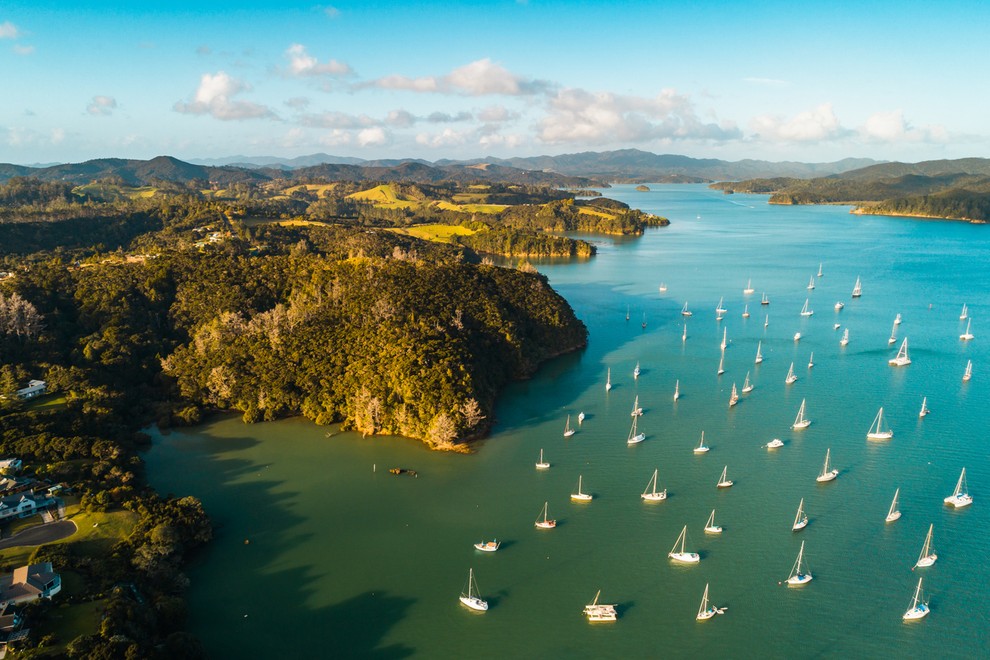
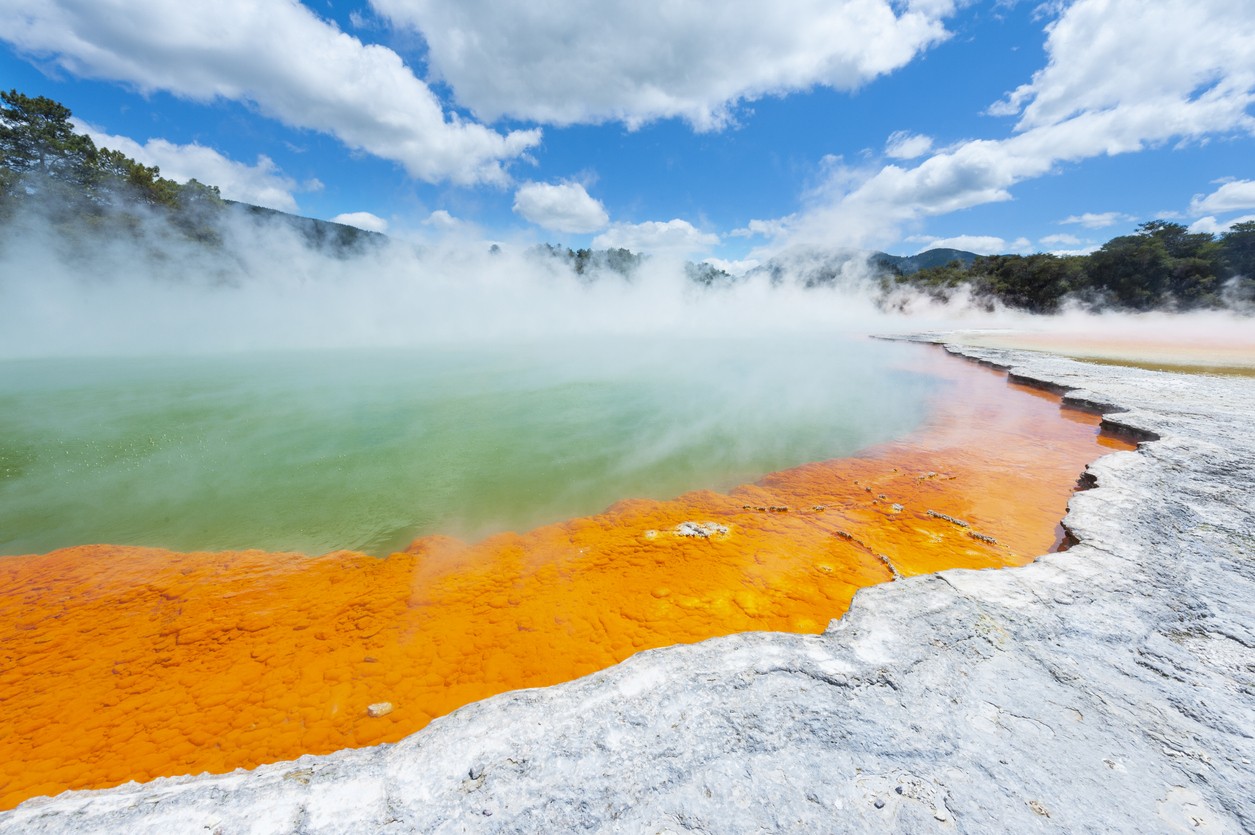
Photo: Rotorua, the second stop on the New Zealand tour, announces itself with steam and a distinctive smell of sulphur.
Your stopover: 2 nights in Rotorua
South of Auckland, the landscape soon becomes more rural. Film fans can plan a detour to the Hobbiton Movie Set near Matamata on their way to Rotorua. The green hills are only accessible as part of a guided tour; booking well in advance is advisable, particularly during peak season.
Rotorua announces its presence with steam and a distinctive sulphurous smell. The surrounding area is home to geysers, hot springs, colourful mineral pools and bubbling mud pots. Equally important is the region’s cultural significance: Rotorua is a centre of Māori culture. A respectful encounter with local traditions, stories and cuisine offers more than just a sightseeing tour of the geothermal landscape.
Plan to stay for two nights. This will give you time to explore not only the geothermal area but also the Redwood Forest or take a stroll around Lake Rotorua.
Special tip: The Redwoods Treewalk is particularly atmospheric in the evening, when light installations float amongst the tall redwoods.
Hotel tip: The Regent of Rotorua Boutique Hotel is centrally located between the lake and the Eat Streat restaurant district. This small hotel combines a peaceful pool area with modern rooms.
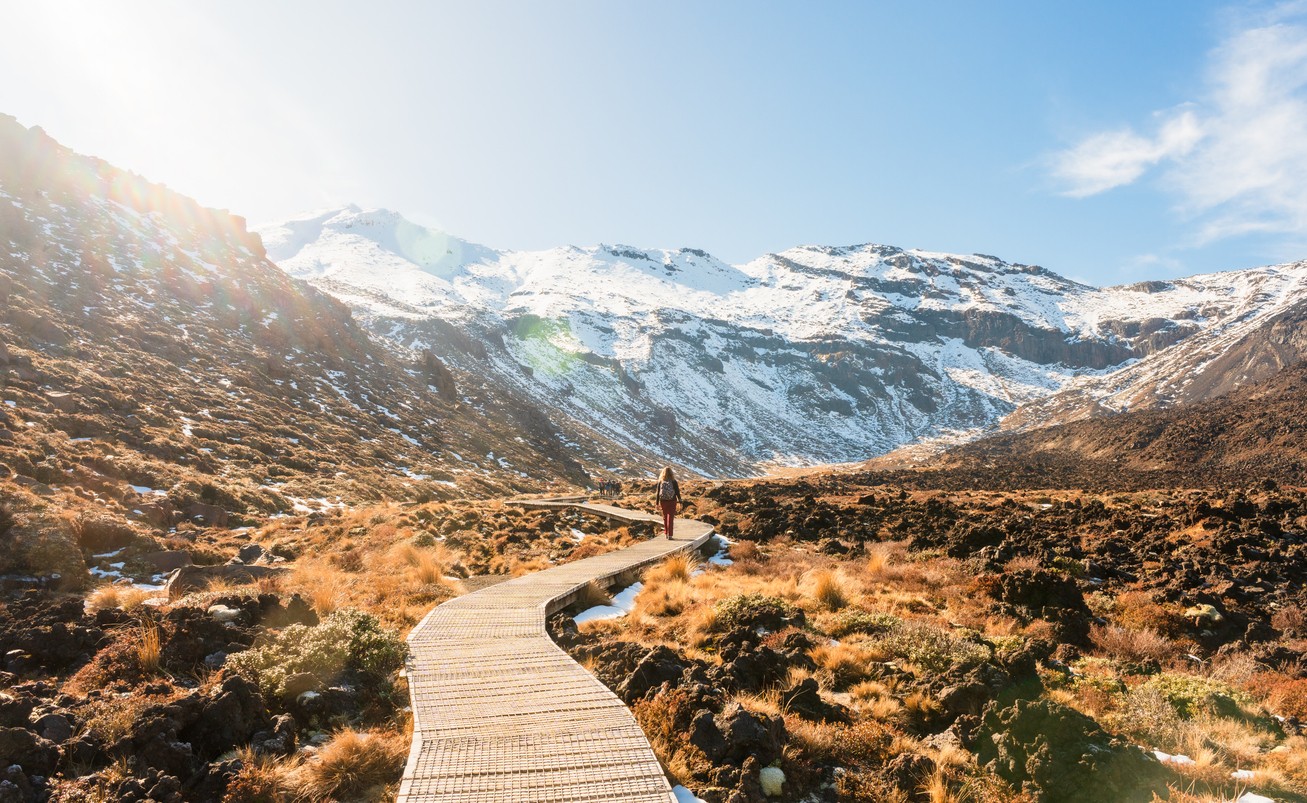
Photo: In stable weather conditions, the Tongariro Alpine Crossing makes for an impressive day trip for experienced walkers.
Your itinerary: 2 nights in the region
The journey takes you past Lake Taupō into the volcanic heart of the North Island. Even as you travel, the colours and vegetation change: green pastures give way to barren plateaus, lava fields and the silhouettes of Tongariro, Ngāuruhoe and Ruapehu.
In stable weather, the Tongariro Alpine Crossing makes for a spectacular day trip for experienced walkers. The challenging route takes you through open alpine terrain, past craters and glistening lakes. However, the weather and visibility can change rapidly. You should therefore check the conditions the evening before and book the necessary shuttle. Between May and October, alpine experience and suitable kit are required; for many travellers, a guided tour is the better choice during this period.
Less demanding alternatives include the Taranaki Falls Track or a shorter hike to the Tama Lakes. Staying two nights in Whakapapa Village, National Park Village or Ohakune gives you the flexibility you need to cope with the weather.
Special tip: The Silica Rapids Walk starts in Whakapapa Village and leads through surprisingly varied vegetation to bright, mineral-rich terraces. It’s a lovely alternative if the weather doesn’t allow for a long mountain hike.
Hotel tip: The Skotel Alpine Resort is situated right in Whakapapa Village. Several walking trails start practically on your doorstep, and some rooms offer views of the national park’s volcanic peaks. Those who prefer a more secluded stay will find a special retreat for two at Mangateitei Views – Rangataua Tiny Home near Ohakune: with views of Mount Ruapehu, a large terrace and an outdoor bathtub.
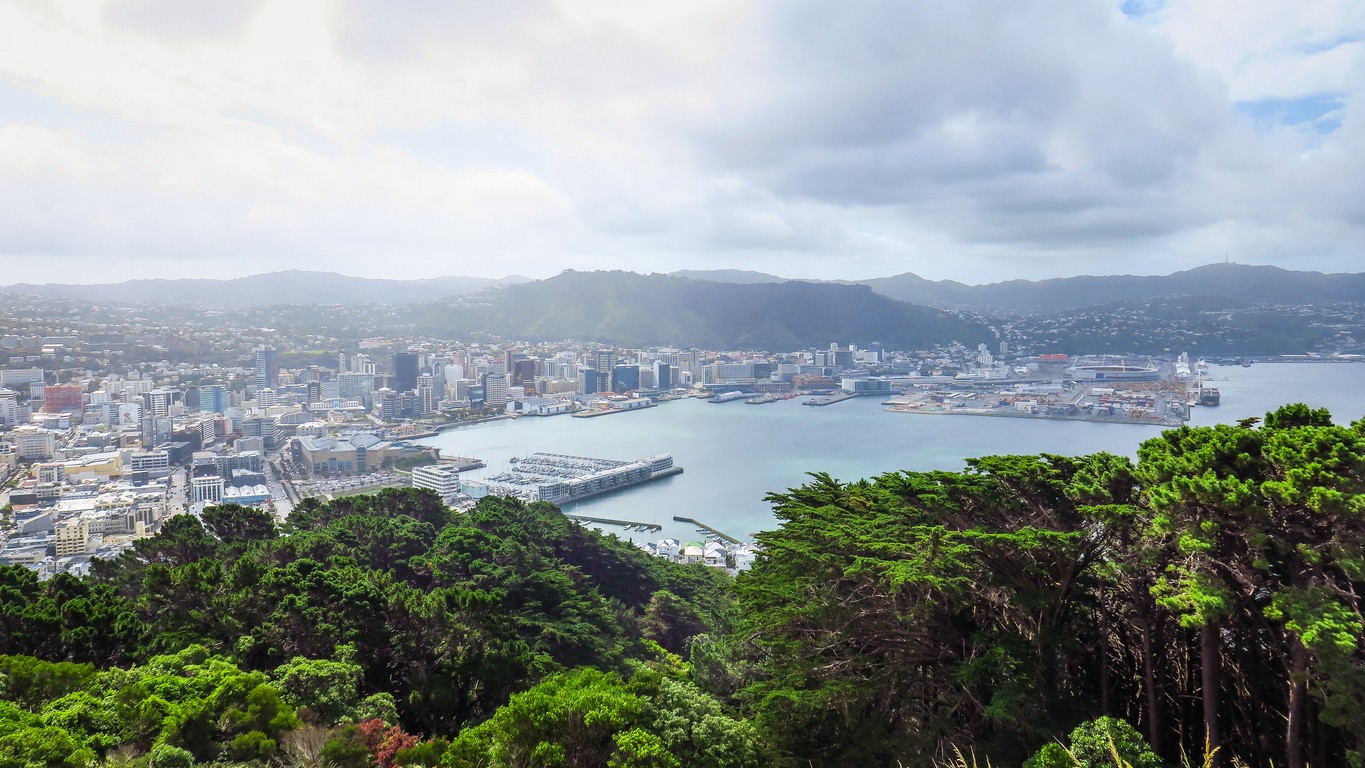
Photo: Wellington – New Zealand’s compact capital nestles between green hills and a sweeping bay.
Your stopover: 2 nights in Wellington
On the way to Wellington, the landscape becomes gentler once more. New Zealand’s compact capital nestles between green hills and a sweeping bay. Much of the city can be explored on foot: the waterfront promenade, the colourful houses on the hillside and the cafés around Cuba Street.
You should allow several hours for the Museum of New Zealand Te Papa Tongarewa. Its exhibitions combine natural history, the present day and the perspectives of the Māori. On a clear day, it’s also well worth taking the red Cable Car up to the Botanic Gardens. Spending a second day here ensures that Wellington isn’t merely a stopover before the ferry crossing.
Special tip: An early-evening guided tour through the Zealandia nature reserve shows Wellington from its quieter side. With a bit of luck, you might even spot some nocturnal native animals there.
Hotel tip: The QT Wellington is situated directly opposite Te Papa and just a few steps from the harbour. Works of art in the rooms and public areas give this centrally located hotel the feel of a live-in gallery.
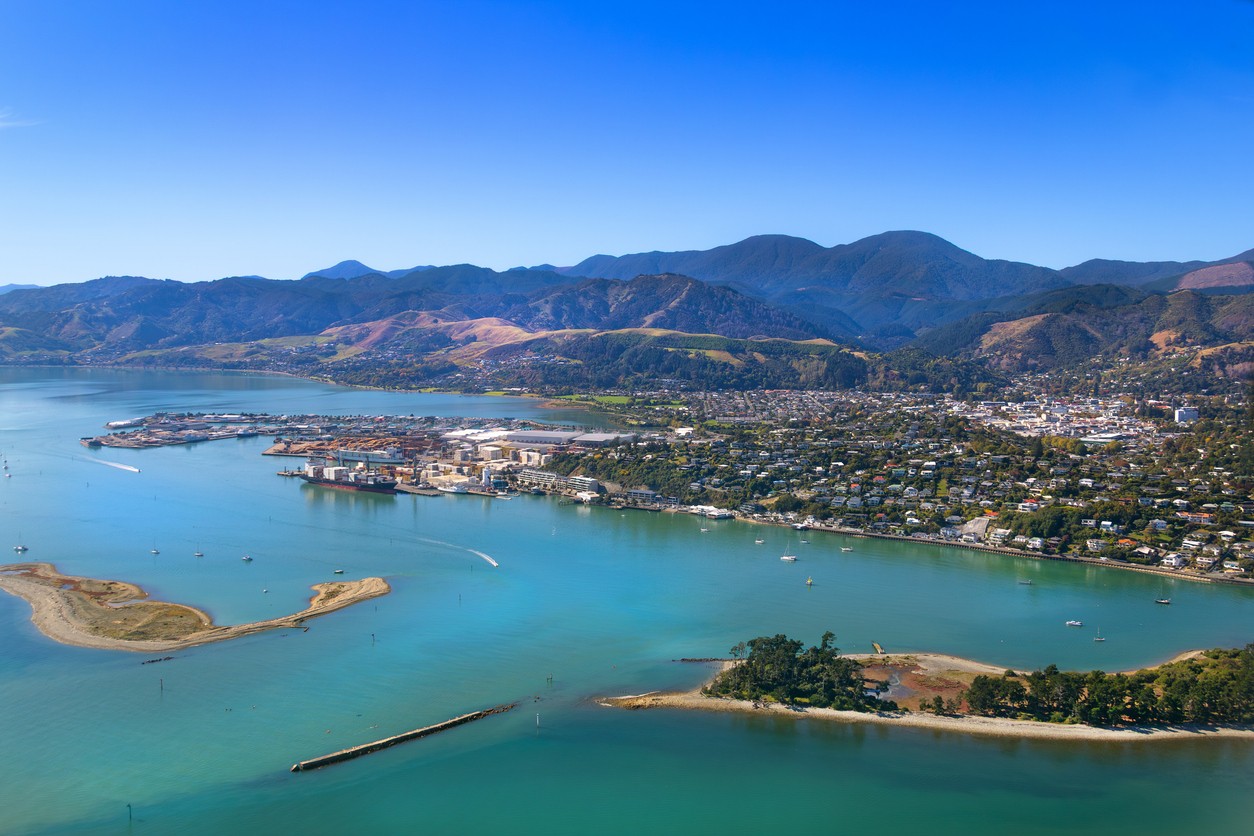
Photo: Nelson is situated between Tasman Bay and green hills and is a great place for a relaxing overnight stay.
Your leg of the journey: Ferry crossing to Picton and 1 night in Nelson
The crossing from Wellington to Picton is far more than just a link between two islands. After crossing the open Cook Strait, the ferry travels through the narrow Tory Channel and Queen Charlotte Sound/Tōtaranui. Wooded slopes, tranquil bays and small islands come ever closer to the ship as it approaches Picton harbour.
From Picton, the road takes about two hours to reach Nelson via Havelock and the Rai Valley. If possible, choose a morning ferry crossing so that the onward journey does not extend into the evening. If you are not taking your hire car onto the ferry, you can drop it off in Wellington and pick up a new vehicle in Picton.
Nelson lies between Tasman Bay and green hills and is ideal for a relaxing overnight stay. If you arrive in good time, there’ll be time for a stroll along the Maitai River and through the compact town centre. From the Botanical Reserve, a short, occasionally steep path leads to the viewpoint above the town known as the ‘Centre of New Zealand’.
Special tip: When entering the Marlborough Sounds, try to stay on the open deck if possible. Particularly in Tory Channel and Queen Charlotte Sound, the coastal scenery unfolds like a leisurely panoramic cruise from this vantage point.
Hotel tip: The Tides Hotel is situated right on the Maitai River and just a few minutes’ walk from Nelson town centre. The river-facing rooms and the waterside restaurant are particularly well suited to a quiet evening after the crossing.
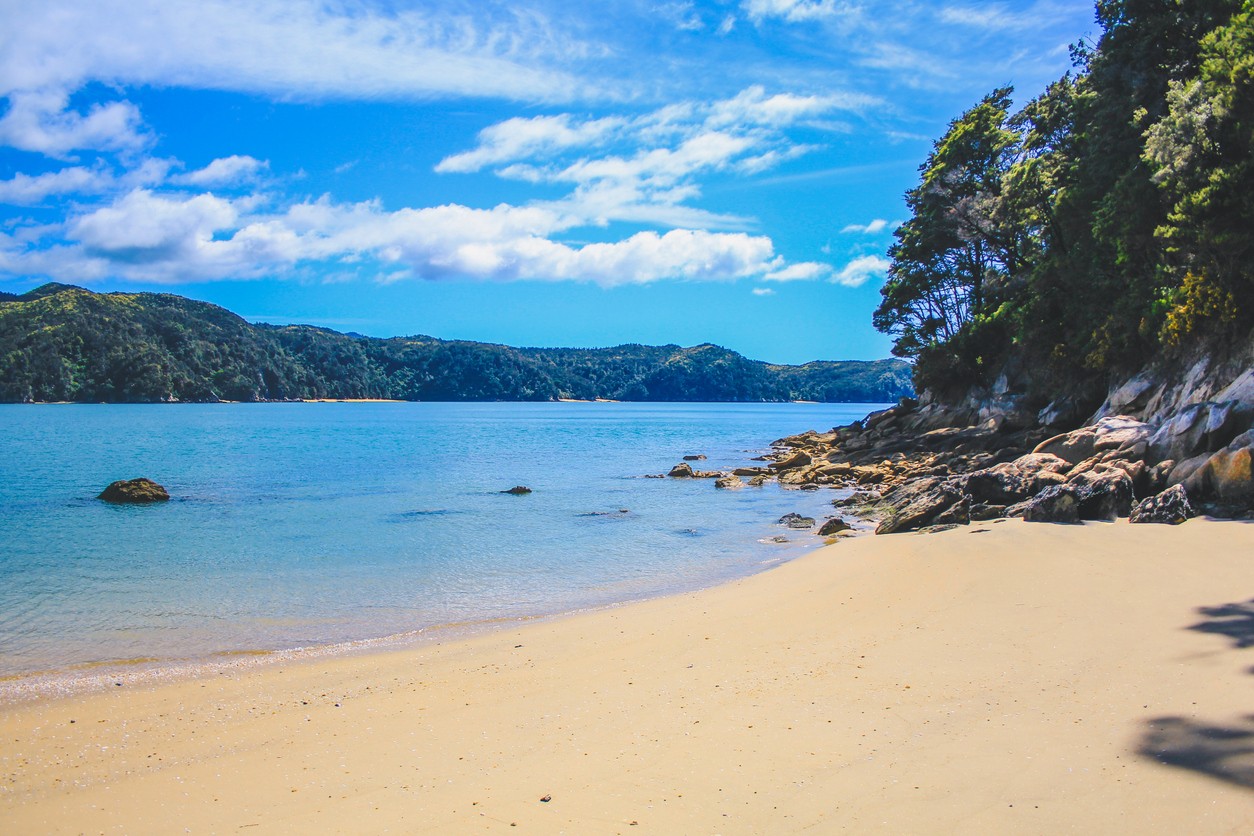
Photo: The country’s smallest national park has an almost tropical feel: golden beaches lie between granite cliffs and dense coastal woodland, whilst behind them the water glistens turquoise or deep blue, depending on the weather.
Your stopover: 2 nights near Motueka or Mārahau
The country’s smallest national park has an almost tropical feel: golden beaches lie between granite cliffs and dense coastal forest, with turquoise or deep-blue waters just beyond, depending on the weather. Motueka, Kaiteriteri and Mārahau are all suitable starting points.
For a day trip, a combination of a water taxi and a walk along the Abel Tasman Coast Track is a great option. Kayak tours offer a different perspective on the coast. As some stretches of beach and river mouths are affected by the tides, the route should be planned in advance. The second day is free for another hike, a quiet bay or a detour to the less-visited Golden Bay.
Special tip: If you’re hiking between Torrent Bay and Anchorage, you can plan a detour to Cleopatra’s Pool. This natural rock pool lies a little off the main path and is particularly peaceful in the early morning.
Hotel tip: The Kimi Ora Eco Resort is set in lush greenery above Kaiteriteri Beach. Many rooms overlook the bay; the pools and spa provide a relaxing way to wind down after a long coastal walk.
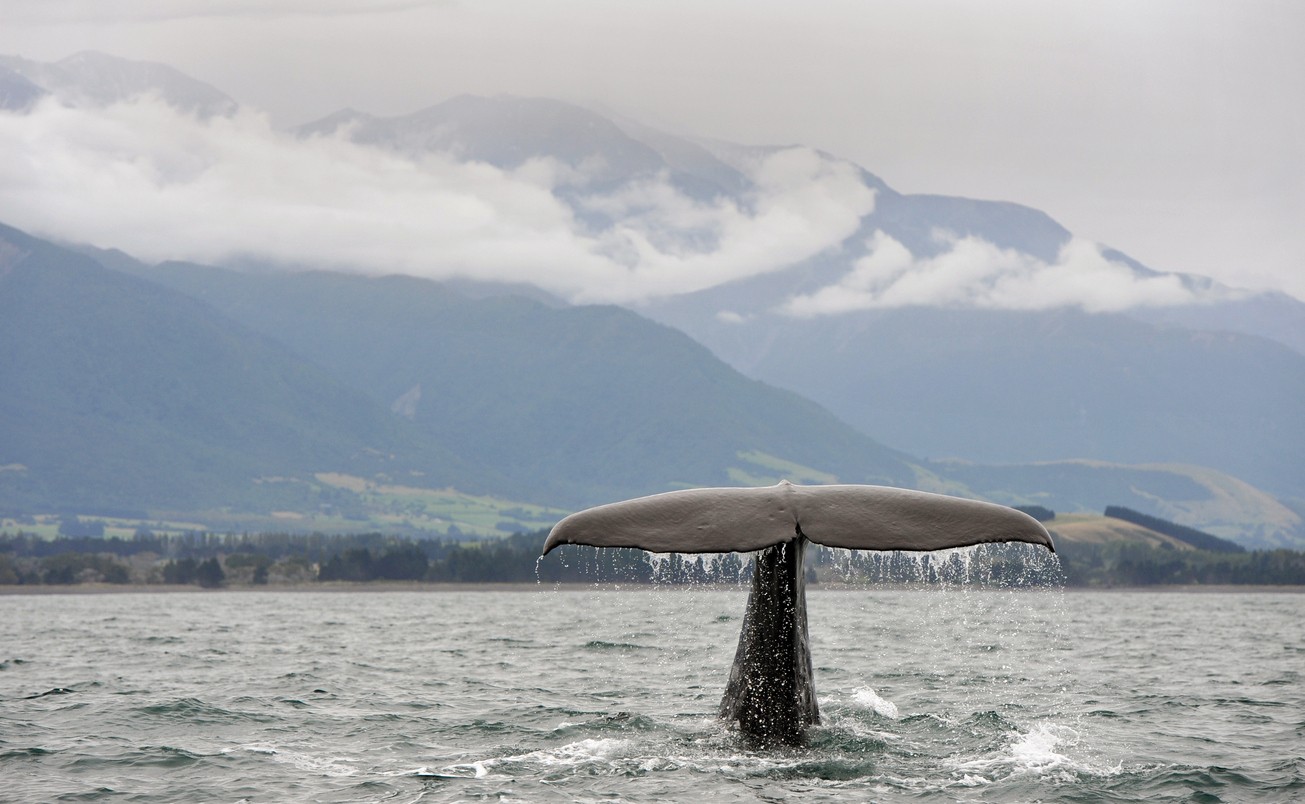
Photo: Boat trips for wildlife watching are weather-dependent and should not be scheduled too close to your onward journey.
Your stopover: 1 night in Kaikōura
The route to Kaikōura follows much of the east coast. At your destination, the peaks of the Seaward Kaikōura Range come unusually close to the Pacific Ocean. This unique setting makes the town one of the most impressive stops on the South Island.
On the Kaikōura Peninsula Walkway, short and longer trails lead over cliffs and through open coastal landscapes. Seals can often be spotted along the coast from a safe distance. Off the coast of Kaikōura, sperm whales and dusky dolphins can be spotted all year round. In June and July, humpback whales also pass by, whilst orcas are most commonly sighted during the New Zealand summer. Boat trips are weather-dependent and should not be scheduled too close to your onward journey.
Special tip: If you feel confident in the open sea, you can swim and snorkel with wild dusky dolphins off Kaikōura. The dolphins decide for themselves how close they come; touching them is not permitted. Those who prefer to stay on board can watch the dolphins from the boat on the same tour.
Hotel tip: The Sudima Kaikōura is situated right on the coast. The sea-facing rooms in particular combine views of the Pacific Ocean with the panoramic scenery of the Seaward Kaikōura Range.
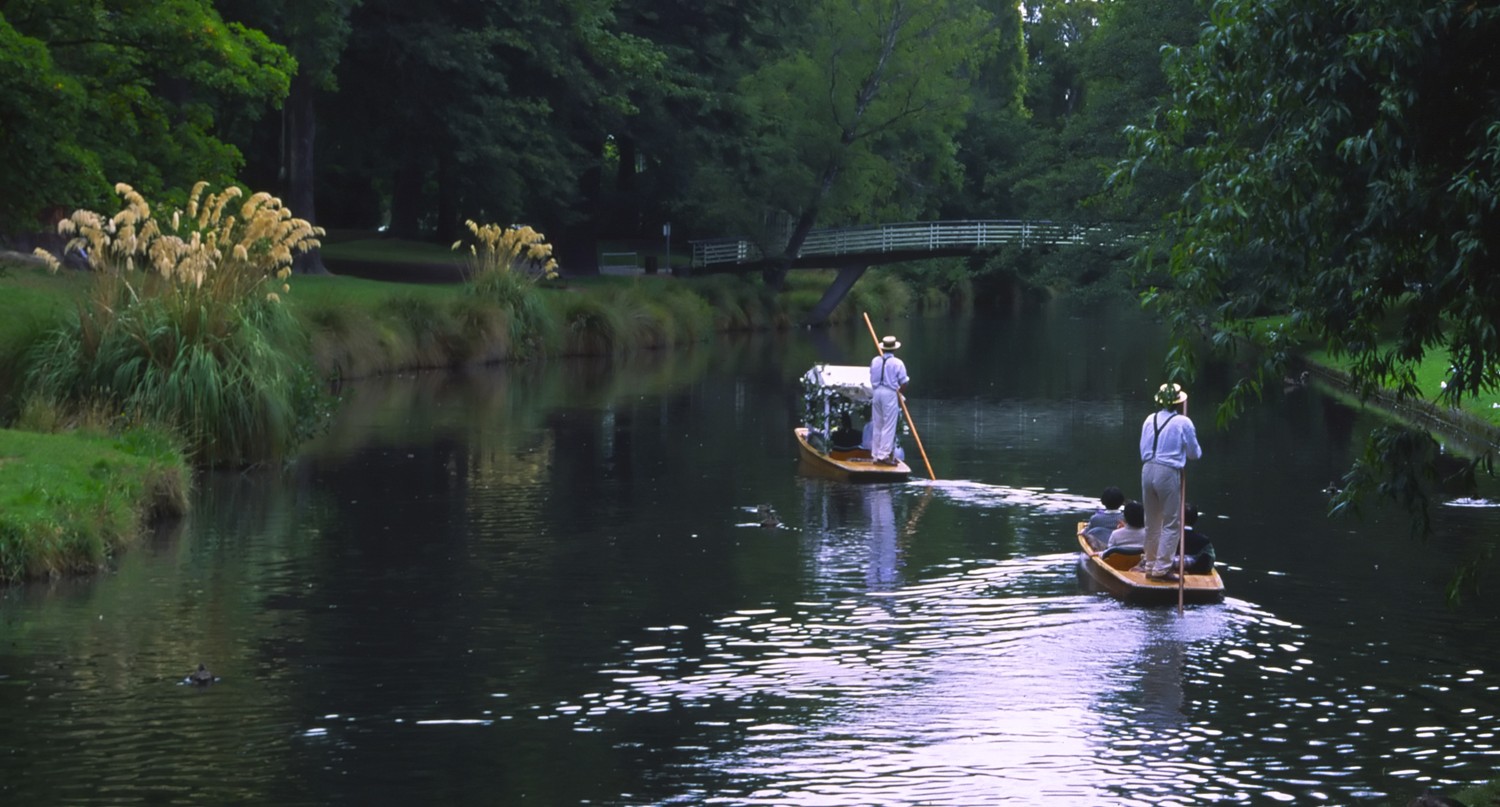
Photo: On a ‘Punting on the Avon’ trip, you glide through the Botanic Gardens in a flat-bottomed boat in the Edwardian style.
Your stopover: 1 night in Christchurch
Christchurch combines English-style gardens and historic façades with a young, experimental side. Since the severe earthquakes of 2010 and 2011, many parts of the city have been reimagined. Temporary architecture, street art and modern buildings stand alongside preserved buildings.
A stroll along the Avon River takes you through the Botanical Gardens and into the city centre. Around the Riverside Market Hall, you’ll find plenty of options for a casual lunch break. If your visit falls on a Sunday, the Riccarton Sunday Market is also well worth a visit – a lively mix of flea market, arts and crafts, and food stalls.
Special tip: With ‘Punting on the Avon’, you glide through the Botanic Gardens in a flat-bottomed, Edwardian-style boat. A punter propels the boat across the tranquil Avon River using a long pole – offering a particularly relaxing perspective on Christchurch’s green side.
Hotel tip: The Observatory Hotel is situated in the historic buildings of the Arts Centre. Its individually designed rooms and location between the Botanic Gardens and the city centre make it particularly well-suited to a short stay.
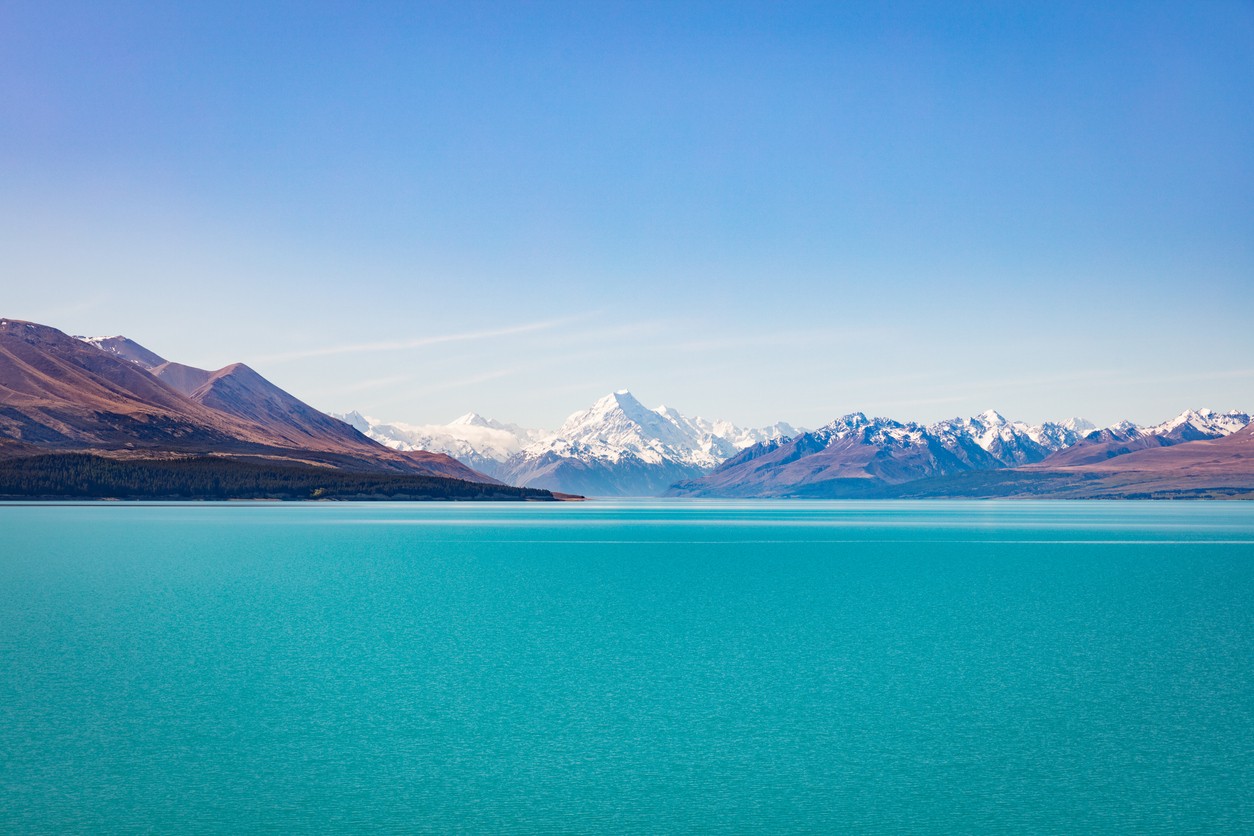
Photo: At Lake Tekapo, turquoise glacial waters, dry grasslands and snow-capped mountains come together.
Your itinerary: 1 night at Lake Tekapo and 2 nights in Wānaka
Beyond Christchurch, the vast Mackenzie Basin opens up. At Lake Tekapo, turquoise glacial waters, arid grasslands and snow-capped mountains come together. The Mount John Summit Track leads to a viewpoint offering a 360-degree panorama of the lake, the Mackenzie Basin and the surrounding mountains. The small Church of the Good Shepherd is a well-known photo spot, but its special atmosphere really comes into its own in the evening. The region forms part of an internationally recognised Dark Sky Reserve and, on clear nights, offers excellent conditions for stargazing.
The following morning, the journey continues along Lake Pukaki towards Aoraki/Mount Cook. Short walks and longer hikes lead into the alpine landscape; which routes are accessible depends on the weather and the condition of the trails. Take time for stop-offs rather than treating the journey merely as a link to Wānaka.
Wānaka offers a quieter setting on the shores of the lake of the same name and is ideal for a two-night stay. Walks along the shore, the Mount Iron Track or a longer hike in the surrounding area offer plenty of ways to spend your free day. Even without a summit hike, the combination of lake, mountains and wide open skies is impressive.
Special tip: The short walk to the Tasman Glacier Viewpoint is often overshadowed by longer hikes. It’s usually quieter here in the early morning, and on a clear day the alpine landscape is particularly striking.
Hotel tip: The Galaxy Boutique Hotel Tekapo is just a few minutes’ walk from the lake. The rooms overlook Lake Tekapo and the surrounding mountains; some also feature a skylight for stargazing. In Wānaka, the Edgewater is situated right on the lake. Rooms, suites and apartments are spread across extensive gardens, from which a lakeside footpath leads into the town centre.
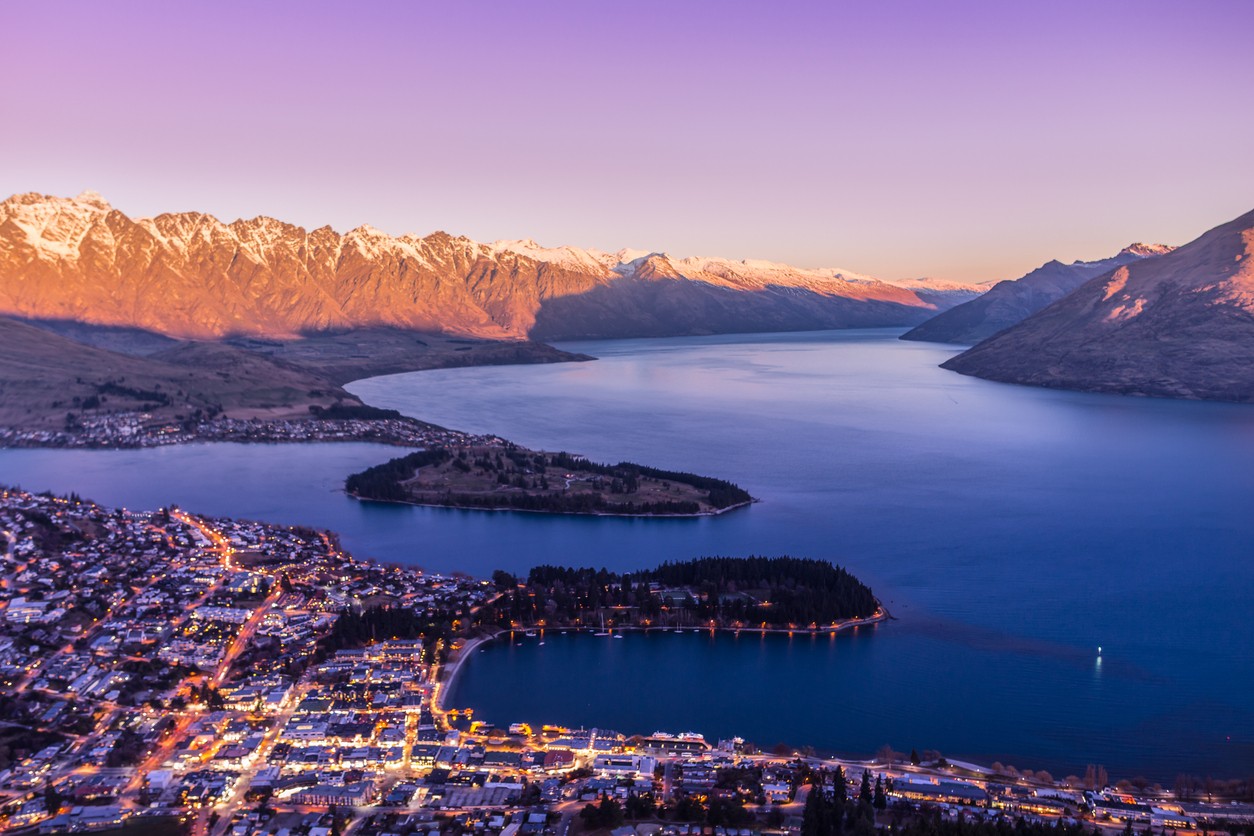
Photo: Queenstown is known as a hub for outdoor and adventure activities, but it’s just as lovely when you take things at a more leisurely pace.
Your stopover: 2 nights in Queenstown
The road over the Crown Range leads to Queenstown on Lake Wakatipu. The town is regarded as New Zealand’s adventure capital: the Kawarau Bridge is the birthplace of commercial bungee jumping, whilst the Nevis Bungy, with its 134-metre jump, demands even more courage. Tandem skydiving offers sweeping views over the lake and the Southern Alps; white-water rafting tours take you through the gorges of the Shotover or down the Kawarau River.
A slightly less nerve-wracking option is a ride on the Skyline Gondola up to Bob’s Peak, where the winding Skyline Luge begins. A boat trip on the lake, Queenstown Gardens or Queenstown Hill showcase the quieter side of the town. An extra day allows time for a visit to Arrowtown or the Gibbston Valley wine region. Allow plenty of time between weather-dependent activities and your onward journey to Te Anau.
Special tip: The small Moke Lake is just a short drive outside Queenstown, but feels much more secluded. Early in the morning, the surrounding mountains are often reflected particularly clearly in the water.
Hotel tips: For a central stay, try the cosy The Dairy Hotel, which combines a former neighbourhood shop from the 1920s with modern boutique design. Situated right by the lake, The Rees Hotel offers peaceful rooms and apartments with views of Lake Wakatipu and the Remarkables.
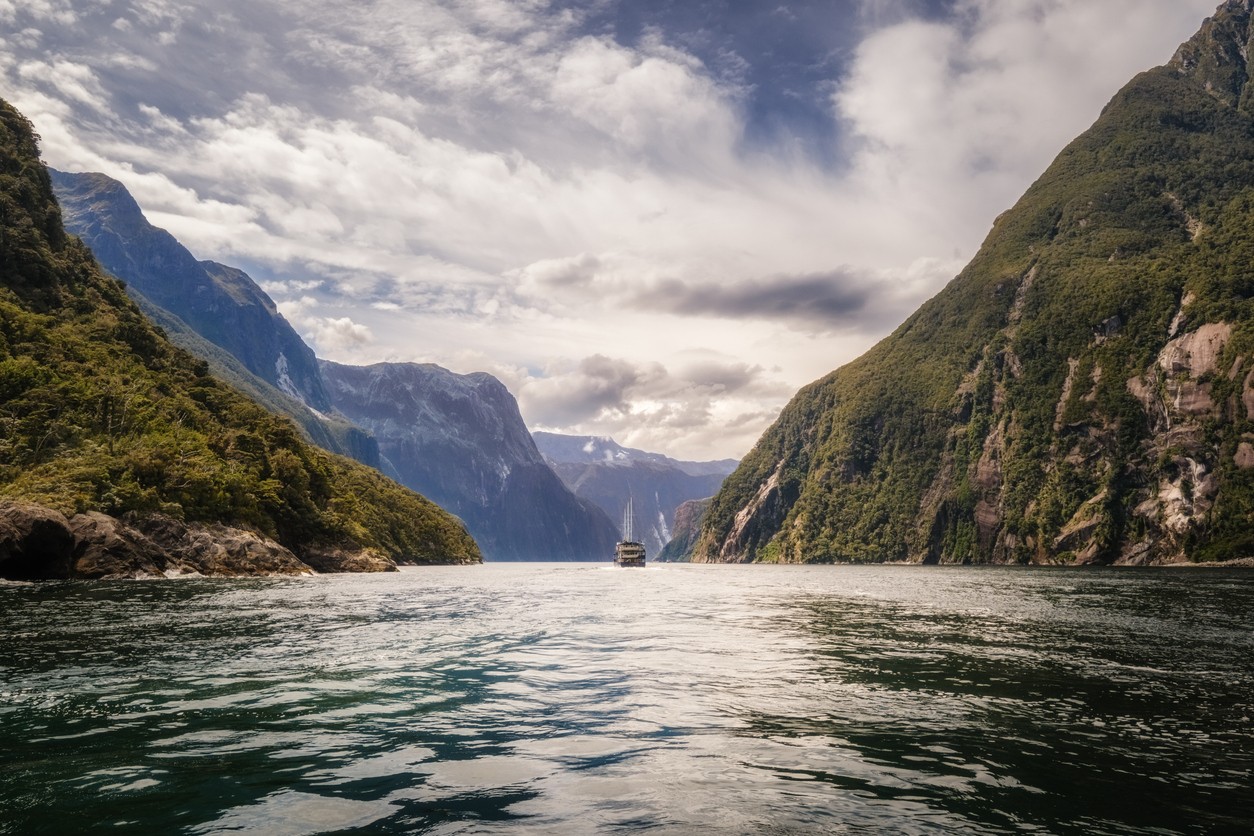
Photo: At Milford Sound, sightseeing boats glide between almost vertical mountain slopes.
Your itinerary: 1 night in Te Anau, followed by a final night in Queenstown
Te Anau is the ideal base for exploring Fiordland and is far more than just a place to stay overnight before heading to Milford Sound. Spend the afternoon by the lake or go for a short walk along the Kepler Track. The next morning, the journey along Milford Road begins. Lakes, beech forests, waterfalls and steep rock faces make the journey itself an experience.
At Milford Sound, tour boats glide between almost vertical mountain slopes. Rain is no cause for disappointment here: it creates countless waterfalls on the dark rock faces, which disappear again in dry weather. You should allow plenty of time for the return journey to Queenstown. If you’d prefer a more leisurely day, stay another night in Te Anau and carry on your journey the following morning.
The final night’s accommodation is back in Queenstown. From there, the journey home begins the next day – via Auckland or Australia to Switzerland, depending on your flight connections.
Special tip: If possible, choose an early or late boat trip on Milford Sound. There will be fewer day-trippers about then, and the vast expanse of water looks even more impressive.
Hotel tip: The Tukare Cabins are situated in a quiet spot on Milford Road just outside Te Anau and offer views across the lake to the mountains of Fiordland. With a private outdoor bath or panoramic sauna, the two cabins offer a secluded retreat. Those who prefer a more central location closer to restaurants will find modern apartments right by the lake at Radfords on the Lake.
Conclusion: A three-week tour of New Zealand cannot cover every region – nor does it need to. This route links the volcanic heart of the North Island with the coasts, lakes and peaks of the South. The key is the pace: two nights in selected locations, realistic driving days and enough flexibility to cope with changes in the weather. This transforms a long list of famous landscapes into a journey that will remain in your memory even between the highlights.

© Swiss Bankers 2026


 Compare cards and conditions

