


Important information:
Am 10. April 2024 wurden das Kundenportal sowie der Web-Zugriff auf das Kartenkonto eingestellt. Bitte laden Sie die Swiss Bankers App herunter, um weiterhin uneingeschränkten Zugriff auf alle Dienste zu haben.
Are you a Swiss Bankers sales partner?
Hier geht es zum Partnerportal.
Lecce, the Baroque gem of southern Italy, captivates visitors with its ornate façades, lively squares and southern Italian charm. Visitors here discover more than just history: quiet alleyways, tempting cuisine and a relaxed way of life. Every corner feels like a lovingly designed attraction – a place that touches both the heart and the senses, with magic, pleasure and southern Italian flair.
 26.08.2025
 Eliza
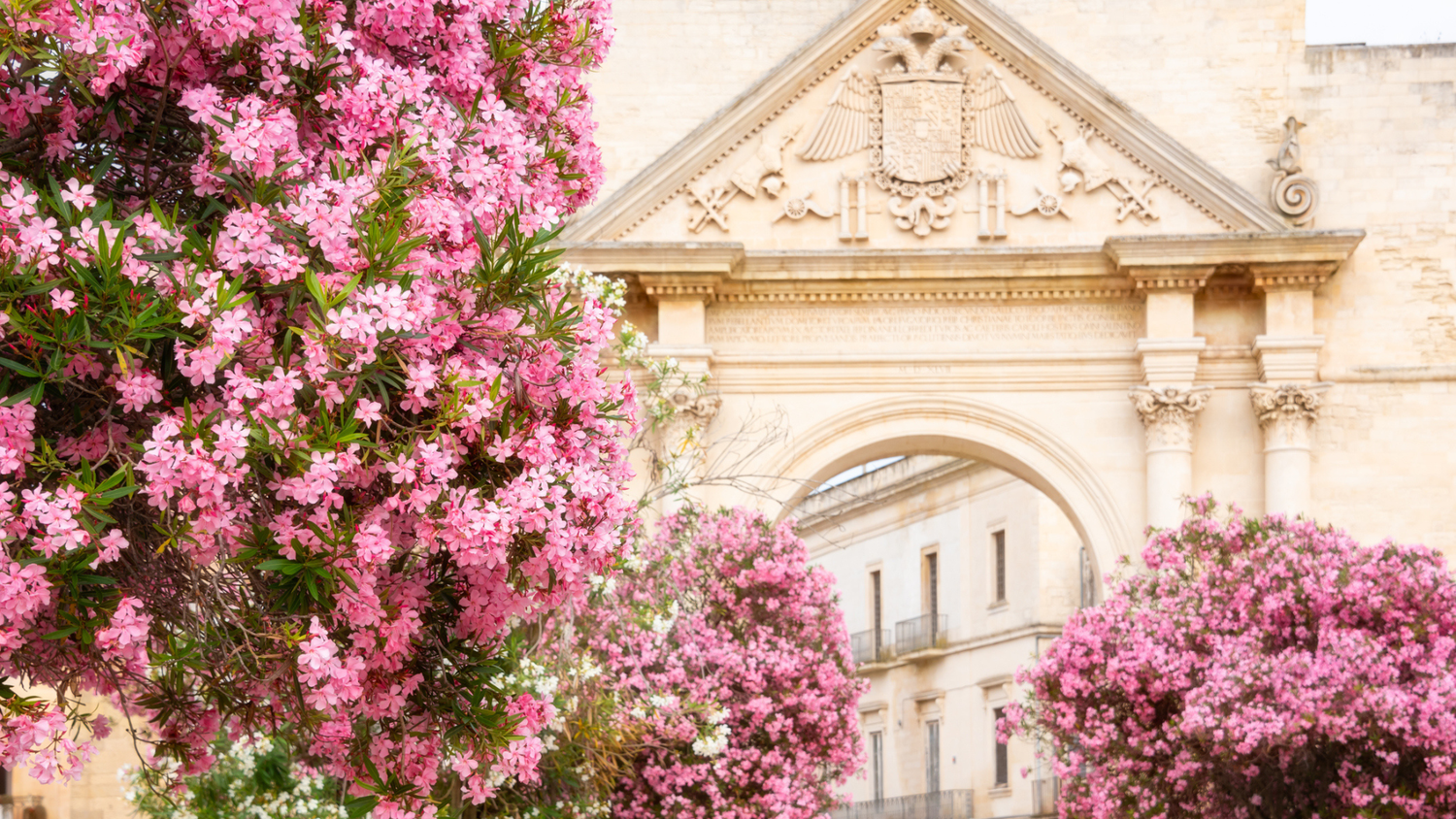
Photo: Lecce’s location ensures a particularly mild climate with plenty of sunny days throughout the year. From spring to late autumn, visitors are drawn by pleasant temperatures, balmy evenings and long days.
Lecce lies in the very south of Italy, in the heart of Salento – the peninsula that juts out into the Mediterranean like the heel of the Italian boot. This means the city is surrounded by two coastlines: the Adriatic to the east and the Ionian Sea to the west. This location ensures a particularly mild climate with plenty of sunny days throughout the year. From spring to late autumn, pleasant temperatures, balmy evenings and long days beckon – perfect for strolling through the city and taking a trip to the seaside. In the height of summer, it gets hot, which is ideal for beach holidays on the shores near Otranto or Gallipoli, but can sometimes feel a bit overwhelming in the town itself. If you’d like to take a leisurely stroll through the old town, it’s best to visit in April, May or ‘golden October’. Winter is mild and peaceful, and much less crowded with tourists: no crowds, but a touch of melancholy, empty squares and time to experience Lecce in its most authentic form.
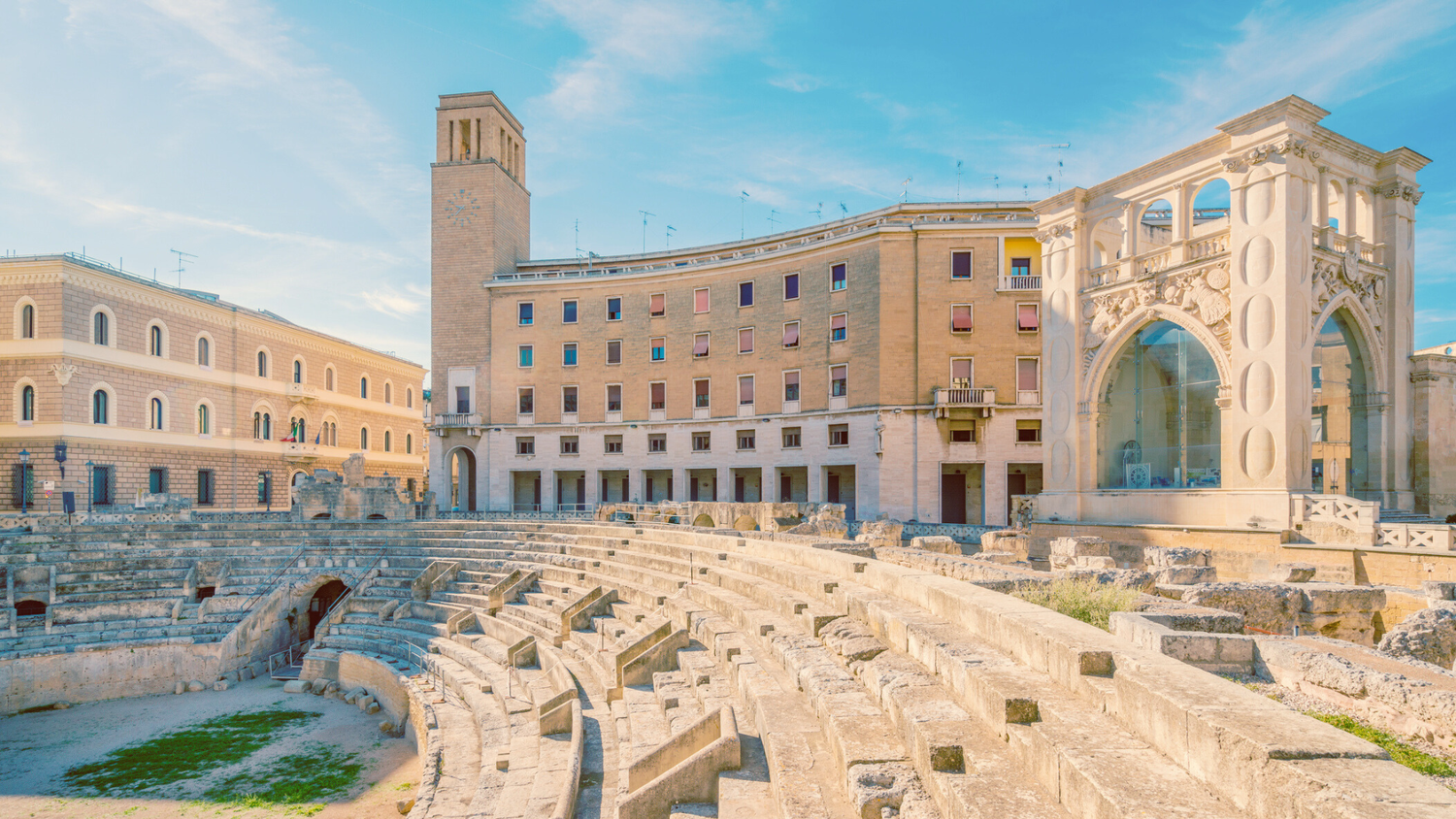
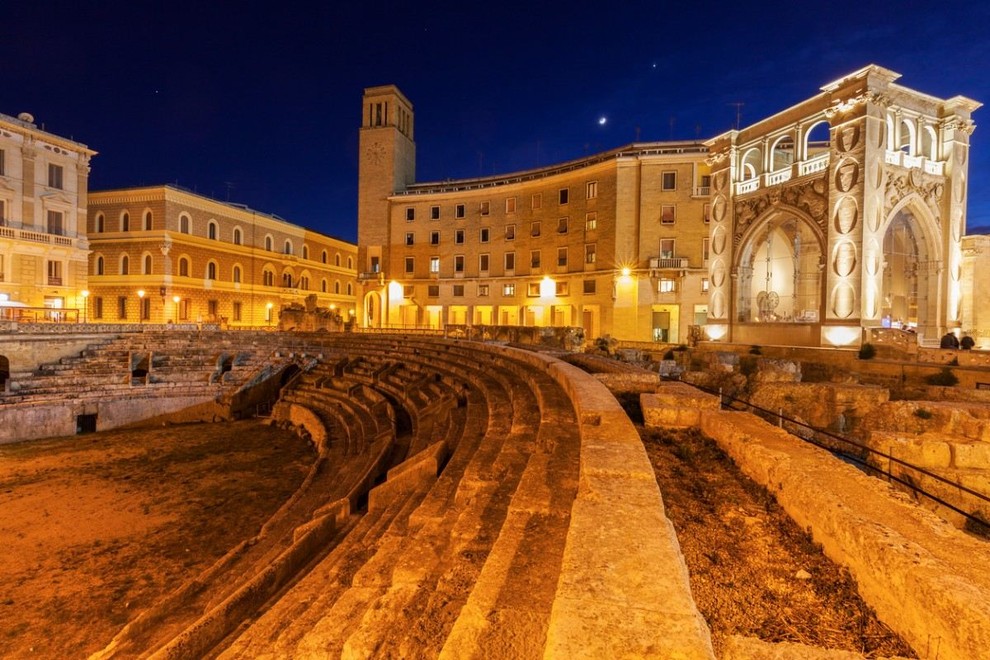
Photo: The Roman amphitheatre in Piazza Sant’Oronzo in Lecce – an impressive sight, surrounded by historic buildings in the bustling heart of the old town.
At first glance, Lecce looks like one big open-air museum – but a closer look reveals just how diverse its neighbourhoods are. The old town is a labyrinth of narrow alleyways, Baroque churches and small boutiques, where you’ll be happy to lose yourself. Each of these corners is a sight in its own right, emphasising the city’s unique character. The neighbourhood around Piazza Sant’Oronzo is particularly lively, where the Roman amphitheatre stands tall and street cafés perfectly capture the southern Italian way of life. Towards Porta Rudiae, Lecce feels more authentic: here you’ll come across artisans, traditional shops and trattorias where the locals have their lunch. If you want to get to know the creative, youthful side of Lecce, head to the southern part of the old town – here you’ll find concept stores, small galleries and colourful street art, which provide an exciting contrast to the Baroque splendour. Away from the main streets, it’s well worth taking a stroll through the quieter side streets, where hidden courtyards, lushly blooming oleanders and, occasionally, a curious glimpse into a private living room await. This is how Lecce reveals its many faces – from lively and bustling to hidden and almost mysterious.
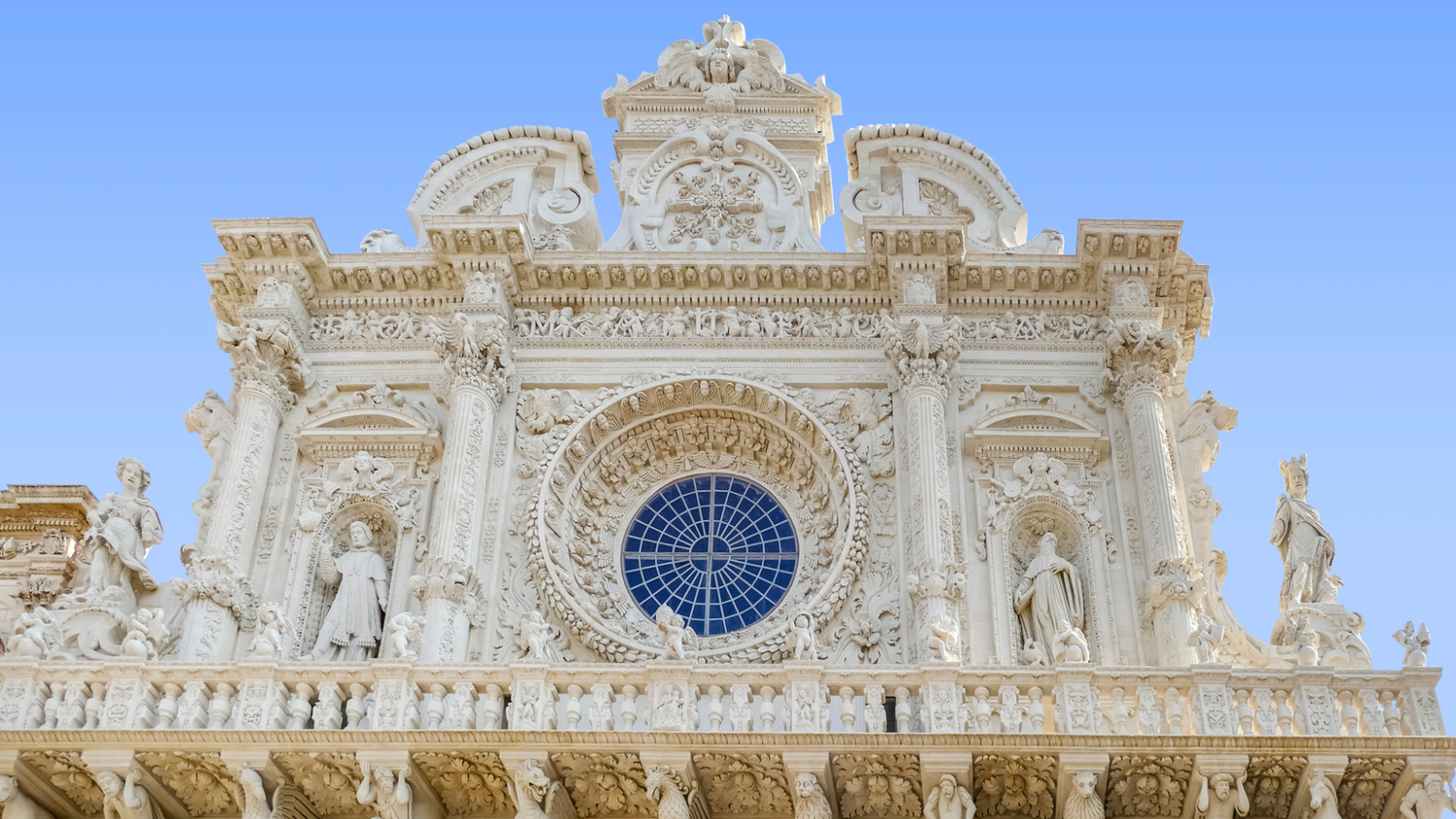
Photo: The magnificently decorated façade of the Basilica of Santa Croce in Lecce, featuring intricate Baroque ornamentation and rose windows.
It is not without reason that Lecce is known as the ‘Florence of the South’. The region’s light-coloured limestone, skilfully crafted, bathes the city in a golden glow. As you stroll through the old town, you’ll come across impressive buildings at every turn. Here are the highlights you shouldn’t miss:
Basilica of Santa Croce: A Baroque masterpiece with an intricately detailed façade adorned with angels, animals and floral motifs.
Piazza del Duomo: One of Italy’s most beautiful squares, surrounded by the cathedral, the Bishop’s Palace and a striking bell tower.
Roman Amphitheatre: Situated right in the heart of the city, it serves as a reminder of Lecce’s ancient past and former glory days.
Roman Theatre: Small but charming; it too bears witness to the city’s long history.
Museo Faggiano: A private museum offering surprisingly fascinating insights into archaeological layers dating from the Roman Empire to the Middle Ages.
Whether magnificent churches, squares steeped in history or ancient ruins – the sights in Lecce tell the story of centuries filled with art, power and Mediterranean joie de vivre.
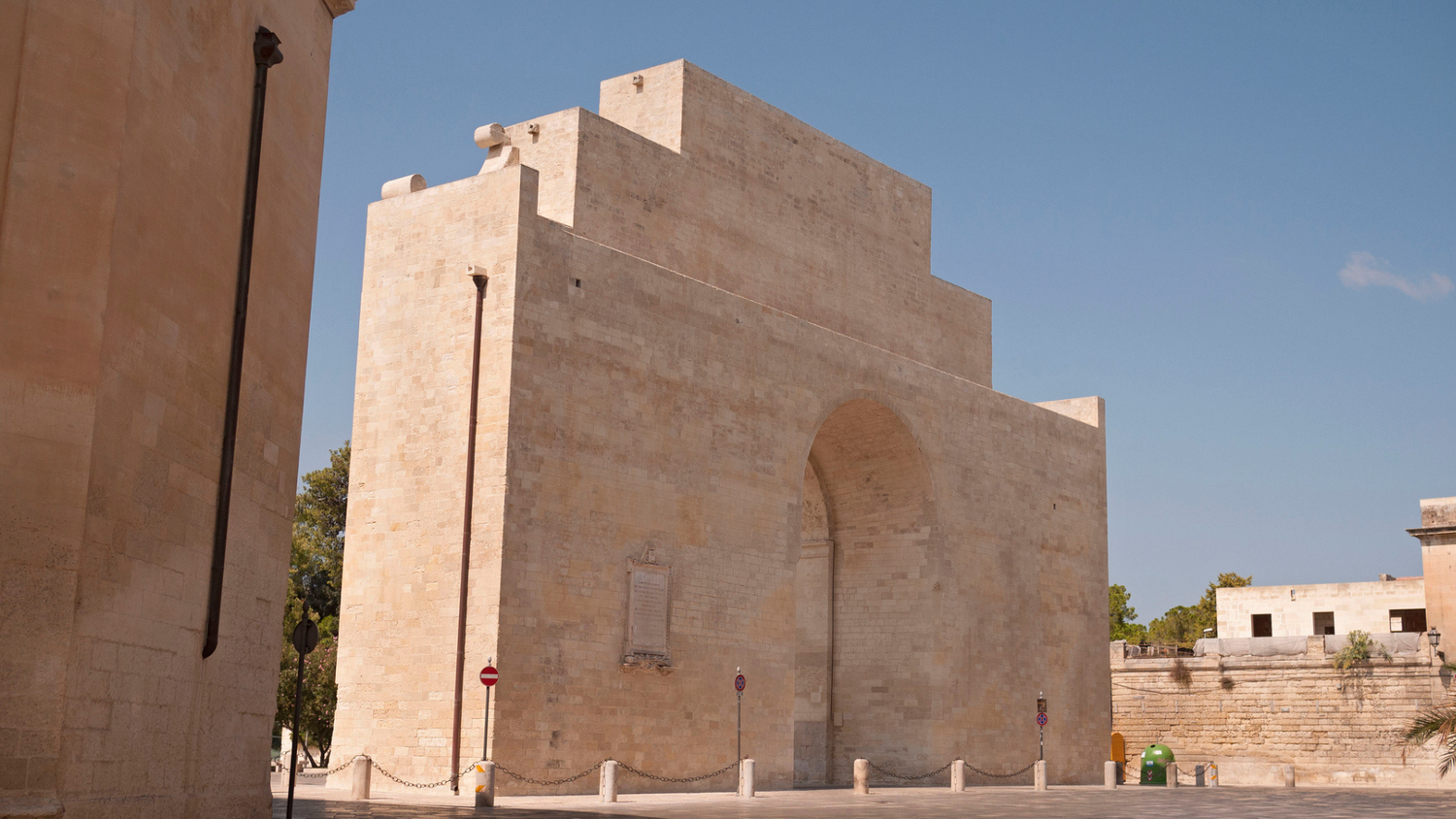
Photo: The imposing Porta Napoli city gate in Lecce – a historic landmark surrounded by quiet alleyways and a real hidden gem.
Away from the main squares, Lecce reveals its true character. Stroll through the unassuming neighbourhood around Via Palmieri: here you’ll find small workshops where artisans still craft delicate figures from papier-mâché – an ancient craft that has made Lecce famous. Another hidden gem is the secluded Giardini Pubblici Giuseppe Garibaldi, where you can take a break from the hustle and bustle in the shade of ancient trees. For sunsets, we recommend a short walk up to the city walls near Porta Napoli: there, the sky turns vibrant shades of orange and red. There are also hidden gems in the surrounding area: picturesque villages such as Specchia, Sternatia and Acaya enchant visitors with their quiet alleyways, ancient fortresses and an authenticity that is far less well-known than that of Gallipoli or Otranto. A trip there reveals the Salento at its most authentic.
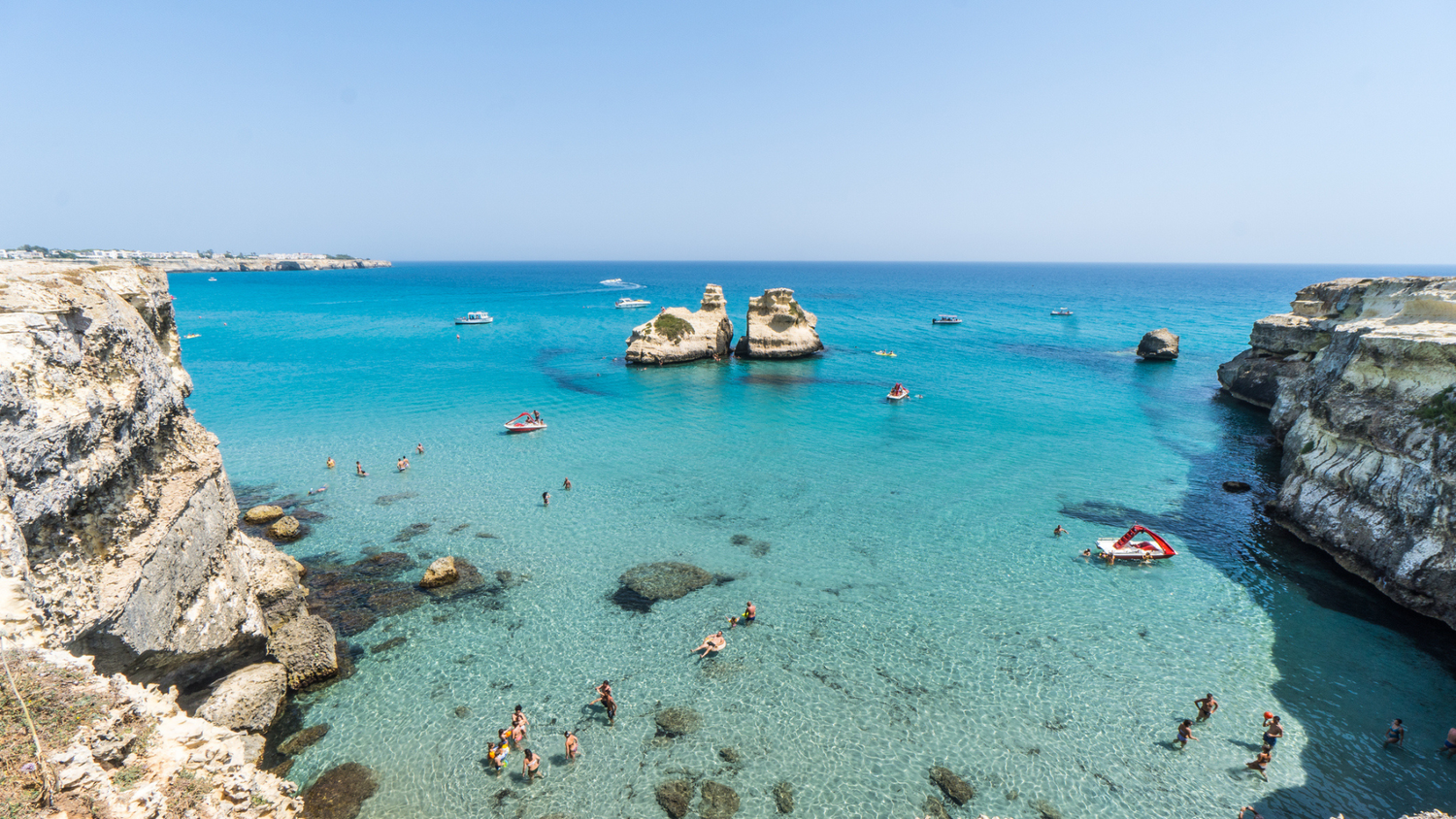
Photo: Crystal-clear water and sunbathers on the beach at Torre dell’Orso near Lecce – ideal for trips to the seaside in Salento.
Lecce isn’t just great for a stroll – the surrounding area also has plenty to offer. If you fancy a trip to the seaside, you’ll find fine sandy beaches near the town, such as at Torre dell’Orso, as well as the impressive Grotta della Poesia, a natural seawater pool. On the Ionian coast near Porto Cesareo, long beaches and crystal-clear water beckon – typical of the Apulian coastline. But the Salento is more than just beaches: a trip to Otranto takes you to a charming harbour town with a Byzantine cathedral and an impressive mosaic floor. Nature lovers shouldn’t miss the Porto Selvaggio Regional Nature Park – a paradise for walkers, swimmers and those seeking peace and quiet. A cycle ride through olive groves and small villages, where time seems almost to have stood still, is also a fascinating experience. Those who prefer a more indulgent experience can spend an afternoon at a vineyard: many winegrowers invite visitors to tastings of Primitivo or Negroamaro, often paired with local snacks. This makes Lecce a wonderful destination that combines culture, nature and cuisine – whatever your mood or travel plans.

Photo: A typical pasticciotto from Lecce, filled with creamy vanilla and served with coffee – a sweet speciality from Apulia.
Lecce’s cuisine is a feast for food lovers. Start the day with a pasticciotto, a small shortcrust pastry filled with vanilla cream – best enjoyed warm and fresh from the bakery. One of the most popular places to try it is the long-established Caffè Alvino in Piazza Sant’Oronzo, where sweet pastries and strong coffee are the perfect way to start the day. It also goes well with the typical caffè in ghiaccio with almond milk – a summery refreshment that’s almost part of the Lecce way of life. At lunchtime, the traditional puccia is a real treat: a stuffed flatbread served with vegetables, cheese or meat, depending on your preference. Orecchiette pasta is also a must – traditionally served with tomatoes, rocket and ricotta forte, a true Salento classic. Particularly charming are the small osterie where the grandmother still stands in the kitchen and the food smells just like home – places where Lecce reveals its culinary heart. Highly recommended are, for example, Trattoria Le Zie, where, in a living-room-like atmosphere, typical Salento dishes such as ‘fave e cicorie’ – puréed broad beans with steamed chicory – or La Cucina di Mamma Elvira, with regional classics and a fine selection of wines. Those in the mood for contemporary, creative cuisine will find Primo Restaurant a stylish venue that elegantly combines tradition and modernity.
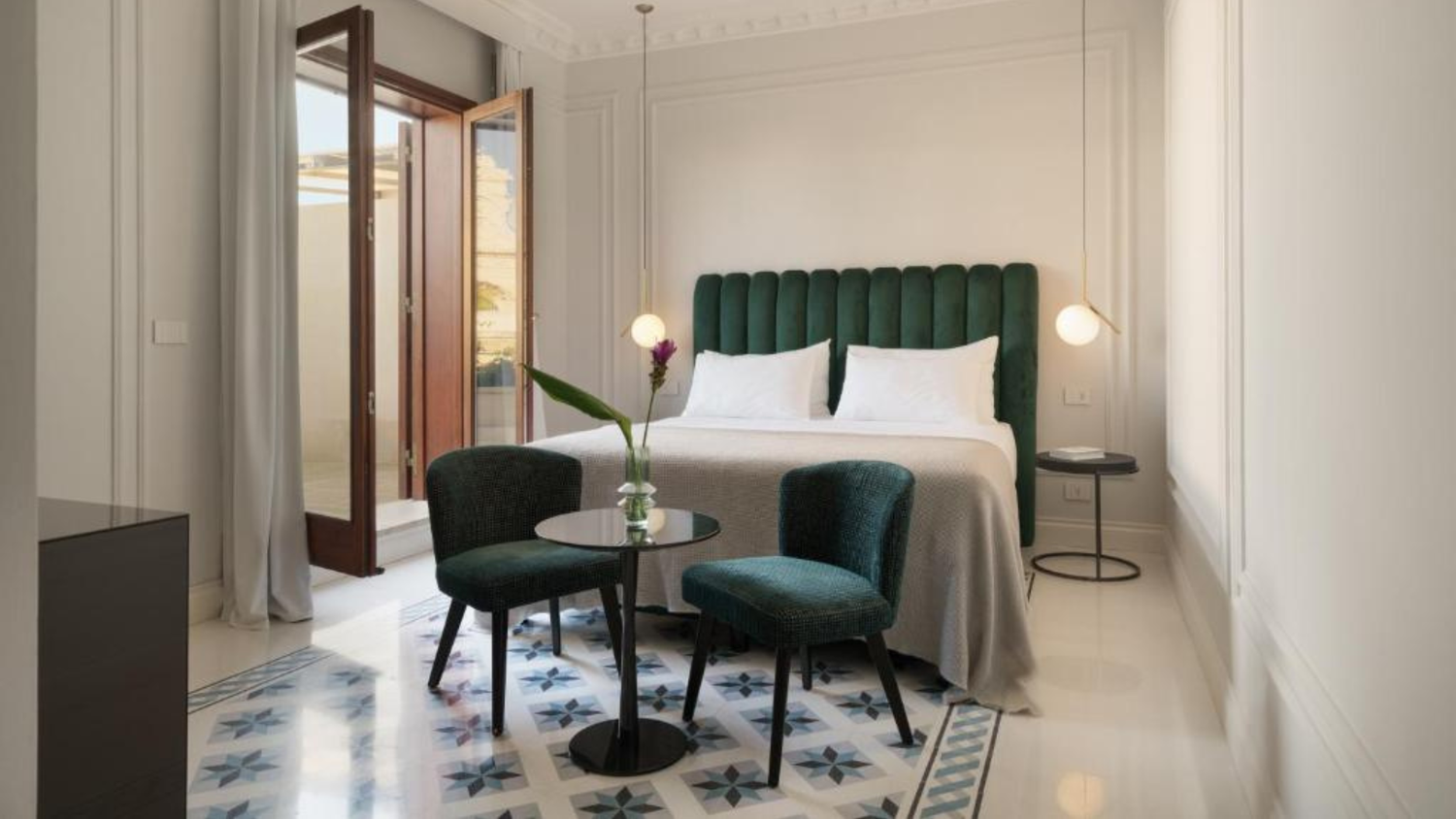
Photo: An elegant hotel room at the Patria Palace Lecce, featuring modern design, historic charm and stylish décor.
Lecce surprises with a variety of stylish establishments that reflect the city’s charm – from historic palazzi to modern design oases. Here are four special recommendations that skilfully combine comfort and atmosphere.
Patria Palace: Situated directly opposite the Basilica of Santa Croce, this elegant hotel offers Baroque flair and modern comforts. The roof terrace, with views over the old town, is a real highlight.
Dimora Giusti: A boutique hotel in a historic palazzo that blends tradition with contemporary design. High ceilings, elegant stone floors and stylish interiors make your stay a memorable experience.
La Vita Bella Lecce: A charming guesthouse in the heart of the old town, delighting guests with lovingly furnished rooms and warm hospitality. Perfect for staying right in the heart of Lecce’s winding alleyways.
Glass House: For lovers of modern architecture: a minimalist accommodation with clean lines, plenty of glass and light. A stylish alternative for anyone looking for a different kind of stay.
Whether it’s a historic palazzo, an elegant hotel or a modern design option – in Lecce, everyone will find accommodation that perfectly complements their own travel style and makes their stay unforgettable.
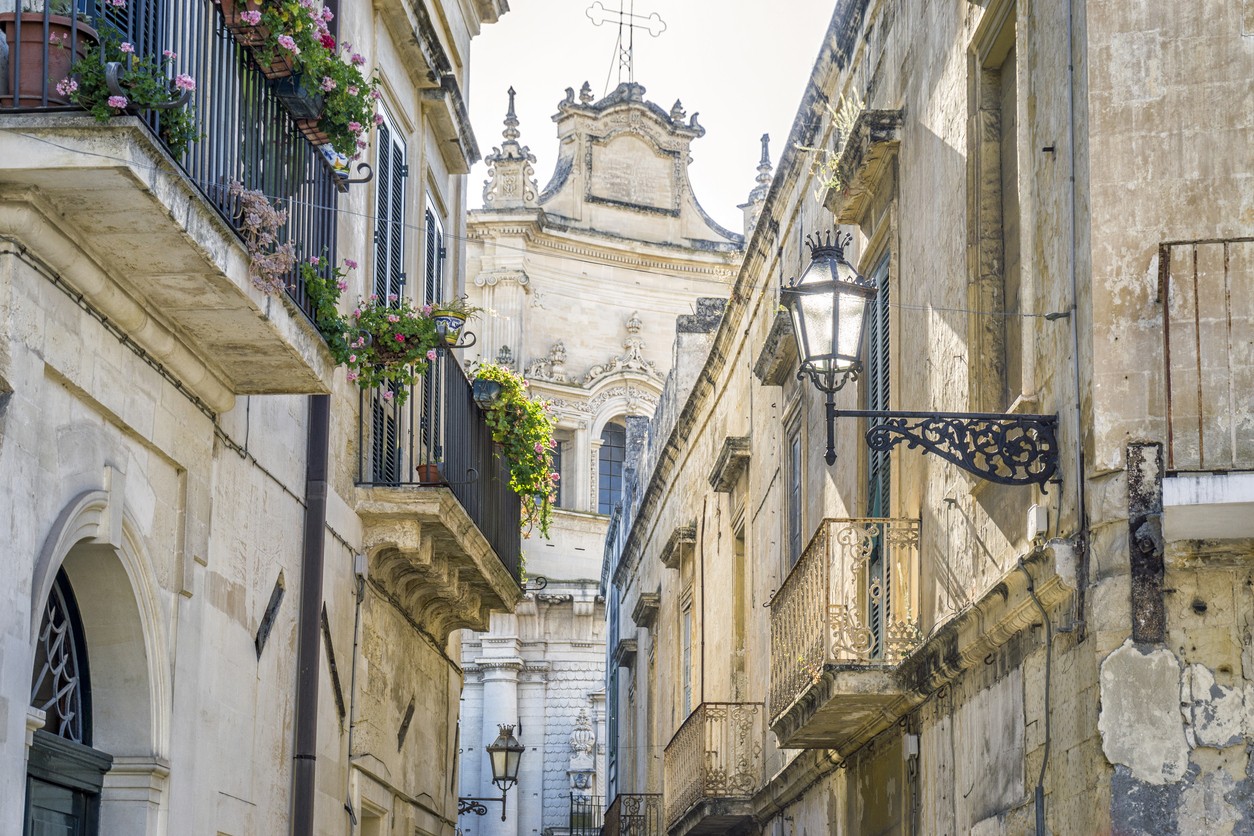
Photo: With its short distances and charming old town, Lecce is ideal for exploring on foot, allowing you to take in the Baroque sights at a leisurely pace.
In Lecce itself, you don’t need a car – the old town is compact, full of life and best explored on foot. If you want to discover the city and the surrounding area, there are various practical and relaxed options available.
On foot: The old town is car-free, and many of the streets are narrow and winding. It’s best simply to wander: that way, you’ll discover hidden squares and courtyards that aren’t mentioned in any guidebook. Comfortable shoes are a must.
By bike: Ideal if you want to get around a bit faster. In Lecce, there are bike-hire stations and small bike shops offering daily hire. A particular highlight is a cycle ride out into the olive groves surrounding the city.
Train: The regional railway, Ferrovie del Sud Est, connects Lecce with towns such as Otranto and Gallipoli. Tickets are affordable and the journeys are leisurely – perfect if you want to head to the coast without any stress. Tip: Buy your tickets in advance from a ticket machine, as smaller stations aren’t always staffed.
Car: A hire car is worth it for beaches or remote locations. However, parking in the old town is difficult, so it’s better to park outside the city centre. If you want to remain flexible, combine the car with the train or a bike.
Car-sharing & shuttle services: Local providers offer hassle-free journeys, some of which can be booked via apps. This is handy if you don’t want to hire a car but are planning a trip to a beach or village.
This keeps getting around Lecce a relaxed affair – and anyone who embraces the leisurely rhythm of the Salento will enjoy not only the destinations but also the journey there.
Conclusion: Lecce is a place that welcomes travellers with Baroque beauty, Mediterranean serenity and warm hospitality. Amidst impressive sights, hidden gems and the southern Italian art of living, a unique magic unfolds. Those who travel mindfully will discover not only history and pleasure, but also the quiet joy of simply being in the here and now.

© Swiss Bankers 2026


 Compare cards and conditions

