


Important information:
Am 10. April 2024 wurden das Kundenportal sowie der Web-Zugriff auf das Kartenkonto eingestellt. Bitte laden Sie die Swiss Bankers App herunter, um weiterhin uneingeschränkten Zugriff auf alle Dienste zu haben.
Are you a Swiss Bankers sales partner?
Hier geht es zum Partnerportal.
Thailand isn’t just a place to visit – it’s also a place to savour. Fragrant lemongrass, fresh coriander, chilli, lime, coconut milk and aromatic spices make Thai cuisine a truly special experience. We’ll introduce you to 10 dishes you simply must try on a trip to Thailand – and let you know where you can find the best versions of these specialities.
 04.09.2026
 Miryana
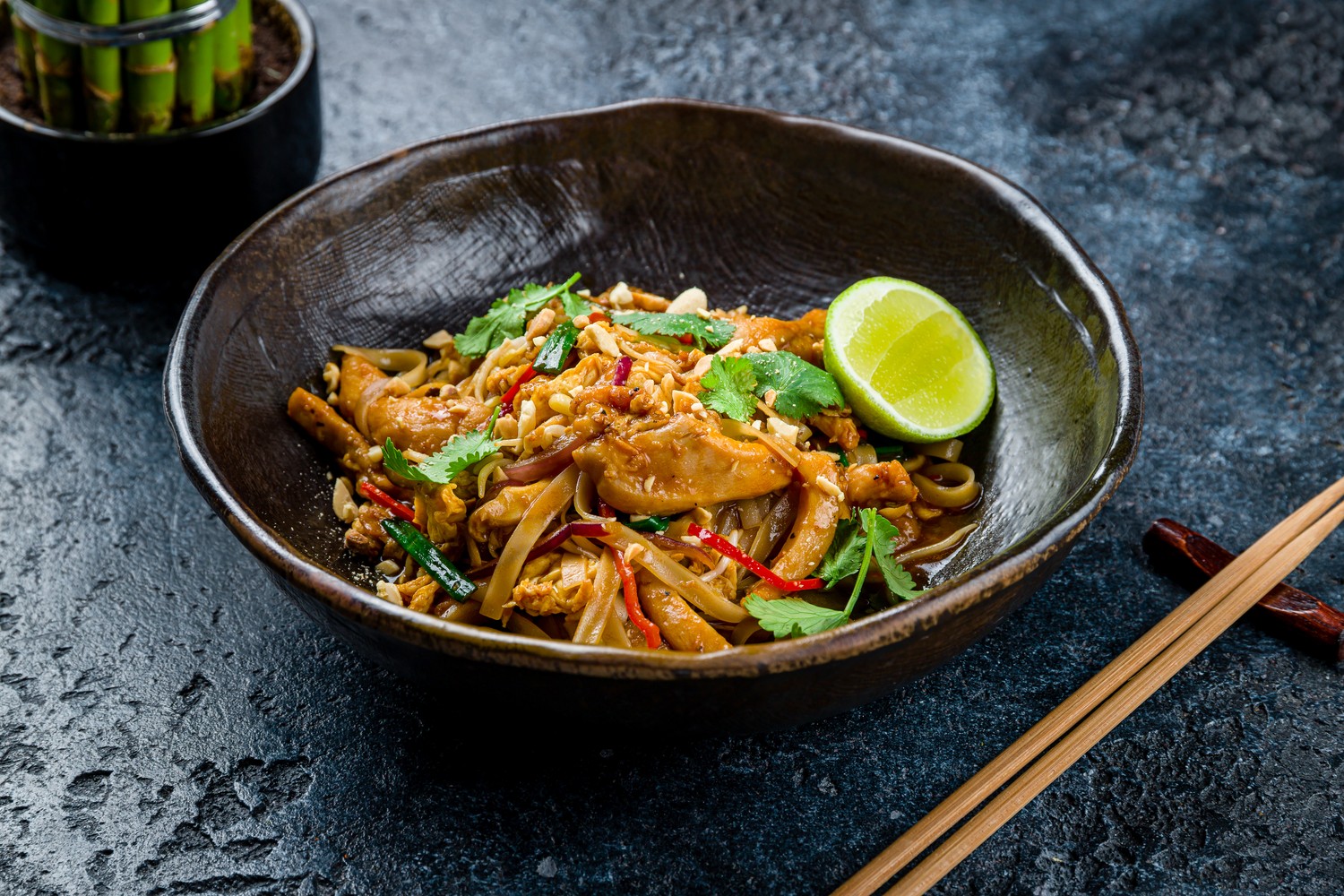
Photo: Pad Thai with tender chicken and fragrant rice noodles.
Hardly any Thai dish is as well known internationally as Pad Thai. Rice noodles are stir-fried in a wok with egg, tofu and bean sprouts and, depending on the variation, served with prawns, chicken or meat. Tamarind adds a slightly tangy note, whilst fish sauce, sugar, chilli and lime create the characteristic balance of sweet, sour, salty and spicy. Roasted peanuts add the finishing touch to the dish.
Pad Thai Fai Ta Lu in Bangkok comes highly recommended. This restaurant, which specialises in Pad Thai, is also listed in the current Michelin Guide and is a great place to try this classic dish in its various forms.
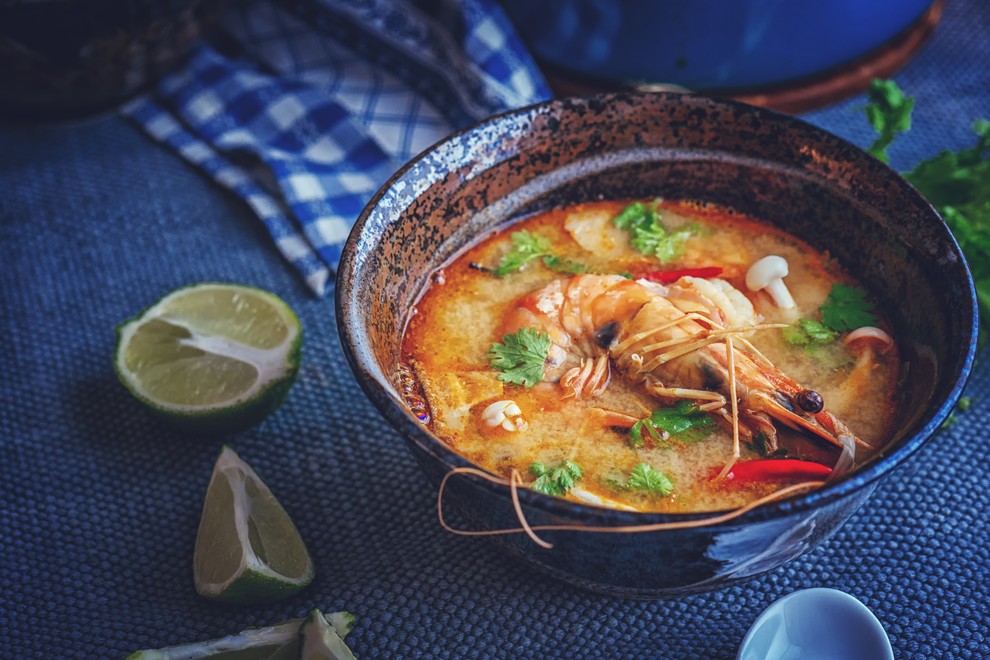
Tom Yum Goong is one of Thailand’s best-known soups. The rich broth is flavoured with lemongrass, kaffir lime leaves, galangal, chilli and lime juice, and is traditionally served with prawns and mushrooms. The result is an intense combination of heat, acidity and fresh herbal flavours.
For an authentic Tom Yum Goong, it’s well worth a visit to Tom Yum Goong Banglamphu Original in Bangkok. This unassuming street food spot in Banglamphu specialises in the spicy and tangy prawn soup and will continue to be a popular destination for this classic dish well into 2026.
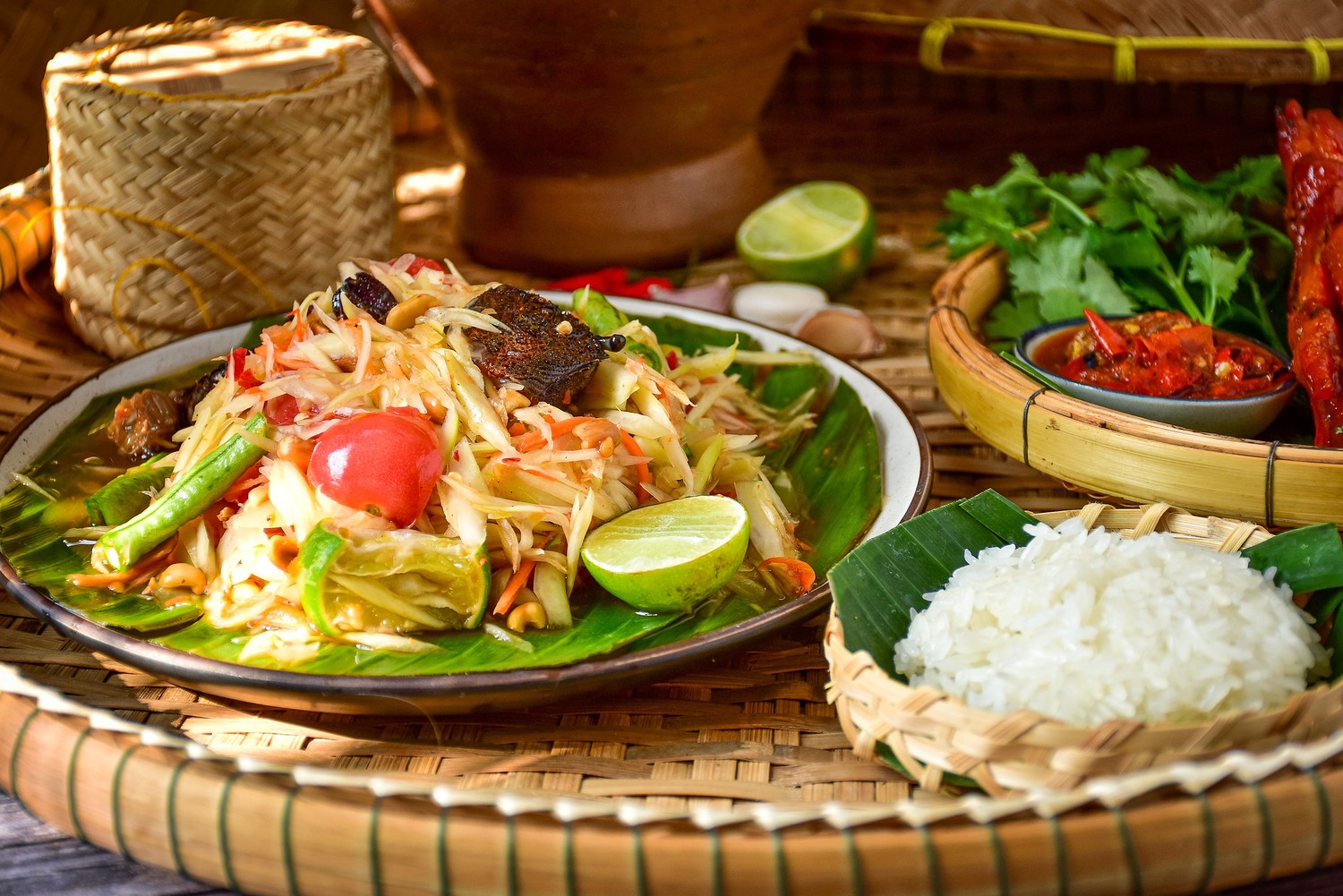
Photo: Som Tam with sticky rice – a spicy green papaya salad served with Thai sticky rice
Som Tam is a spicy salad made from unripe green papaya, which is particularly popular in north-eastern Thailand. The papaya is pounded in a mortar with lime juice, fish sauce, palm sugar, tomatoes, peanuts and chilli. This creates the characteristic blend of sweet, sour, salty and spicy flavours.
For Som Tam, it’s well worth a visit to Som Tum Khun Kan in Bangkok. The restaurant is renowned for its Isan cuisine and offers numerous variations of the papaya salad – from the classic Som Tam Thai to significantly spicier versions. If you don’t like it too spicy, you should specifically ask for ‘phet nit noi’ – ‘only a little spicy’ – when ordering.
Pad Kra Pao is one of Thailand’s most popular everyday dishes. Meat or tofu is stir-fried in a wok with garlic, chilli and aromatic holy basil, and served with jasmine rice. It goes particularly well with a crispy fried egg.
If you’d like to try this classic dish in Bangkok, Phed Mark, near the Ekkamai BTS station, is the place to go. This small restaurant is entirely dedicated to Pad Kra Pao and offers various versions as well as several levels of heat.
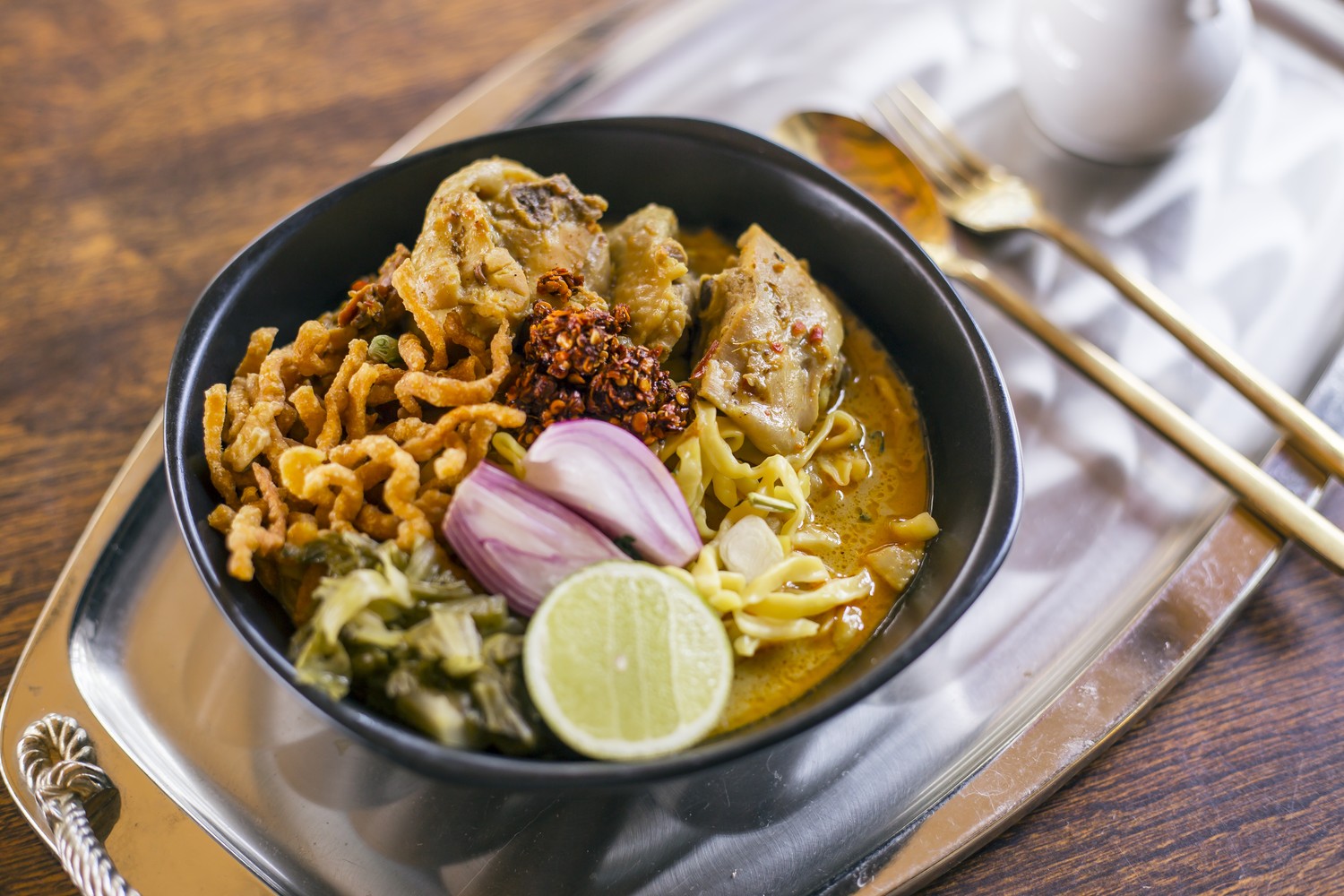
Photo: Khao Soi – a creamy curry and coconut noodle soup with crispy noodles, lime and pickled vegetables
Anyone travelling to Chiang Mai should definitely try Khao Soi. This northern Thai speciality combines egg noodles with a creamy, slightly spicy curry and coconut broth. Crispy deep-fried noodles add a satisfying crunch, whilst lime, pickled vegetables, shallots and chilli are served on the side.
In Chiang Mai, Khao Soi Mae Sai comes highly recommended. This unpretentious restaurant, which specialises in noodles, has been awarded a Bib Gourmand by the Michelin Guide and is particularly renowned for its aromatic, slightly spicy Khao Soi broth.
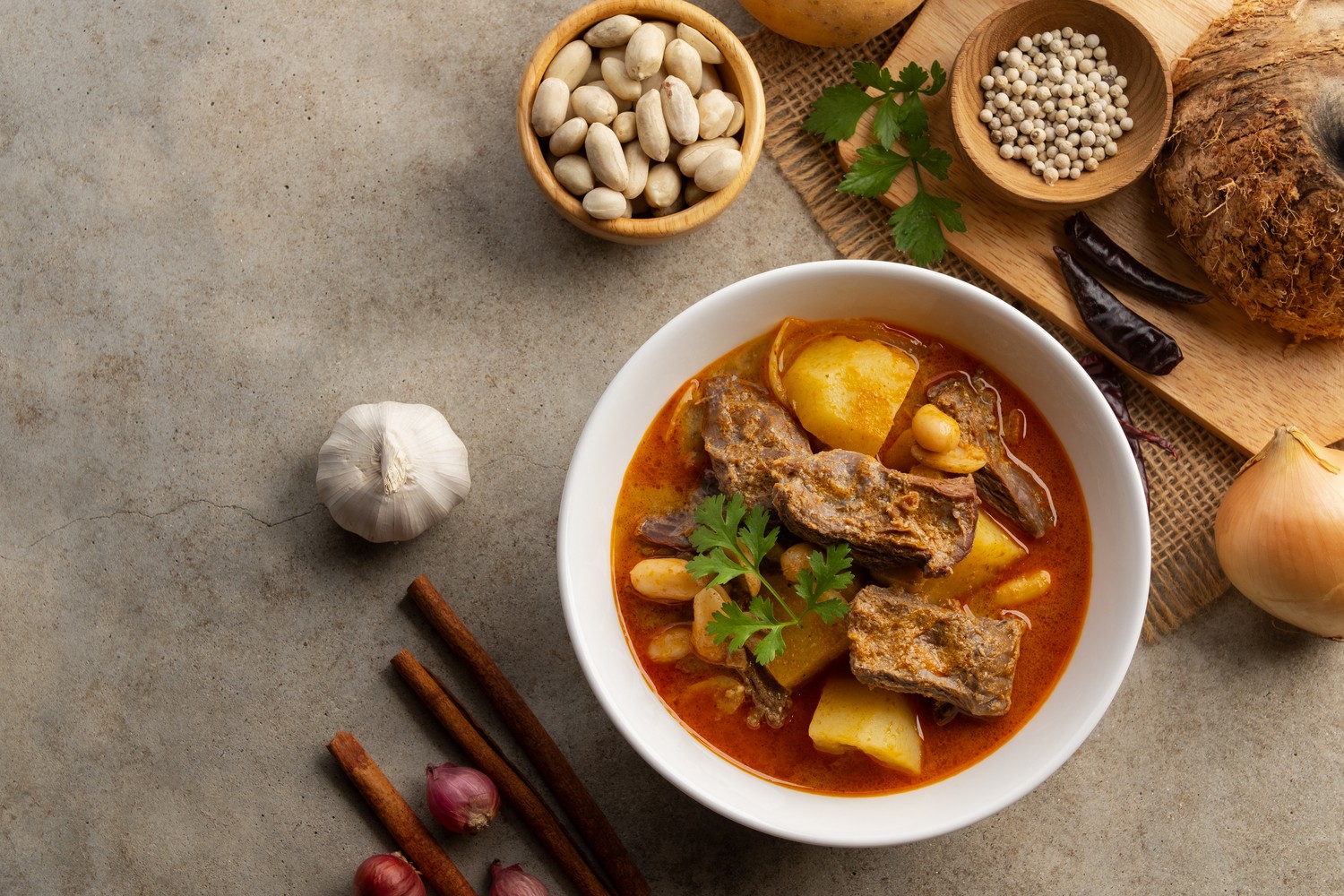
Photo: Massaman curry with tender braised beef, potatoes, peanuts and a creamy coconut sauce.
Massaman curry is quite different from many other Thai curries. Spices such as cinnamon, cardamom, cumin and star anise are combined with coconut milk, potatoes, onions and peanuts. The result is a creamy, slightly sweet curry, which is usually much milder than green or red curry.
This dish is well worth a visit to Roti Chaofa in Phuket. This traditional Thai-Muslim restaurant is renowned for its roti and curries; the Michelin Guide particularly highlights the slow-braised beef Massaman curry.
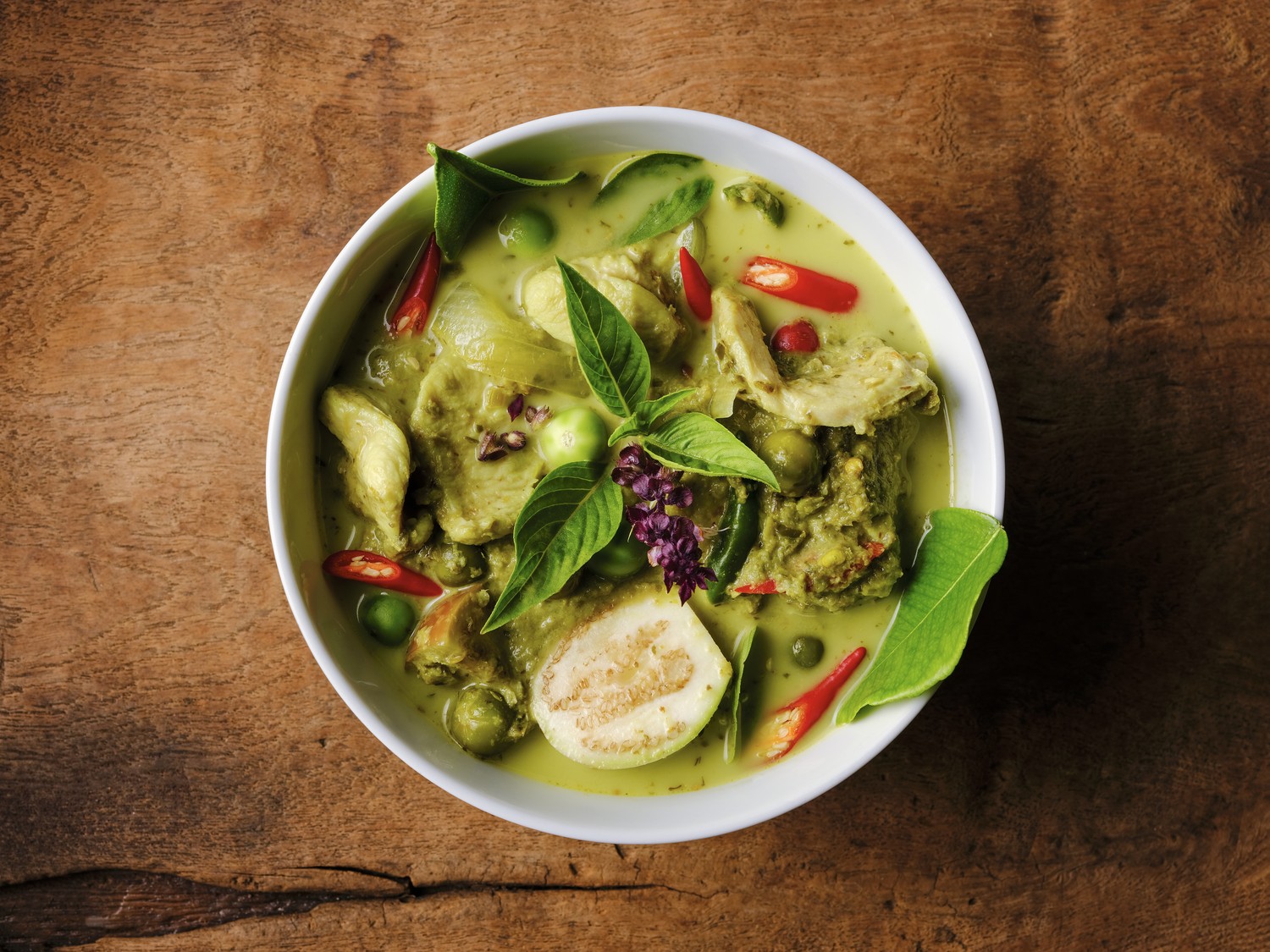
Photo: Gaeng Keow Wan – classic green Thai curry with chicken, coconut milk and aromatic herbs
Gaeng Keow Wan, better known as green Thai curry, is one of the country’s most popular curries. It gets its distinctive colour from green chillies and herbs. Coconut milk adds creaminess, whilst Thai basil and kaffir lime leaves give the curry its intense flavour. Depending on how it is prepared, it can be pleasantly spicy or quite hot.
A particularly lovely place to try it is RONGROS in Bangkok. The restaurant is situated right on the banks of the Chao Phraya, opposite Wat Arun, and is listed in the Michelin Guide. Among its specialities is green curry with rib-eye steak and roti – ideal for anyone who wants to sample this classic dish in a rather special setting.
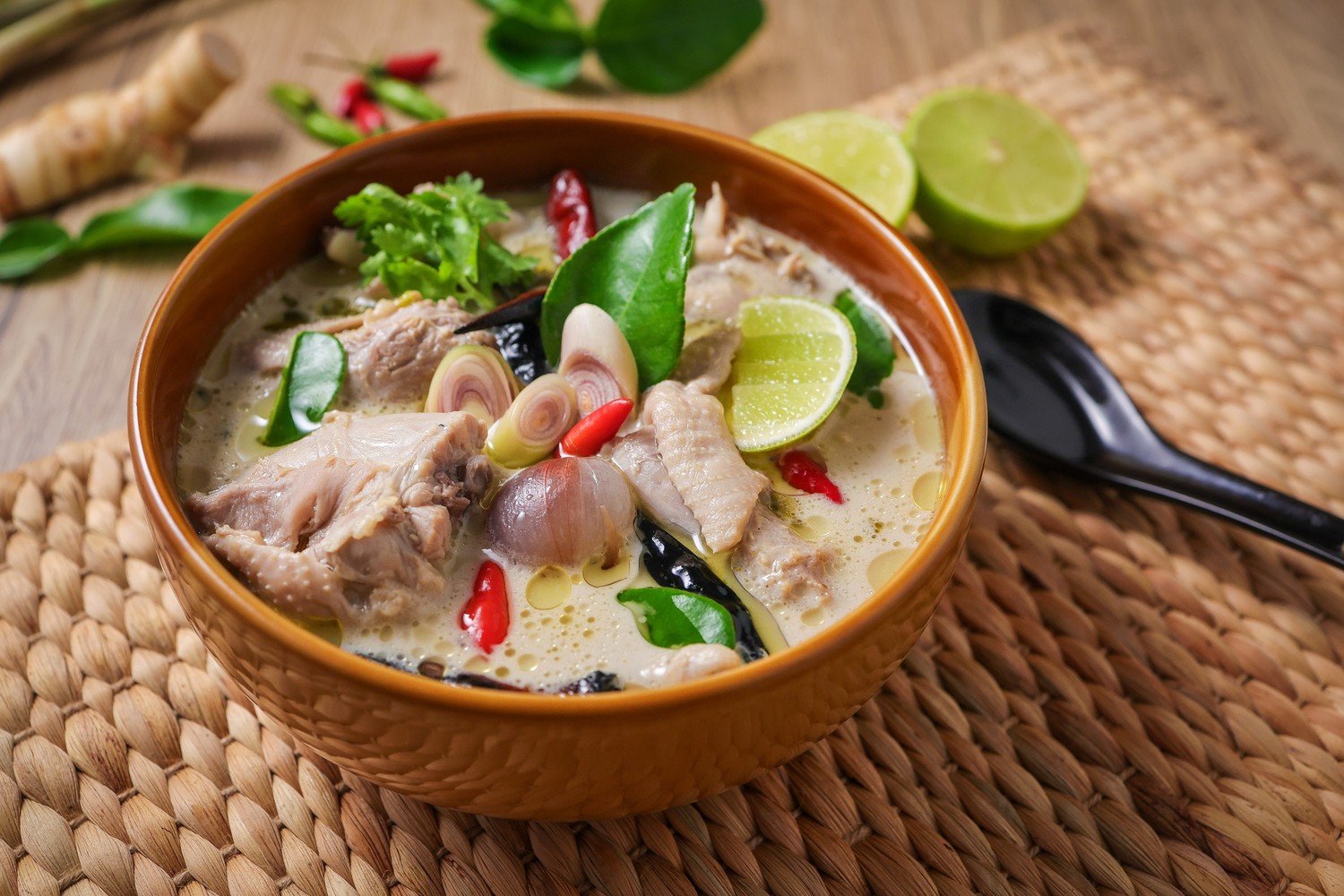
Photo: Tom Kha Gai – a creamy Thai coconut soup with chicken, galangal and fresh herbs.
Tom Kha Gai is a creamy coconut soup with chicken, galangal, lemongrass, kaffir lime leaves, mushrooms and a touch of chilli. Compared to Tom Yum Goong, it has a milder, more rounded flavour, yet remains pleasantly fresh and aromatic thanks to the lime and fresh herbs.
A good place to try it is Krua Apsorn in Bangkok. This well-known Thai restaurant is listed in the Michelin Guide and serves classic Thai cuisine in a relaxed atmosphere. Tom Kha Gai is also one of the dishes on the menu there.
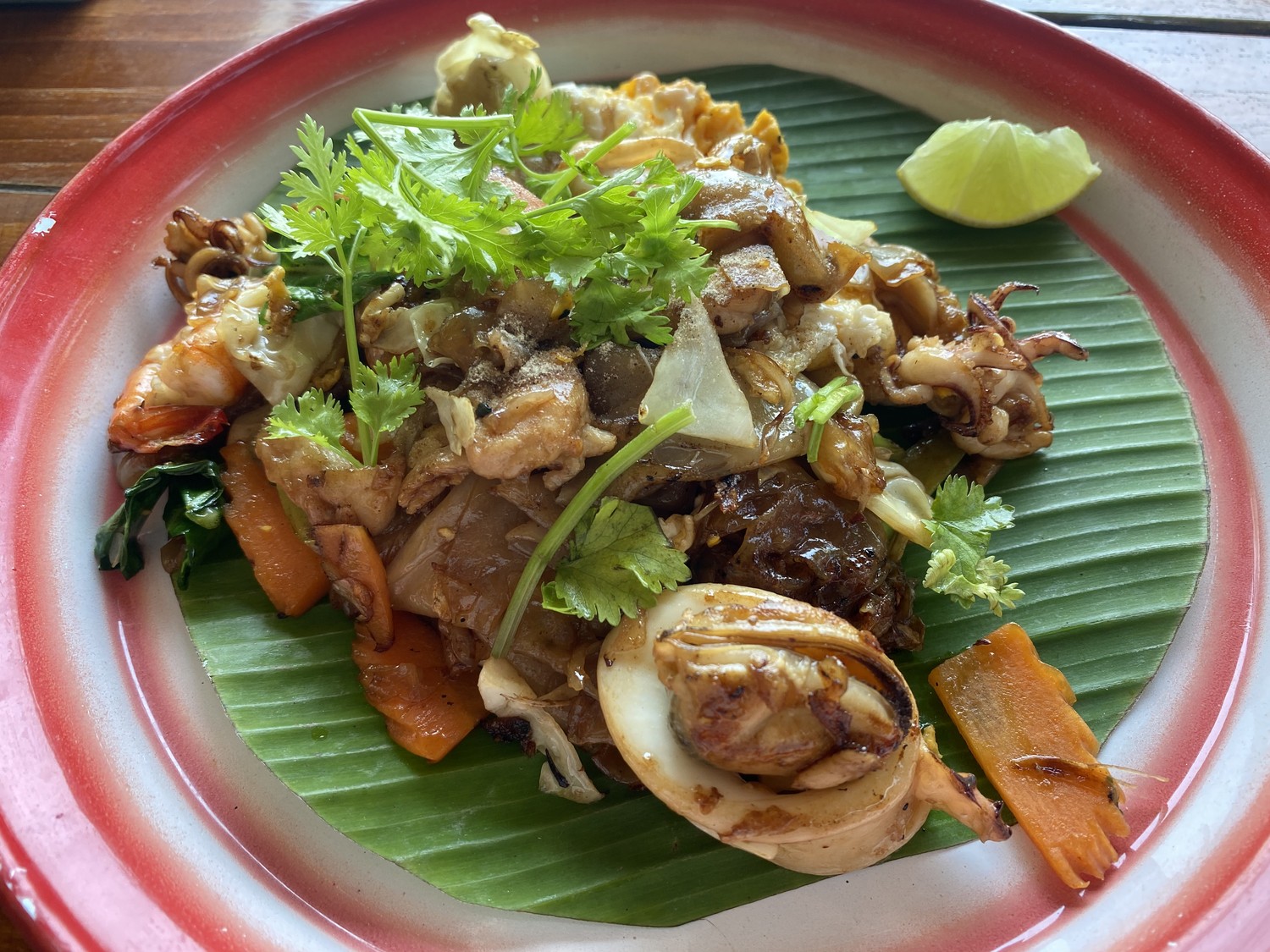
Photo: Pad See Ew – stir-fried wide rice noodles with seafood, served on a banana leaf.
Pad See Ew is one of Thailand’s most popular noodle dishes. Wide rice noodles are stir-fried in a wok over a high heat with egg, Chinese broccoli and dark soya sauce. This creates the dish’s characteristic slightly sweet flavour and – when prepared well – a delicate, smoky wok aroma. Pad See Ew is usually served with chicken, pork, beef or tofu.
For this classic dish, R-leaw in Bangkok is well worth a visit. This traditional restaurant prepares Pad See Ew according to a recipe whose history dates back to 1962. It’s a great place to try this straightforward Thai noodle dish in its classic form.
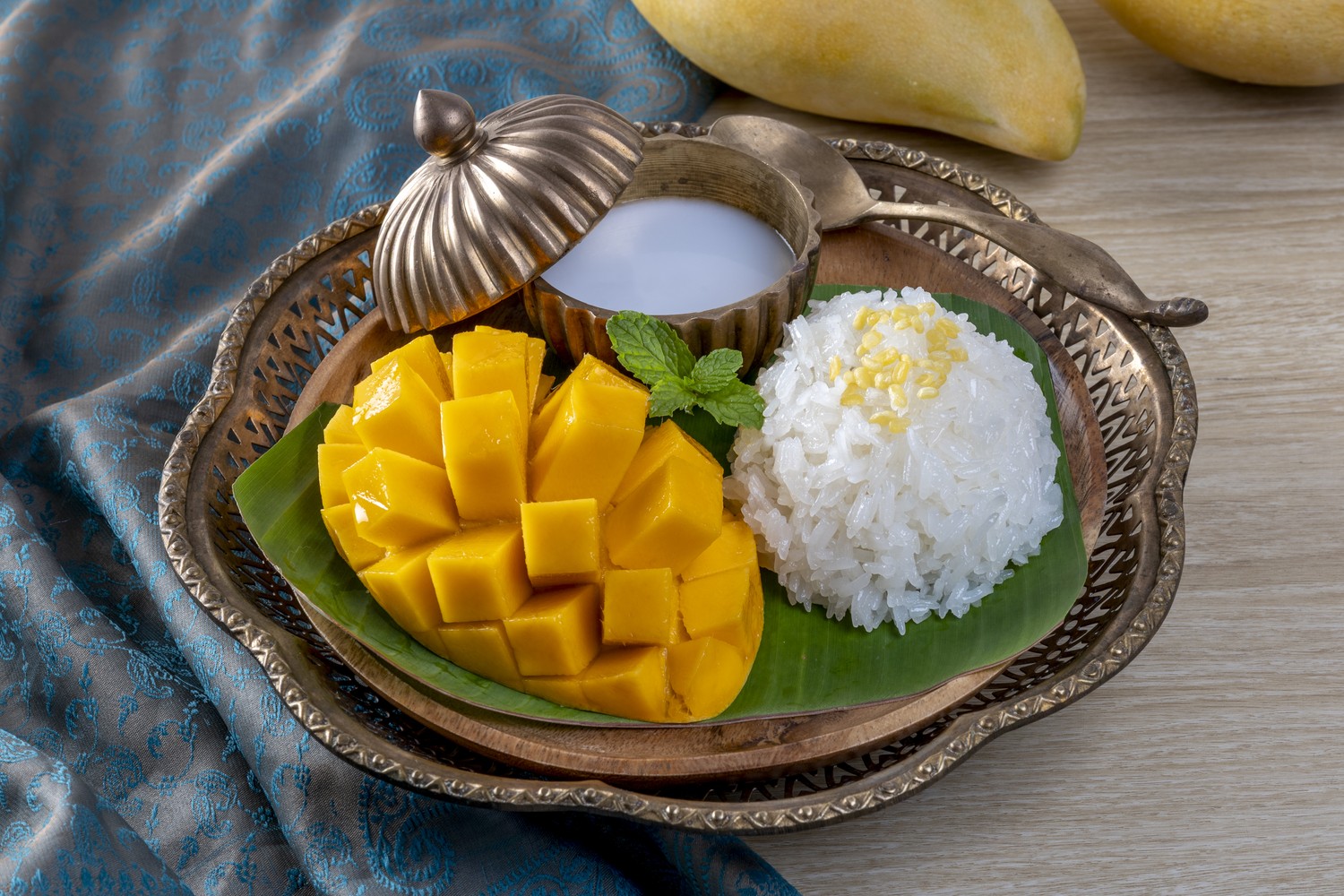
Photo: Mango Sticky Rice – sweet sticky rice with ripe mango, stylishly served on a golden tray featuring a traditional Thai pattern.
Mango sticky rice, known in Thai as Khao Niao Mamuang, is one of Thailand’s best-known desserts. Sweet sticky rice is flavoured with creamy coconut milk and served with ripe mango. A slightly salty coconut sauce ensures that the dessert tastes pleasantly balanced despite its sweetness.
A particularly well-known place to try it is K. Panich in Bangkok. This traditional street food stall is currently listed in the Michelin Guide. For its mango sticky rice, K. Panich uses sticky rice from Chiang Rai, freshly pressed coconut milk and aromatic Nam Dok Mai mangoes.
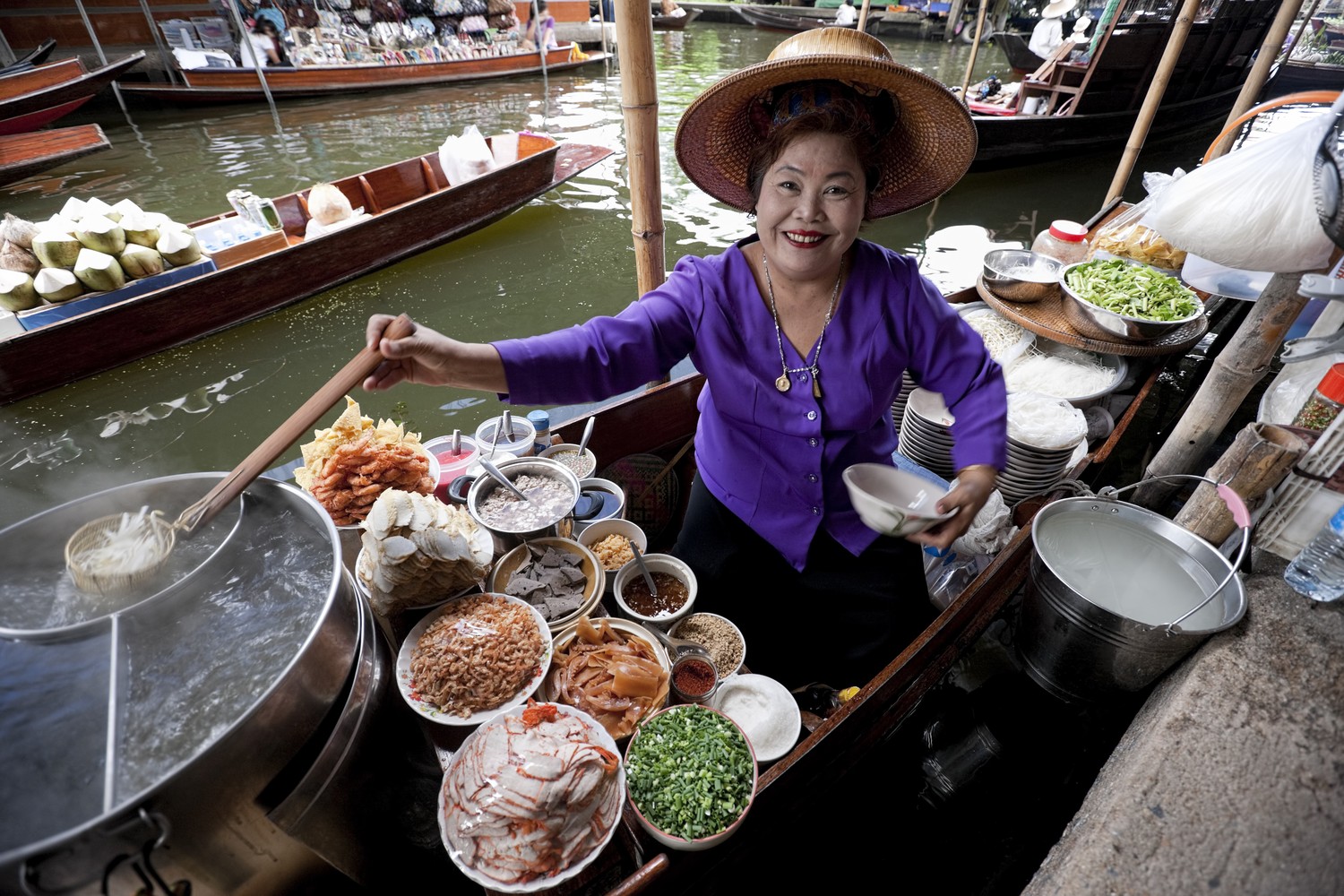
Photo: Street food at the Damnoen Saduak Floating Market – freshly prepared Thai noodles straight from the floating market stall.
In many restaurants and street food stalls, it’s enough simply to point at the dish you want or show the name on your smartphone. A few Thai phrases can still come in handy, though:
Mai phet: not spicy
Phet nit noi: only slightly spicy
Mai sai nam pla: without fish sauce
Mai sai nam man hoi: without oyster sauce
If you’re vegetarian, you should ask for more details. This is because even dishes containing tofu or vegetables may contain fish sauce, oyster sauce or prawn paste. ‘Mangsawirat’ refers to vegetarian food, whilst ‘Jay’ denotes a stricter plant-based diet, which also avoids certain ingredients such as garlic and onions.
And here’s another tip: if you’re at a street food stall and don’t know what to order, just have a look at what the locals are eating. You’ll often discover dishes you would otherwise have overlooked.
Thai cuisine is as diverse as the country itself. Whether it’s spicy soups, aromatic curries, fried noodles or sweet mango sticky rice – many of the best culinary experiences await in small restaurants, at markets and at simple street food stalls. Try your way through the different regions, sample dishes you haven’t tried before, and if in doubt, ask for the house speciality.
You can find further practical information on entry requirements, payment methods, the best time to visit and safety on our country information page for Thailand.

© Swiss Bankers 2026


 Compare cards and conditions

