Hello Bavaria! Your guide to cities, nature and cuisine

Bavaria is more than just a federal state – it’s a way of life. From the snow-capped peaks of the Alps to the rolling vineyards of Franconia, the Free State offers a diversity that is unrivalled anywhere in the world. Whether you’re seeking an adrenaline rush in the mountains, want to soak up the history of medieval towns, or simply fancy a cold, light beer in a beer garden: Bavaria has something for everyone.

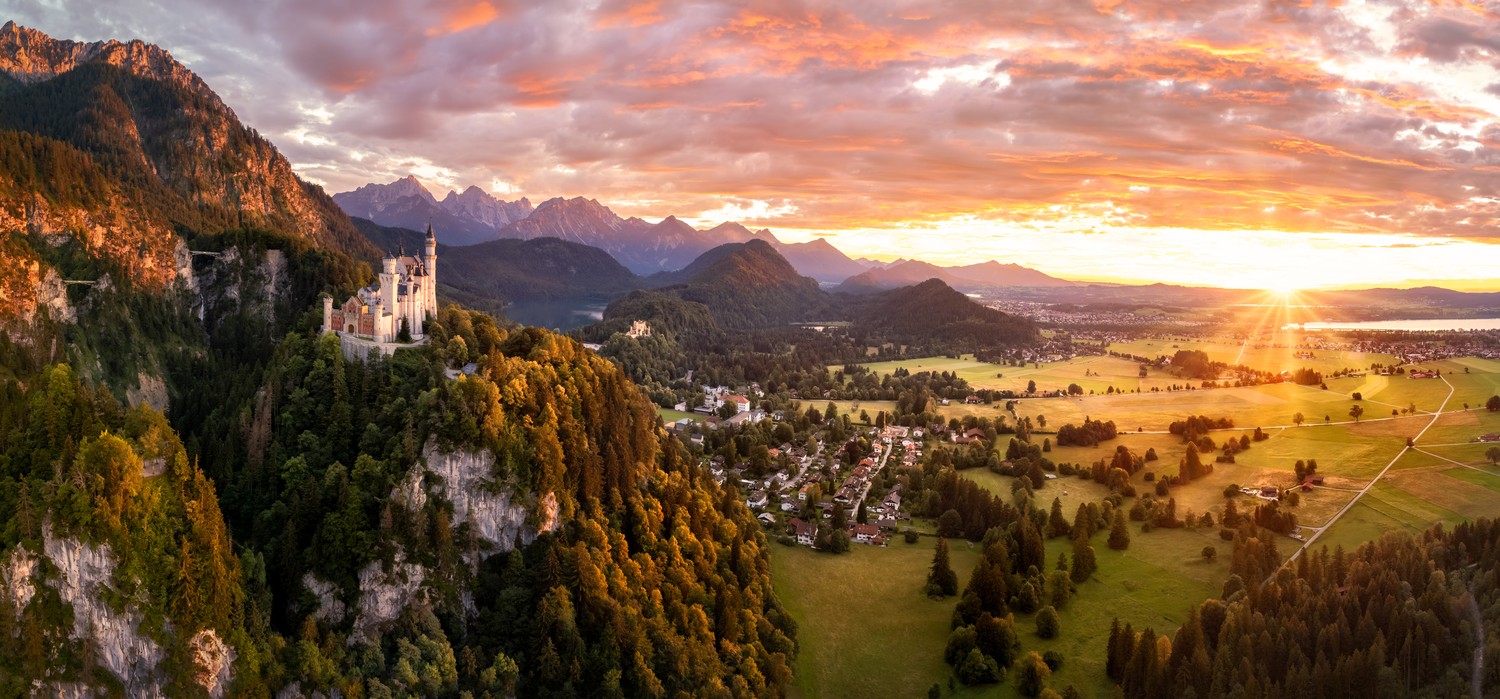
Photo: A colourful aerial view of Neuschwanstein Castle in the distance – mountains and valley bathed in the evening light.

UNESCO & Old Town Charm: The Best Cities in Bavaria for a City Break

Bavarian cities offer a fascinating blend of historic architecture and vibrant everyday life – from metropolitan cultural programmes to the romantic charm of the old town, which seems to belong to another era.

  • Munich: The Bavarian capital combines tradition and modernity within a compact area. City life pulsates around Marienplatz, the English Garden offers lush greenery and a surprisingly active atmosphere, and Nymphenburg Palace offers a taste of Bavarian splendour that can be perfectly combined with a stroll through the park grounds. You’ll find even more inspiration in our blog post about Munich.
  • Nuremberg: Perfect for anyone who wants to not just see history, but feel it. The Imperial Castle dominates the city’s skyline, whilst below it the Old Town invites you to stroll through its narrow streets, squares and museums. Nuremberg takes on a particularly festive atmosphere during Advent: the Christkindlesmarkt is one of the most famous in Europe and a classic reason for a winter break.
  • Augsburg: One of the oldest cities in Germany – with a palpable sense of its Renaissance and Fugger history. Particularly worth seeing are the Fuggerei (the famous social housing complex) as well as the elegant squares and grand boulevards around the town hall and the Perlachturm. Those who appreciate a ‘city with substance’ will find culture here without the constant hustle and bustle.
  • Bamberg: Romance and UNESCO charm at their best. It’s no coincidence that the city is often referred to as the ‘Franconian Rome’ – the entire old town is a UNESCO World Heritage Site and feels like a cohesive historical ensemble. A stop in Bamberg is a must for food lovers: be sure to try the famous smoked beer, a speciality that you’ll either love straight away – or at least never forget.
  • Regensburg: One of Germany’s best-preserved medieval towns – and a real classic for a day trip or weekend break. Stroll through the narrow streets of the old town to the Stone Bridge, enjoy the view of the Danube and make time for cafés and the riverside promenade – Regensburg feels both historic and pleasantly relaxed.
  • Würzburg: Baroque grandeur meets the Franconian way of life. The Würzburg Residence is an absolute highlight, and along the Main – particularly around the Old Main Bridge – the city shows its more leisurely side. Würzburg is also an ideal starting point for exploring the Franconian wine region, whether for a short wine tasting or as part of a short tour.

Photo: Spectacular aerial view of Marienplatz with the New Town Hall 

Photo: Nuremberg: View of the Henkersteg Bridge over the Pegnitz.

Photo: Augsburg: Skyline of the historic old town.

Photo: Bamberg’s historic town hall – one of the most iconic sights in the old town.

Photo: Regensburg: the clock tower, the Stone Bridge and the cathedral – the city’s most famous landmarks at a glance.

Photo: A view of Würzburg’s old town with the Old Main Bridge spanning the River Main.

The top nature destinations in Bavaria: Zugspitze, Eibsee, Königssee

Bavaria’s natural landscape is ideal for anyone who wants to get out and about: the High Alps, crystal-clear lakes and vast forests are often just a short drive apart – perfect for day trips or a short tour.

  • The Alps & Zugspitze: At 2,962 metres, the Zugspitze is Germany’s highest mountain and offers a spectacular panorama. Those who prefer less challenging terrain will find gentler walking trails, green pre-Alpine landscapes and classic mountain hut experiences in the Allgäu.
  • Bavarian lakes: With its emerald-green waters, the Königssee in Berchtesgaden National Park almost looks like a Norwegian fjord. Insider tip: The Eibsee at the foot of the Zugspitze delights with its vibrant colours and beautiful lakeside paths – it’s not for nothing that it’s often referred to as the ‘Caribbean of Bavaria’.
  • Bavarian Forest: Europe’s largest contiguous forested mountain range is perfect for anyone seeking peace, solitude and unspoilt nature – with long trails, dense forests and plenty of space to breathe deeply.

Travel: The free prepaid credit card

Secure payments with a prepaid credit card at over 70 million shops worldwide. Available in CHF, EUR and USD. Manage your balance via the app. Cash withdrawals at home and abroad. Order online now – no credit check required, in just 5 minutes!

Learn more

Castles in Bavaria: In the footsteps of King Ludwig II

No visit to Bavaria is complete without a detour to the castles of King Ludwig II – those places where romance, theatrics and alpine panoramas combine to create a true Bavarian classic.

Highlight: Neuschwanstein Castle. This world-famous fairytale castle towers spectacularly over the valley and is considered one of Germany’s most visited attractions. It served as Walt Disney’s inspiration for Sleeping Beauty’s castle and attracts millions of visitors every year. Insider tip: You’ll get the iconic view (and the perfect photo) from the Marienbrücke – ideal if you arrive early in the day before it gets too busy.

Quieter alternatives: If you prefer a more relaxed atmosphere, Linderhof Palace is well worth a visit – smaller, yet rich in detail and beautifully situated. Herrenchiemsee, on an island in Lake Chiemsee and often referred to as the ‘Bavarian Versailles’, is equally impressive: sumptuous rooms, extensive gardens and, to top it all off, the boat trip across the lake, which makes the experience truly special.

Video: Neuschwanstein Castle 

Food & Drink in Bavaria: Beer gardens, specialities and Franconian wine

Bavarian cuisine is far more than just a cliché – it is regional, down-to-earth and, at the same time, astonishingly diverse. In the cities, you’ll find modern interpretations and international influences, whilst in the countryside, pub culture, seasonal produce and artisanal traditions take centre stage.
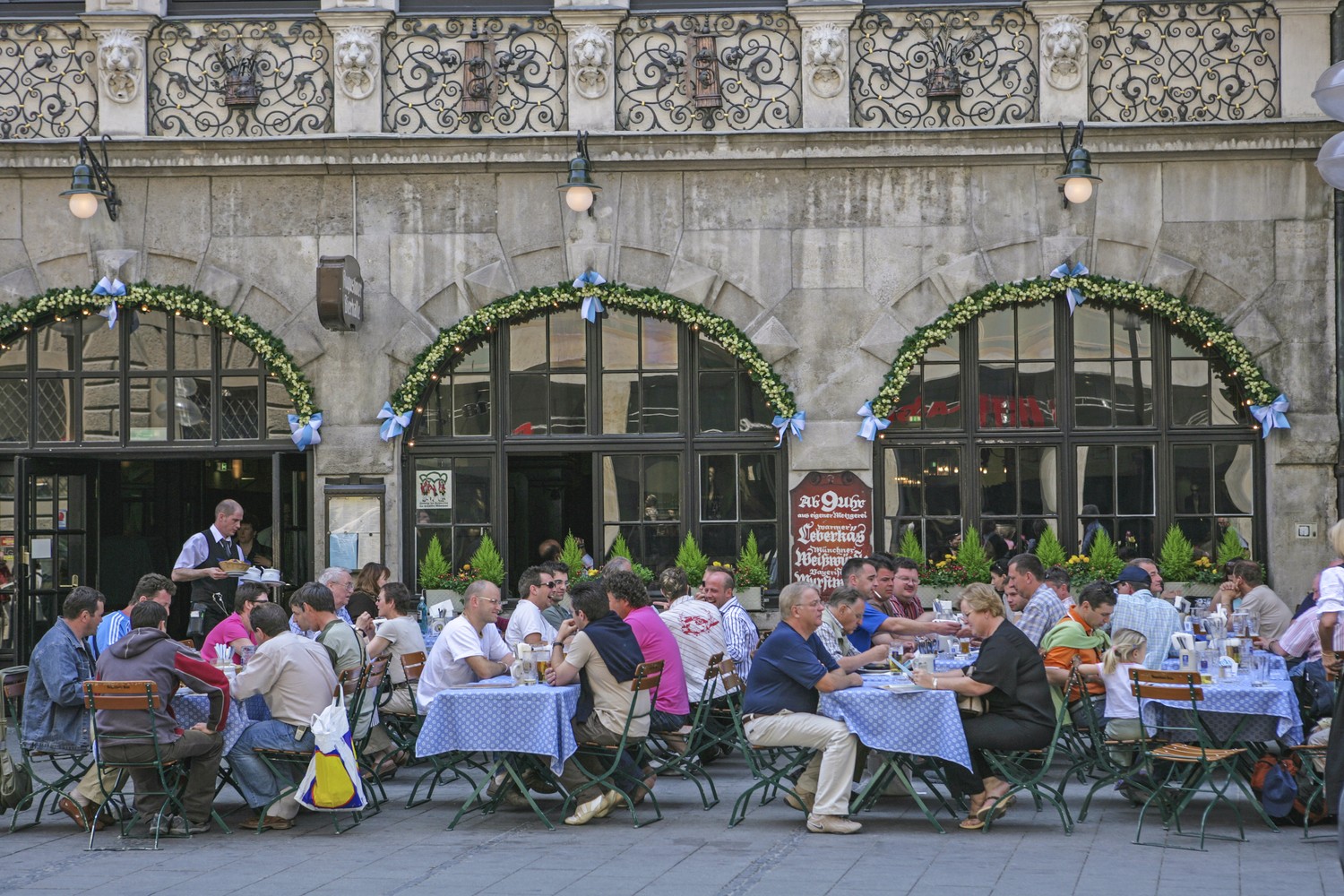
  • Beer gardens & pubs: A visit to a beer garden is almost a must in Bavaria – not just for the beer and pretzels, but for the atmosphere: long tables, a relaxed, communal atmosphere and classics such as Obazda, Radi or roast pork. In traditional pubs, the fare is heartier, often featuring recipes that have been passed down through the generations. Our recommendations: In Munich, the Augustiner-Keller is a true original – here, the beer is still tapped from wooden barrels. If you fancy a royal experience, visit the beer garden at the Chinese Tower in the English Garden. For one of the best roast pork dishes in the world, head to the Ayinger pub on the Platzl in Munich or the historic Hofbräuhaus (yes, it’s touristy, but the architecture and craftsmanship are the real deal!).
  • Franconia: Wine instead of beer (or both): In Franconia, wine takes centre stage. Around Würzburg, along the Main and in small wine-growing villages, you’ll experience a culture of indulgence all of its own – from hedge-side taverns to wine bars. Perfect for anyone who wants to discover a slightly ‘different’ side of Bavaria’s culinary scene. Our recommendations: An absolute must in Würzburg is the ‘Brückenschoppen’ on the Alte Mainbrücke. Pick up a glass of wine (e.g. a Silvaner in the typical ‘Bocksbeutel’ bottle) from the Mainwein wine bar stall and enjoy the view of the Marienberg Fortress. Winemaker’s tip: Visit the Juliusspital winery or the Staatlicher Hofkeller in Würzburg for a cellar tour – the atmosphere in the vast wooden barrel cellars is magical.
  • Regional specialities: The highlights vary considerably depending on the region – in the Allgäu, cheese and dairy dishes take centre stage; in Upper Bavaria, hearty classics dominate; and in cities like Nuremberg, local specialities are simply part of the experience. You’ll find the most authentic experiences at weekly markets, in small bakeries and wherever the menu changes with the seasons. Market tip: Head to the Viktualienmarkt in Munich or the Hauptmarkt in Nuremberg

Photo: Augustiner Bräu in Munich – Bavarian pub culture at its finest.

Bavaria Tour: Perfect Itineraries from Munich to the Alps

If you want to do more than just ‘see’ Bavaria – if you want to truly experience it – a round trip with clearly defined stages is well worth it. This way, you can combine city life, nature and leisure without constantly having to pack your bags.
  •  Classic Southern Route (7–9 days): Munich – Lakes – Allgäu – Berchtesgaden: Start in Munich (culture, beer gardens, Old Town), then head to the foothills of the Alps at Lake Tegernsee/Lake Eibsee for peaceful days by the water. Continue on to the Allgäu for rolling mountain landscapes and castles (Neuschwanstein as the highlight of the day). Finally, head towards Berchtesgaden/Königssee: spectacular scenery, a national park atmosphere – the perfect final leg of the journey.
  • Franconia Pleasure Tour (5–7 days): Nuremberg – Bamberg – Würzburg: Ideal if you’d like to combine history and fine dining: Nuremberg to start with, then Bamberg (UNESCO-listed old town and Rauchbier) and on to Würzburg – with time to visit the Residenz and take a detour to the Franconian wine villages along the Main.
  • Cities & UNESCO (6–8 days): Munich – Augsburg – Regensburg – Nuremberg: A round trip focusing on cityscapes, architecture and museums: Munich as a grand start, Augsburg with its Fugger and Renaissance charm, Regensburg as a medieval UNESCO gem on the Danube, and Nuremberg as a historic finale with its impressive old town.
  • Nature Focus (6–10 days): Zugspitze/Eibsee – Bavarian Forest – Lake District: For anyone who wants to spend most of their time outdoors: first, alpine highlights around the Zugspitze and Eibsee, followed by a change of pace in the Bavarian Forest with plenty of peace and space. To round off the trip, a few days in the Lake District for a relaxing finale.

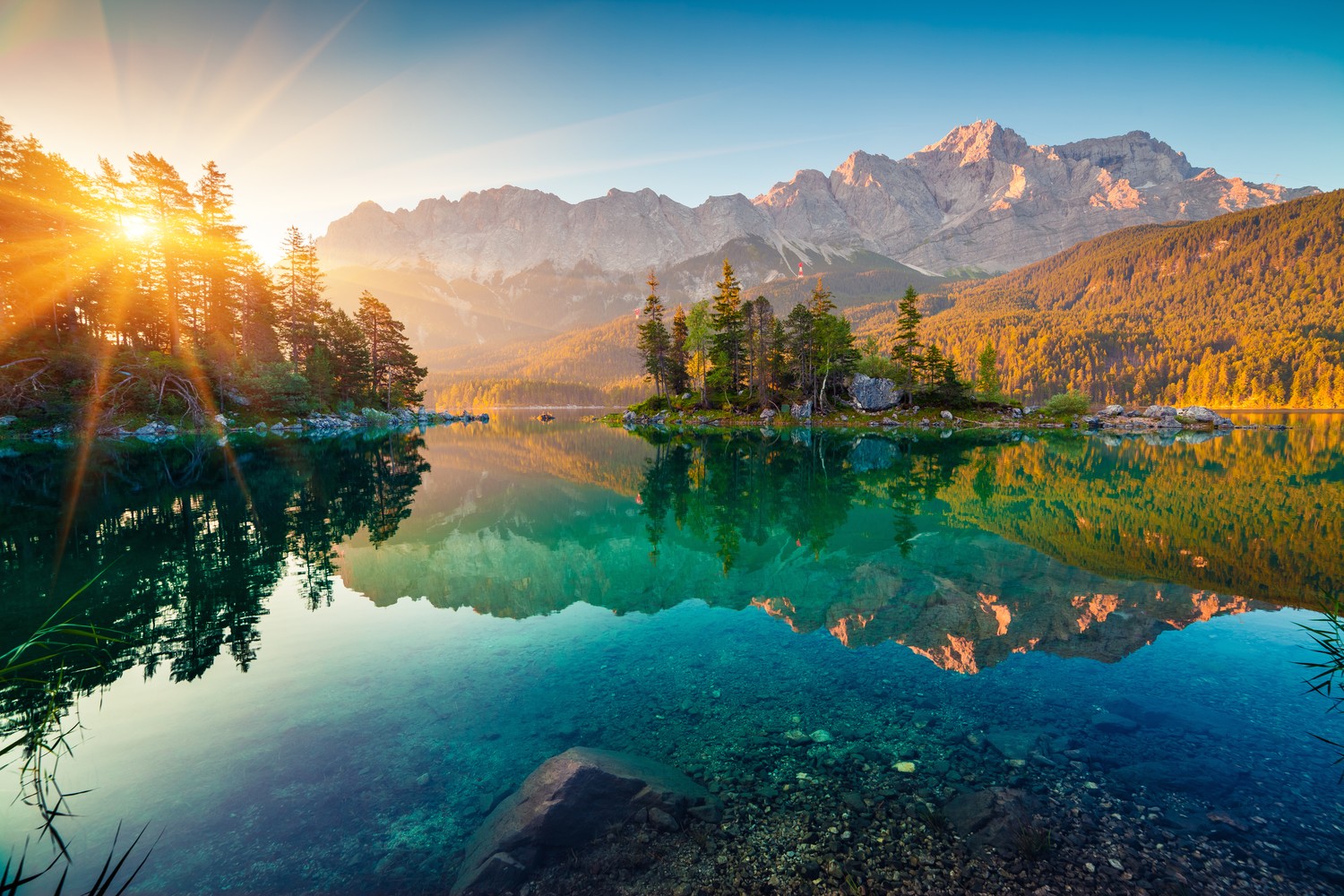
Photo: Sunrise at Eibsee – with the Zugspitze massif providing a spectacular backdrop.

Accommodation in Bavaria: from mountain huts to unique lodgings

In Bavaria, a bed is more than just a place to sleep – your choice of accommodation often shapes the character of your trip.

Farm holidays: A classic choice, especially for families. Many farms in the Allgäu or the Bavarian Forest offer modern holiday flats where you can enjoy fresh milk and eggs straight from the farm every morning. Our recommendation: The Moralthof estate in Lenggries combines authentic farm life with stylish Alpine apartments and a high-quality wellness area. Ideal for anyone seeking nature and proximity to animals, whilst still appreciating comfort and design.

Mountain huts & alpine pastures: For hikers, spending the night in a dormitory or a small shared room in a DAV hut is simply part of the experience. The sunrise over the peaks more than makes up for the (sometimes) lack of luxury. Those who prefer a more modern experience should head for the Höllentalangerhütte at the foot of the Zugspitze. 

Extraordinary experiences:

  • Wine & Wellness: In Franconia, indulgence can be perfectly combined with relaxation. Our recommendation: the Sonnenhotel Weingut Römmert in Volkach. It’s the perfect choice for anyone wishing to experience wine in a modern way. Highlights include the spacious spa area and the extraordinary wine-barrel-style pool – design and indulgence at the very highest level.

  • Monastery hotels: Places such as Ettal Abbey or Weltenburg Abbey offer guest accommodation. Our recommendation: the St. Georg guesthouse at Weltenburg Abbey. Combine your stay with a boat trip through the Danube Gorge (departing from Kelheim) – it’s one of Bavaria’s most spectacular natural experiences.

  • Floating Villages: On Lake Brombach in the Franconian Lake District, you can even stay in floating tiny houses right on the water. Our recommendation: The Eco Lodges at Floating Village Brombachsee. Here you’ll sleep in designer tiny houses that gently rock on the waves.

Video: Floating Village Brombachsee – floating eco-lodges for a special holiday right on the water.

Conclusion: Bavaria is more than just a travel destination – it’s a feeling

Whether you’re setting foot on Bavarian soil for the first time or returning for another visit, Bavaria blends tradition and modernity like no other region – this mix of ‘laptop and lederhosen’ is what makes the Free State so distinctive.

With its mountains and cosmopolitan flair, fairytale castles and pub culture, Bavaria invites you to slow down a gear, share a pretzel and savour the moment – in true ‘gmiatlich’ style. Pack your walking boots (and, if you like, a dirndl or lederhosen): one visit is rarely enough to discover everything. 

Take care and see you soon in Bavaria!