


Important information:
Am 10. April 2024 wurden das Kundenportal sowie der Web-Zugriff auf das Kartenkonto eingestellt. Bitte laden Sie die Swiss Bankers App herunter, um weiterhin uneingeschränkten Zugriff auf alle Dienste zu haben.
Are you a Swiss Bankers sales partner?
Hier geht es zum Partnerportal.
Baroque façades made of light-coloured limestone and black lava, bustling markets and Mount Etna always within sight: Catania is one of Sicily’s most exciting cities. Discover the most beautiful sights in Catania, as well as special places and day-trip destinations – and experience a city where the Sicilian way of life and the proximity to the volcano are ever-present.
 04.09.2026
 Eliza
Contents:
- Catania’s most beautiful neighbourhoods, nestled between Baroque alleyways and the seafront
- Catania’s sights, from lava rock to Sicilian Baroque
- Catania off the beaten track: the city’s best-kept secrets
- Activities & excursions: experiences amidst volcanic landscapes and the seaside
- From granita to pasta alla Norma: the best culinary tips in Catania
- From palaces to boutique hotels: unique accommodation in Catania
- The best time to visit: Catania between summer heat and mild autumn
- Getting there & getting around in Catania: explore the city at your own pace
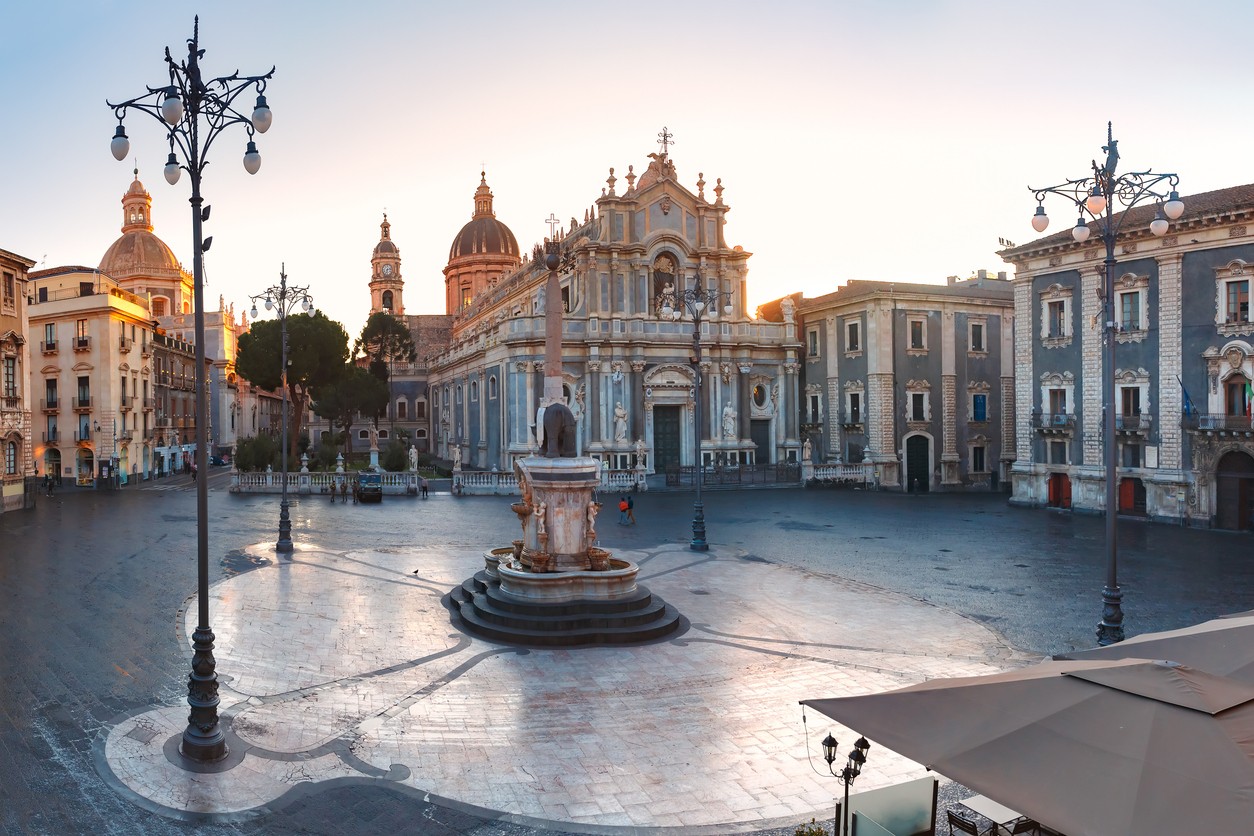
Photo: The Centro Storico around Piazza del Duomo is home to Baroque churches, palazzi, markets and winding alleyways. Many of the main attractions are located here, just a few minutes’ walk from one another.
Catania lies on Sicily’s east coast, right on the Ionian Sea and at the foot of Mount Etna. Following the devastating earthquake of 1693, a large part of the city was rebuilt in the late Baroque style. A particularly distinctive feature is the alternation of light-coloured limestone and black lava rock.
Centro Storico around Piazza del Duomo: The monumental heart of Catania brings together Baroque churches, palazzi, markets and winding alleyways. Many of the city’s main attractions are located here, just a few minutes’ walk from one another.
Via Crociferi and the Benedictine Quarter: Magnificent churches and monasteries line the short stretch of Via Crociferi. Further west, the Roman Theatre and the monumental Benedictine complex await.
San Berillo and the Teatro Massimo district: Here, historic façades sit alongside bars, small restaurants and creative projects. Street art and cultural venues lend San Berillo an alternative, less polished atmosphere.
Castello Ursino and San Cristoforo: Catania feels more local and lively around the medieval castle. Small trattorias, bars and narrow residential streets characterise the neighbourhood.
Borgo and Via Etnea: North of Villa Bellini, Via Etnea increasingly becomes a residential and shopping street. On a clear day, Mount Etna accompanies you as you head north.
Lungomare, San Giovanni Li Cuti and Ognina: Black lava rocks, small coves and fishing boats characterise Catania’s coastline. San Giovanni Li Cuti, in particular, is well worth a stroll or an aperitif by the sea.
For a first visit, the historic centre around Piazza del Duomo, Via Etnea and Teatro Massimo is particularly convenient. Those looking for a quieter place to stay can also choose the area towards the Lungomare.
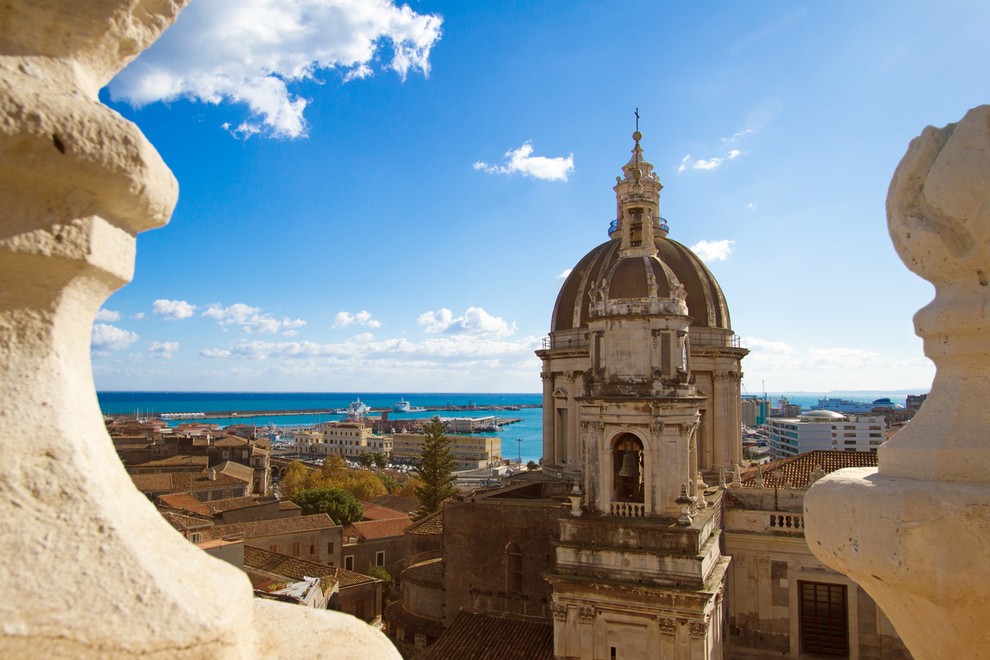
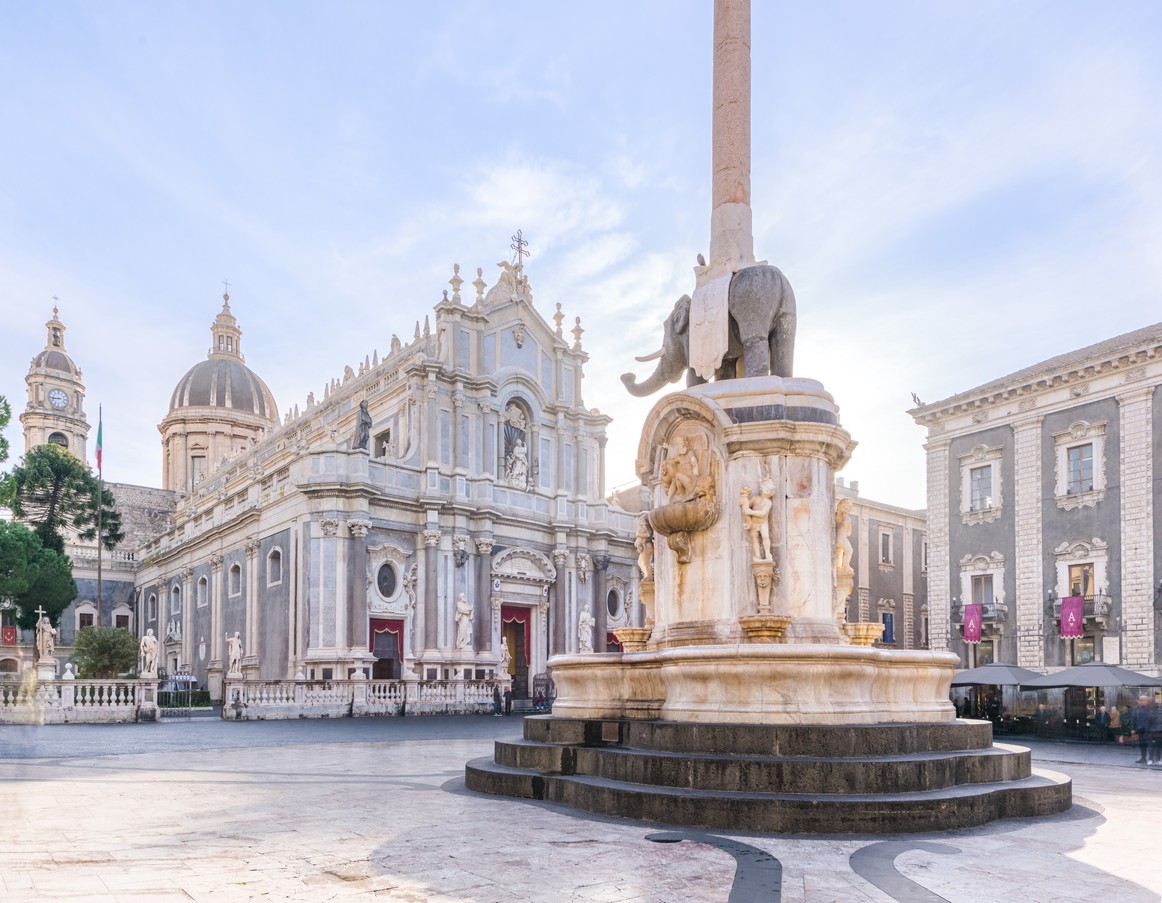
Photo: In Catania’s main square stands the ‘Liotru’, an elephant carved from black lava rock and the city’s landmark.
Many of Catania’s main attractions are located close to one another. The juxtaposition of ancient ruins, medieval walls and magnificent Baroque architecture is particularly fascinating.
Fontana dell’Elefante: In Catania’s central square, Piazza del Duomo, stands the ‘Liotru’, an elephant carved from black lava rock and the city’s landmark. Surrounding it are the cathedral, the town hall and the Fontana dell’Amenano.
Cattedrale di Sant’Agata: The cathedral took on its current Baroque form following the earthquake of 1693. Amongst other things, the interior houses the tomb of the composer Vincenzo Bellini.
Via Etnea and Piazza Stesicoro: The city’s main shopping and promenade street links palazzi, churches, cafés and shops. On a clear day, Mount Etna rises at the end of the street; the remains of a Roman amphitheatre can be found in Piazza Stesicoro.
Via Crociferi and San Benedetto: Churches and monasteries line this street almost without interruption. Particularly worth seeing is the Chiesa di San Benedetto, with its frescoes, marble decorations and elegant flight of steps.
Teatro Romano and Odeon: Behind an unassuming row of houses, an ancient theatre unexpectedly comes into view. It is precisely its location, nestled amongst modern residential buildings, that makes this site so special.
Monastero dei Benedettini di San Nicolò l’Arena: Cloisters, cellars, gardens and Baroque halls make this vast monastic complex one of Catania’s most fascinating sights. The guided tours are particularly worthwhile.
Castello Ursino: The fortress was built in the 13th century near what was then the coastline. Following the eruption of Mount Etna in 1669, it now lies considerably further inland; the Castello is currently closed for renovation work.
Teatro Massimo Bellini: This magnificent opera house is named after the Catania-born composer Vincenzo Bellini. The piazza in front of it has a particularly lovely atmosphere in the evening.
It’s best to start your tour early, around Piazza del Duomo and the Pescheria. From there, you can easily combine visits to the Teatro Romano, the Benedictine monastery, Via Crociferi and Via Etnea.
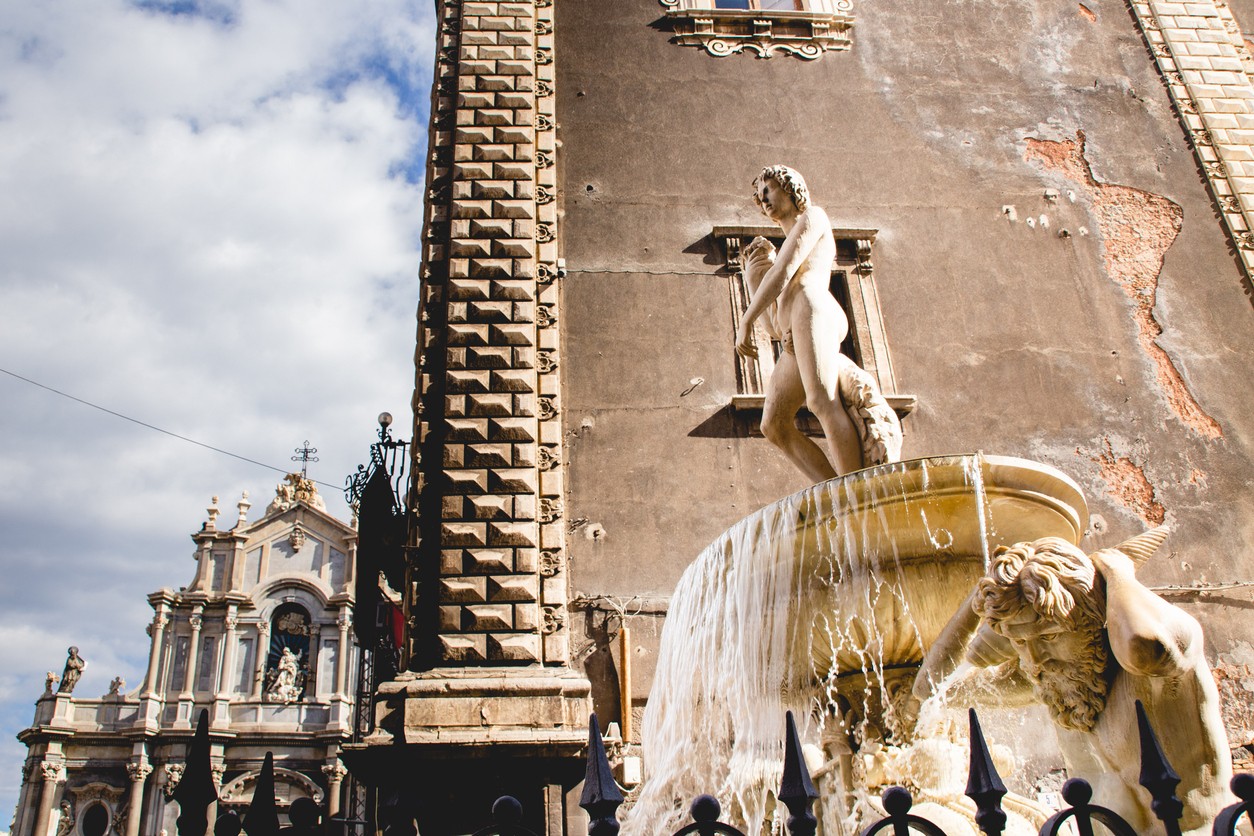
Photo: The elegant Fontana dell’Amenano fountain is fed by the Amenano, a river that flows largely underground through Catania.
Beneath the streets lie watercourses and ancient structures, whilst surprising views open up behind church spires. It is precisely these little discoveries that reveal a different side to Catania.
Terme Achilliane: Beneath the cathedral lie the remains of a Roman bath complex. A visit takes you several metres below today’s Piazza del Duomo.
Fontana dell’Amenano: This elegant fountain is fed by the Amenano, a river that flows largely underground through Catania. Behind the curtain of water, steps lead down to the Pescheria.
Badia di Sant’Agata: The climb to the upper part of the Baroque church is particularly beautiful. From here, the view stretches across the old town and, on a clear day, as far as Mount Etna.
Palazzo Biscari: One of Catania’s most magnificent aristocratic palaces surprises visitors with its richly decorated halls, frescoes and a sweeping Rococo staircase.
San Giovanni Li Cuti Bay: Black volcanic sand, fishing boats and small eateries lend the bay an almost village-like atmosphere. It is particularly lovely here in the late afternoon.
Badia di Sant’Agata, Terme Achilliane and Palazzo Biscari can easily be incorporated into a stroll through the old town. San Giovanni Li Cuti is well worth a separate detour to the seaside.
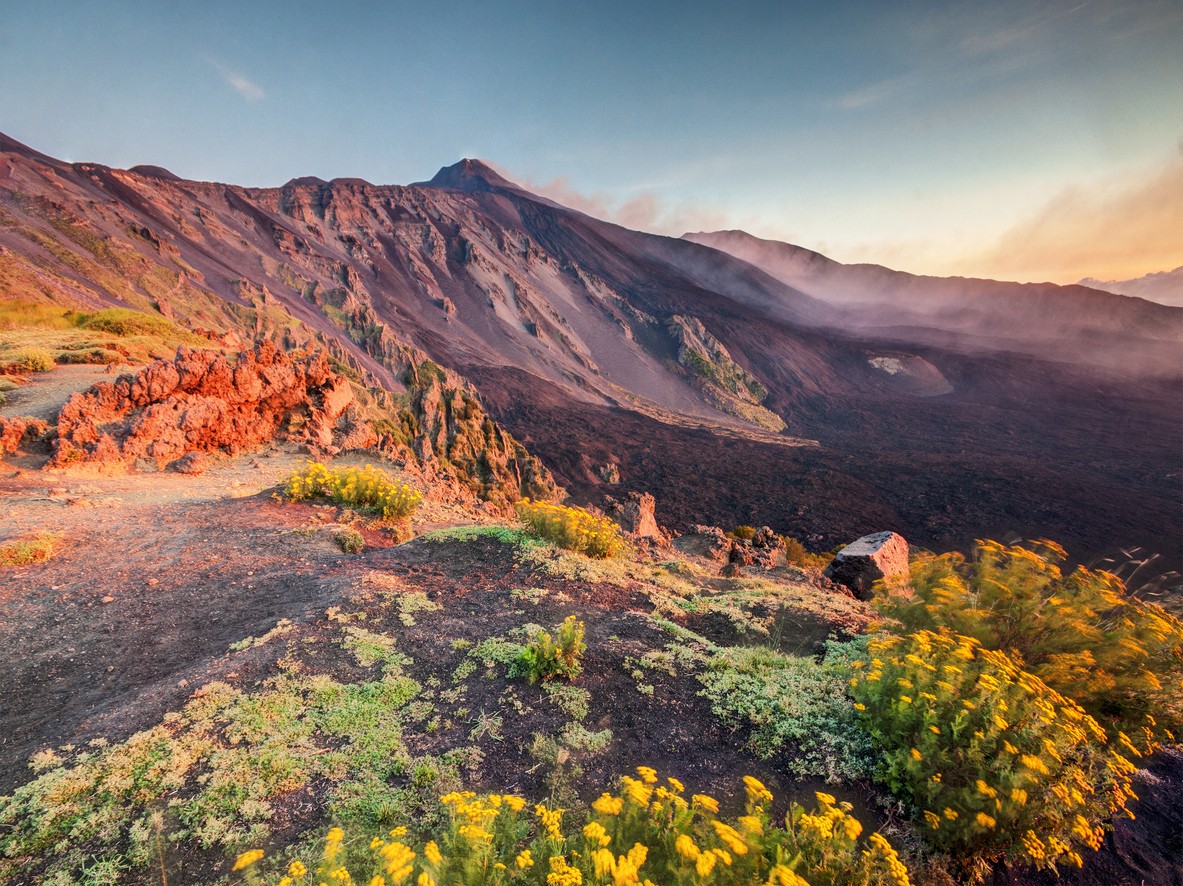
Photo: Mount Etna is just a short trip away from Catania and can be explored on hikes through lava fields, woods and stunning volcanic landscapes.
Mount Etna practically starts on your doorstep; there are small fishing villages along the coast, and Taormina and Syracuse are also within easy reach. With a few extra days, you can therefore combine a stay in Catania with exploring the surrounding area.
Mount Etna: craters and lava fields: From Rifugio Sapienza at around 1,900 metres, the cable car takes you up into the volcanic landscape. Depending on conditions, the journey continues towards the summit region in special vehicles or with guides.
Hiking in the Parco dell’Etna: Quieter trails lead through lava fields, woods and over extinct secondary craters. Popular routes include the Monti Sartorius and the Schiena dell’Asino.
Aci Castello and Aci Trezza: In Aci Castello, a Norman castle towers above the sea, whilst off the coast of Aci Trezza the striking Faraglioni rock formations rise out of the water.
Taormina and Isola Bella: Winding alleyways, the ancient theatre and spectacular views make Taormina one of Sicily’s most popular destinations. Below lies the small island of Isola Bella.
Syracuse and Ortigia: The old town of Ortigia charms visitors with its light-coloured façades, narrow lanes, the cathedral square and promenades right by the sea.
Wine villages on Mount Etna: Small wineries and Etna DOC vineyards are scattered around Milo, Linguaglossa and Randazzo. A lovely alternative to the classic volcano excursion.
Two to three full days are sufficient for Catania itself. If you have four or five days, I’d set aside at least one day for Mount Etna and another for the coast or Taormina.
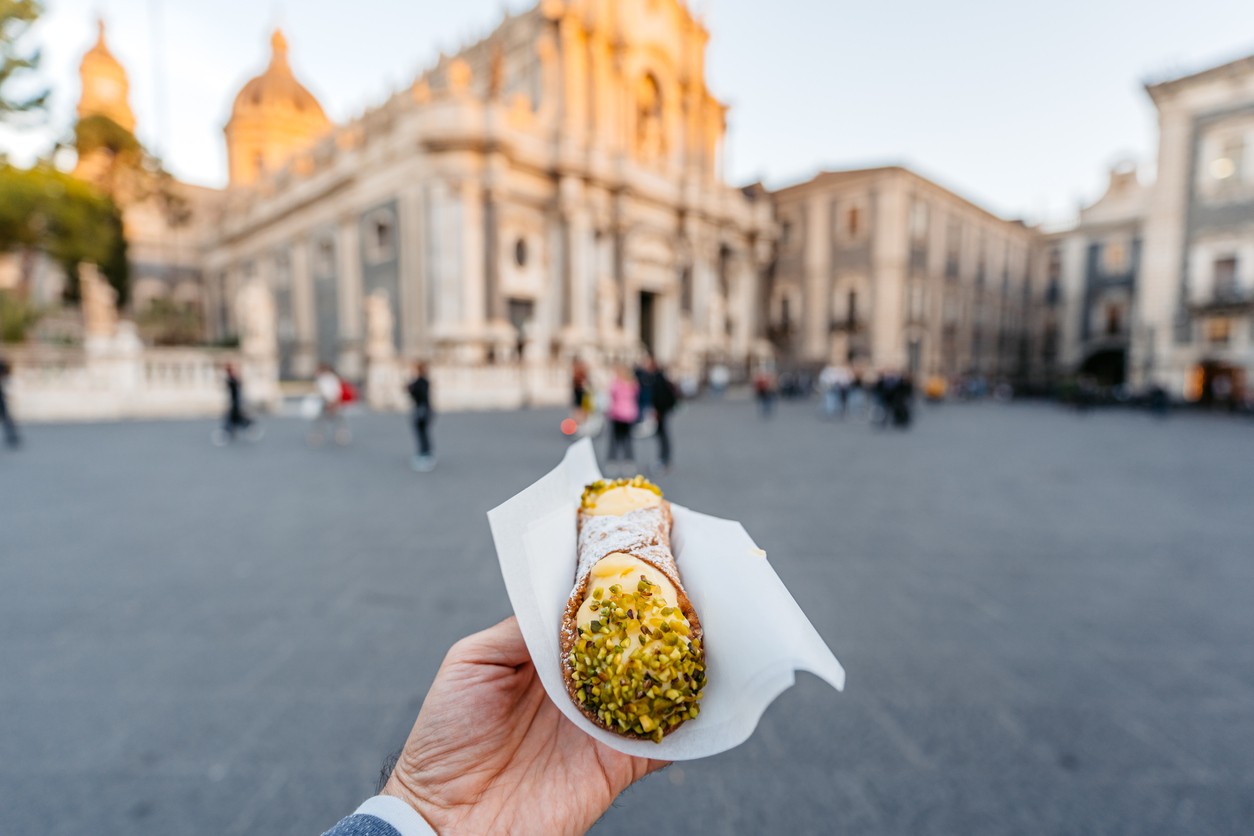
Photo: Sweet classics such as cannoli or granita with brioche are simply a must on any trip to Catania.
Catania’s cuisine is down-to-earth, flavourful and strongly influenced by Sicilian produce: aubergines, tomatoes, ricotta salata, pistachios, citrus fruits, as well as fresh fish and seafood all play an important role. Classics include pasta alla Norma, arancini and sweet specialities such as cannoli or granita with brioche.
Anyone wishing to explore Catania’s culinary scene should, in addition to an evening at a restaurant, allow time for spontaneous breaks: a granita in the morning, an arancino as a snack or a cannolo with an espresso are just as much a part of the experience as an elaborate meal.
The historic centre is particularly convenient for a first city break: many attractions are within walking distance of Piazza del Duomo, the Teatro Massimo Bellini and Via Etnea. Particularly charming are the smaller boutique hotels and historic accommodation options that blend Catania’s Baroque heritage with art, design or modern comforts.
Asmundo di Gisira: Just a few steps from the Pescheria, this exceptional boutique hotel blends historic architecture with contemporary art. The individually designed rooms draw inspiration from Sicilian myths and stories, whilst the leafy terrace overlooks the Baroque Piazza Mazzini.
Habitat Boutique Hotel: Set in a historic palazzo near the Teatro Massimo Bellini, old ceilings and floors meet lava stone, wood and clean, contemporary design. A tranquil courtyard and the on-site restaurant, Materia, complement the stylish concept – ideal for anyone wishing to architecture and great food.
Palazzo Sangiorgio: This elegant 5-star hotel combines a restored palazzo in the historic Civita district with modern rooms, a spa and a roof terrace. Piazza del Duomo and the Teatro Massimo are just a few minutes’ walk away – a particularly convenient location for a central stay.
B&B Palazzo Cerami: This small luxury B&B is set in a historic building dating from the late 19th century, near Via Crociferi and Via Etnea. High ceilings, classic details and individually furnished rooms lend the property plenty of charm; its location, comfort and breakfast are also particularly highly praised.
Taga Suites: Modern, playful and pleasantly personal: Taga Suites offers individually designed rooms and suites, some with a whirlpool or sauna. This small property is situated near Piazza Stesicoro and combines contemporary design with a surprisingly peaceful retreat in the heart of bustling Catania.
For a first visit, the area between Piazza del Duomo, Teatro Massimo and Via Etnea is ideal. Asmundo di Gisira is the most unusual choice for art and character, Habitat is particularly exciting for design and cuisine, and Palazzo Sangiorgio offers greater comfort. Palazzo Cerami appeals with its classic Sicilian charm, whilst Taga Suites is the most modern and personalised option in the selection.
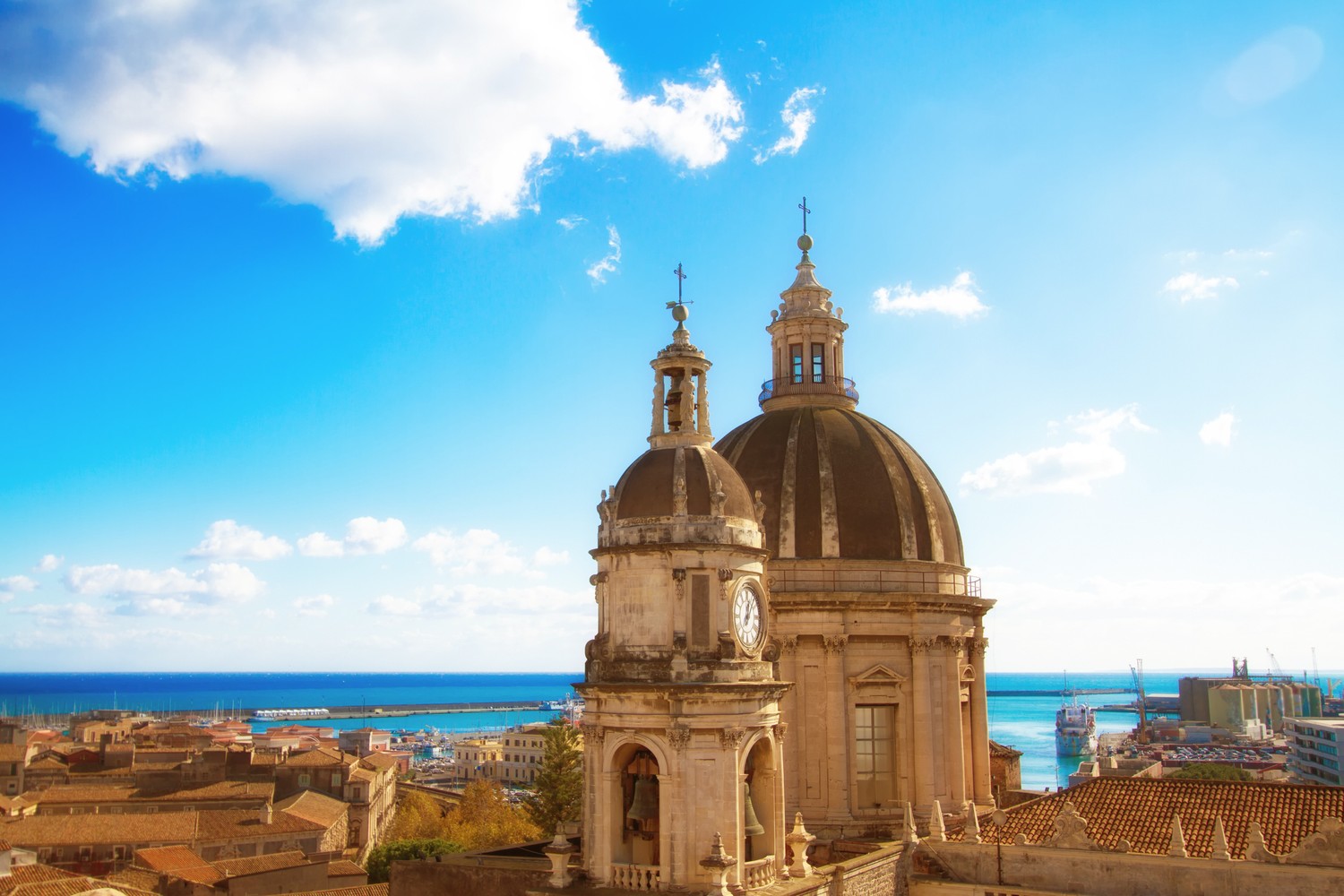
Photo: Catania has a Mediterranean climate, with hot summers and long, mild transitional seasons. Spring and autumn are particularly good times to visit the city and Mount Etna.
Catania has a Mediterranean climate, with hot summers and long, mild transitional seasons. Spring and autumn are particularly well suited to visiting the city and Mount Etna.
Spring: April, May and early June offer pleasant temperatures for city walks, hikes and trips along the coast.
Summer: July and August are hot and sunny. City walks are best enjoyed in the morning or late afternoon.
Autumn: September often still offers fine weather for swimming, whilst October and November are more pleasant for sightseeing and hikes.
Winter: In Catania, the weather usually remains mild, whilst there may be snow on Mount Etna. In early February, the Festa di Sant’Agata brings the town to life.
For a classic city break, May, October and the first half of November are particularly lovely. If you’d also like to go swimming, September often offers ideal conditions.
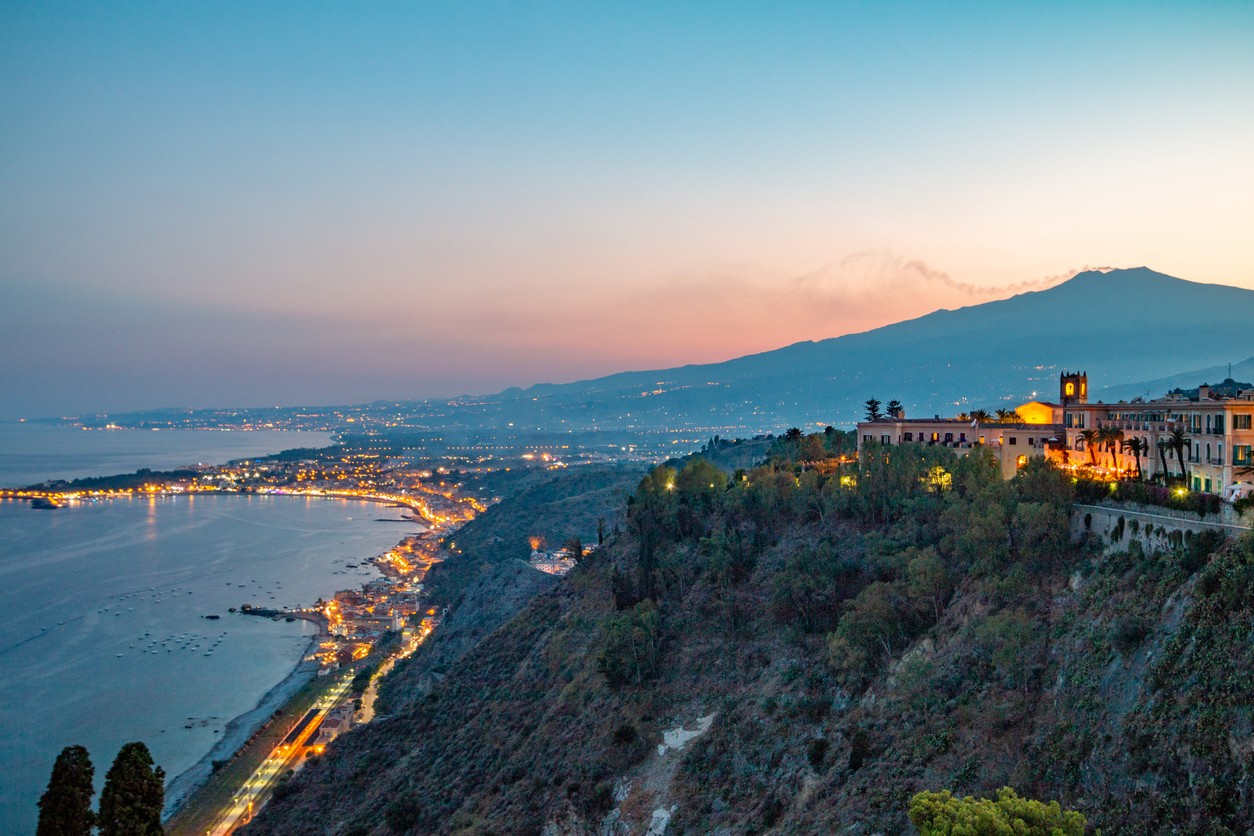
Photo: Catania is ideal both for a short city break and as a starting point for a tour of Sicily. Many destinations on the east coast can be reached without a hire car.
Catania is ideal both for a short city break and as a starting point for a tour of Sicily. Many destinations on the east coast can be reached without a hire car.
Travelling by plane: Catania-Fontanarossa Airport is just a few kilometres from the city centre. The Alibus connects the airport with the main railway station and Via Etnea, amongst other destinations.
Travelling on by train: Regional trains run from Catania Centrale to destinations including Taormina, Messina and Syracuse.
Getting around on foot: The main sights in the historic centre are close together. Walking is usually the best option for reaching Piazza del Duomo, Pescheria, Via Crociferi and Via Etnea.
Metro and city buses: The metro is particularly handy for longer journeys to the northern parts of the city. Buses complement the network and connect the city centre with the coast.
To the coast: San Giovanni Li Cuti and Ognina can be reached by bus or taxi. In summer, there are also connections to Plaia, south of the city.
Car hire for Mount Etna and round trips: Within Catania, a car is usually unnecessary. However, for visiting wineries, mountain resorts and a wider tour of Sicily, it offers considerably more freedom.
Mount Etna without a hire car: Organised tours are a straightforward alternative. The higher parts of the volcano are accessed by cable car, specialised vehicles or guides anyway.
For days spent in the city, a combination of walking, buses and the metro is usually sufficient. I would only pick up a hire car once you continue your journey from Catania.
Conclusion: Catania is not a picture-perfect postcard town – and that is precisely what makes it so charming. Baroque palazzi, black lava rock, lively markets and the nearby Ionian Sea all come together here. Anyone who combines the city, the volcano and the coast will discover one of Sicily’s most contrasting sides.

© Swiss Bankers 2026


 Compare cards and conditions

