


Important information:
Am 10. April 2024 wurden das Kundenportal sowie der Web-Zugriff auf das Kartenkonto eingestellt. Bitte laden Sie die Swiss Bankers App herunter, um weiterhin uneingeschränkten Zugriff auf alle Dienste zu haben.
Are you a Swiss Bankers sales partner?
Hier geht es zum Partnerportal.
Travelling stress-free starts with the right preparation – and that includes managing your travel budget. After all, paying smartly whilst on the move not only saves you money, but also time and hassle. But which payment method is the best choice? Cash, card or mobile payments? The answer lies in finding the right combination. We’ll show you how to pay flexibly worldwide, avoid unnecessary fees and be fully prepared for any situation.
 21.10.2026
 Miryana
An espresso in Milan, a souvenir in Marrakesh or dinner in New York – depending on your destination, a different payment method is often the better choice.
Practical tip: Carry some local currency for spontaneous purchases, but avoid carrying large amounts of cash.
Whether at a hotel, restaurant or on a shopping trip – cards allow you to pay conveniently without having to carry cash around all the time. But there are differences:
Credit cards offer a credit limit and are often required for car hire deposits.
With debit cards, the amount is debited directly from your bank account.
Prepaid cards work on a credit balance basis. You can only spend what you’ve topped up beforehand – ideal for keeping your travel budget under control.
Hold your smartphone up to the terminal, confirm the payment, and you’re done! With Apple Pay, Google Pay or a compatible smartwatch, you can pay quickly and contactlessly. Modern security measures protect your card details. Good to know: Mobile payments use your registered payment card. You should therefore still carry a physical card with you – in case your smartphone fails or contactless payment isn’t possible.
Flexibility on the go: With the Swiss Bankers Travel Card, you can keep track of your travel budget and pay anywhere in the world where Mastercard is accepted. The prepaid card can be managed via the Swiss Bankers app and supports Apple Pay and Google Pay. Please note the applicable card terms and conditions.
Small fees, unfavourable exchange rates and additional costs when withdrawing cash can put a significant strain on your holiday budget. What may go unnoticed individually can really add up over the course of your holiday. With a few simple tricks, you can avoid such additional costs.
Our tip: Whenever possible, always choose the local currency when paying or withdrawing cash. This way, you’ll avoid the often-expensive instant conversion. However, any fees charged by your card provider will still apply.
What you should bear in mind: Compare your cards’ terms and conditions before you travel. That way, you’ll know which is best suited for purchases and which for cash withdrawals.

A lost card, a stolen wallet or a suspicious transaction can quickly put a damper on your holiday. By taking a few simple precautions, you can ensure you’re still able to make payments even in an emergency.

Whether it’s a city break, a long-haul holiday or an adventure holiday – the most suitable payment methods depend on your destination and the nature of your trip.
City breaks in Europe: Cards and smartphones are the way to go: Contactless payment is widely accepted in many European cities – from restaurants to public transport. Use your card and mobile payment as your main payment methods and keep some cash for smaller purchases.
Long-haul trips: Combine cash and cards wisely: In Japan, Mexico or Morocco, cards are often accepted in larger hotels and shopping centres. In traditional markets and smaller shops, however, cash is often preferred. Pay for larger purchases by card and make sure you have enough local currency to hand. With Swiss Bankers’ cash ordering service, you can have foreign currencies conveniently delivered to your home before you set off. Orders are placed via the Swiss Bankers app using an active card and a residential address in Switzerland. The minimum order value is CHF 200, plus fees.
Road trips and car hire: It’s difficult without a credit card: A standard credit card is particularly important when hiring a car: many car hire companies require one for the security deposit and do not accept prepaid cards for this purpose. Check the payment terms before booking. For day-to-day expenses, a card and mobile payment are ideal, supplemented by a little cash for when you’re out and about.
Adventure holidays and remote regions: Be well prepared: On a safari in Namibia or a hiking trip through the Andes, cash machines are often few and far between. Card payments may also fail due to a lack of network coverage. Plan to carry a larger, securely stored cash reserve and take two cards with you that can be used independently.
Be well prepared: On our country information pages, you’ll find practical information about your destination – from the local currency and payment options to important travel tips.
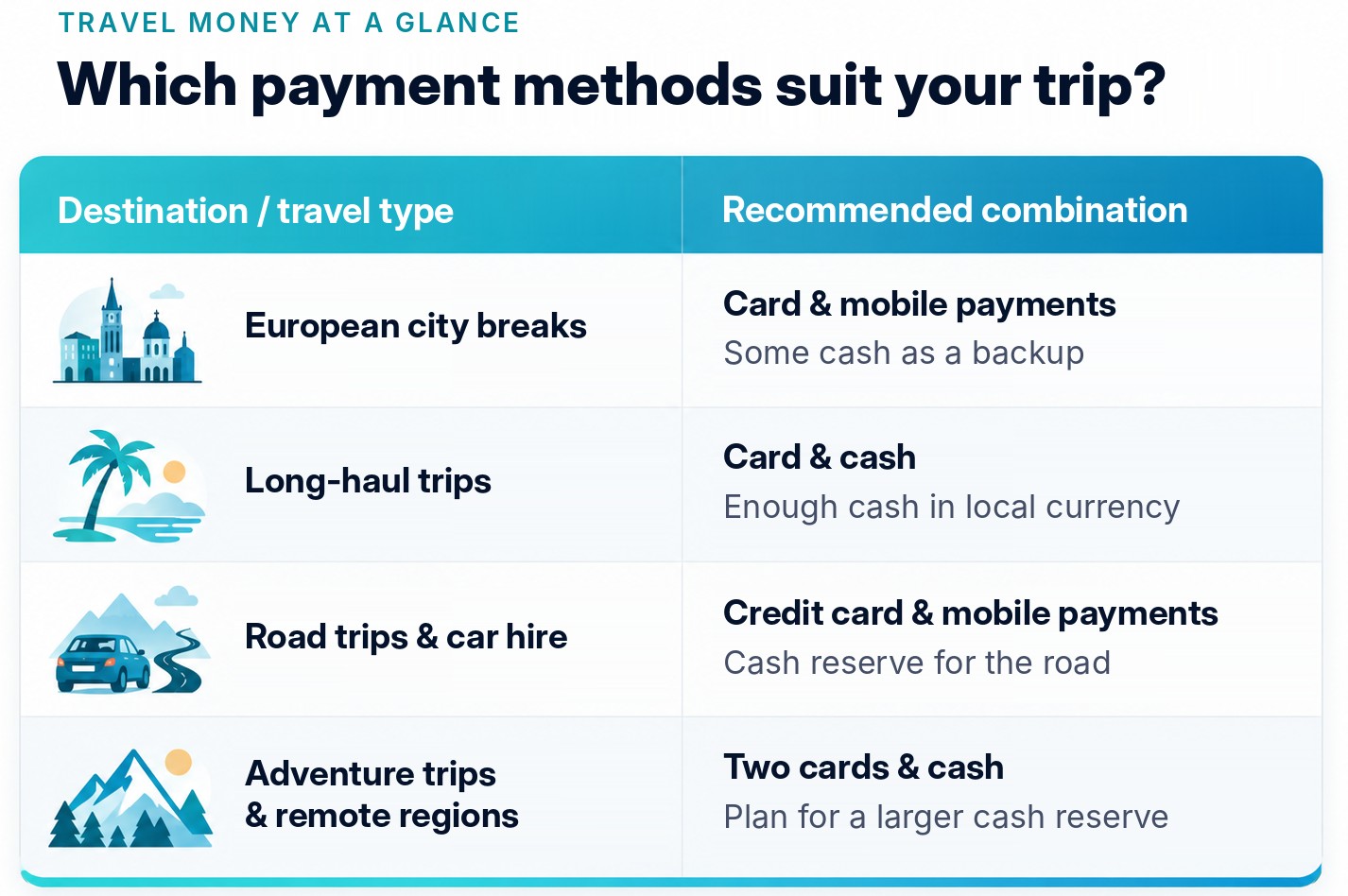
Table: Recommended payment methods by type of trip, from city breaks to adventure holidays
Having the right travel budget makes things much easier. If you check the payment options at your destination before you set off, keep an eye on fees and make provisions for unexpected situations, you’ll be able to enjoy your holiday with greater peace of mind. The key is not to take as many payment methods as possible, but to use them in a way that suits your destination and your own needs. This way, you’ll remain flexible whilst travelling, keep your spending under control and be able to focus entirely on your trip.

© Swiss Bankers 2026


 Compare cards and conditions

