


Important information:
Am 10. April 2024 wurden das Kundenportal sowie der Web-Zugriff auf das Kartenkonto eingestellt. Bitte laden Sie die Swiss Bankers App herunter, um weiterhin uneingeschränkten Zugriff auf alle Dienste zu haben.
Are you a Swiss Bankers sales partner?
Hier geht es zum Partnerportal.
Mykonos is a place you simply must visit at least once – the clichés about the turquoise-blue water and the white houses are actually true, and it almost feels as though they were invented specifically for this island. But the island is more than just its party image: myths, history and quiet corners are just waiting to be discovered. We’ll show you a different side to Mykonos: with tips on Chora, quiet beaches, day trips, cuisine and practical information.
 21.06.2026
Contents:
Chora, Little Venice and the windmills: Mykonos straight out of a picture book
The north and the island’s interior: Mykonos away from the hustle and bustle
Beaches on Mykonos: less ‘which is the most beautiful?’ – more ‘which one suits me?’
Eating out in Mykonos: where the food not only looks good, but tastes great too
Accommodation on Mykonos: lovely hotels, sweeping views and clever money-saving tips
Conclusion: Mykonos is better if you’re not just looking for the obvious
Chora is where Mykonos reveals all its picture-postcard beauty: whitewashed houses, winding alleyways, blue doors, little churches and, time and again, that view of the sea. Legend has it that there are 365 churches on Mykonos – one for every day of the year. Whether they’ve been counted exactly or not, they’re just as much a part of the island’s landscape as the windmills, the cubic houses and the blue of the Aegean Sea. The town really comes into its own in the morning – when the alleyways are still quiet, the light is soft and Mykonos seems almost a little sleepy.
From Chora, it’s just a few steps to Little Venice, where the houses stand right by the water and colourful balconies jut out over the Aegean. Just above them stand the famous windmills of Mykonos, one of the island’s most recognisable landmarks. The scenery is particularly beautiful at sunset – but it’s also very popular. If you prefer a quieter atmosphere, come earlier in the day or stay a little longer after sunset, when the hustle and bustle gradually dies down.
If you want to experience Mykonos away from the beach clubs and crowded streets, you should make time to explore the north and the island’s interior. Here, the island feels rougher, quieter and more unspoilt: narrow roads, arid hills, plenty of wind and, time and again, unobstructed views across the Aegean Sea.
A lovely contrast to Chora is Ano Mera, a quiet village in the island’s interior. Around the village square you’ll find tavernas, more everyday life and less of a show. Particularly worth a visit is the Panagia Tourliani Monastery, one of the island’s most famous historic sites. The north also reveals a different side to Mykonos – more barren, more expansive and considerably less glamorous. A detour to the Armenistis Lighthouse in the north-west is particularly lovely. There, standing amidst the rocks, the wind and the sea, you’ll experience Mykonos as a rugged slice of the Cycladic landscape.
Top tip: It’s best to explore this side of the island by hire car. The roads are narrow in places, but the views are well worth it – especially in the late afternoon, when the light softens.
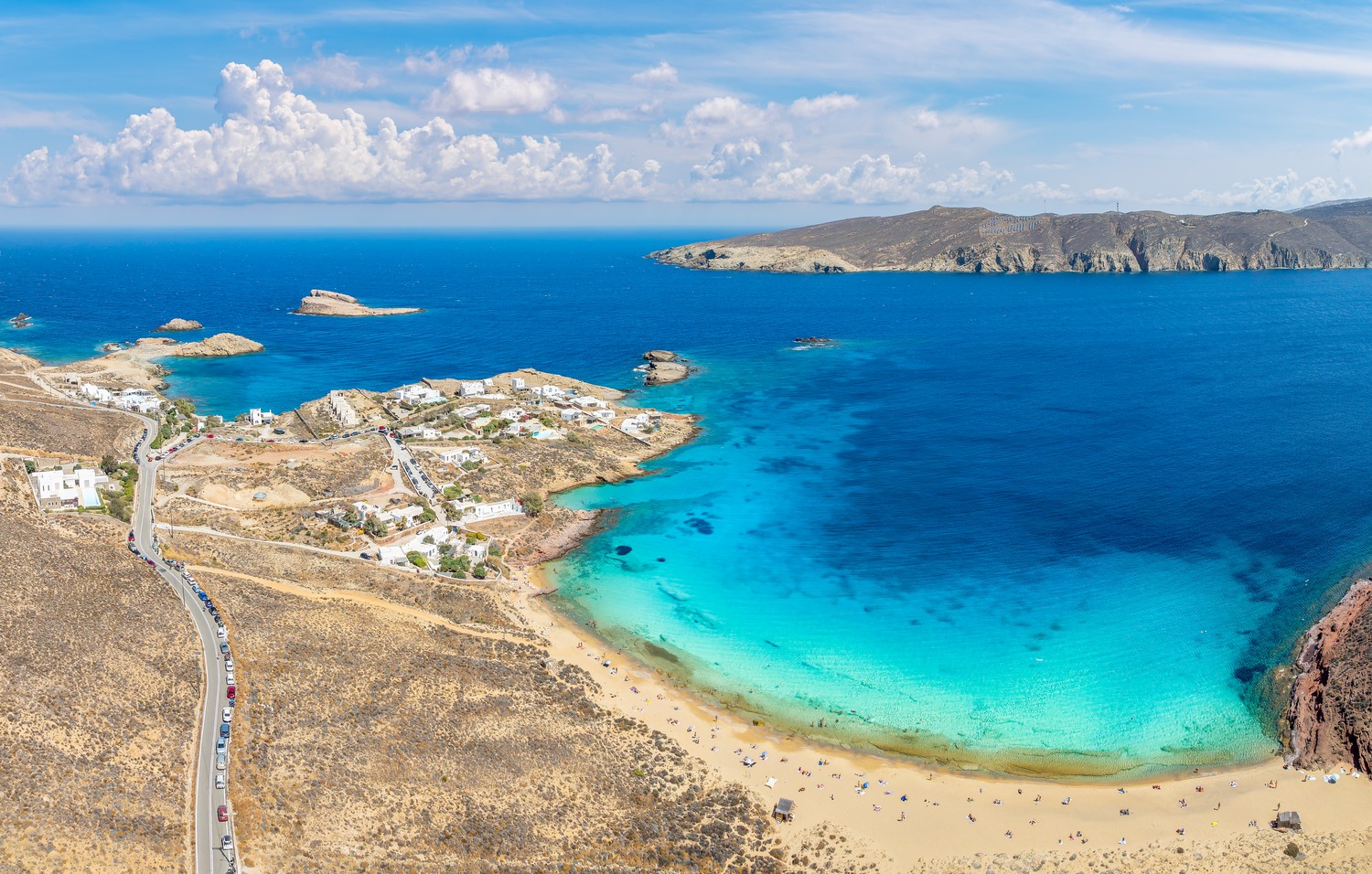
Photo: Agios Sostis – an unspoilt bay with sweeping views across the Aegean Sea.
Asking which is the most beautiful beach on Mykonos can quickly lead you astray. That’s because the beaches are all very different – and that’s precisely what makes them so exciting.
Ornos is convenient, easily accessible and ideal if you’re looking for comfort. Psarou is sophisticated, well-known and represents the more glamorous side of the island. Paraga and Paradise are lively and perfect for anyone who enjoys music, beach clubs and a great atmosphere. Kalafatis is ideal for water sports, whilst Agios Sostis has a more natural and peaceful feel. Ftelia is particularly lovely for those who enjoy the wind, wide open spaces and a slightly wilder landscape. If you’re looking for an even more relaxed experience, you should also consider Fokos, Kapari or Loulos. These beaches are less commercialised and ideal if you want to experience Mykonos away from the beach clubs.
The wind is particularly important: on some days, it can be very strong on Mykonos. In that case, it’s worth making a spontaneous decision and choosing a more sheltered beach. Before heading to the beach, check the wind direction on Windfinder. When there’s a strong northerly wind, the southern beaches are often more pleasant, whilst northern bays can be rougher and windier.
So the better question isn’t: Which beach is the best? But rather: What sort of Mykonos do you want to experience today?
Video: Delos – the mythical birthplace of Apollo.
Just a short boat ride from Mykonos lies Delos – a small island with a rich history. In ancient times, it was regarded as a sacred place and the birthplace of Apollo and Artemis. Today, Delos is one of Greece’s most important archaeological sites and a UNESCO World Heritage Site.
Amidst the ruins of temples, ancient columns, mosaics and stone paths, you get a real sense of just how much history this little patch of land holds. The trip is perfect for anyone who wants to experience Mykonos as more than just a beach and lifestyle destination. Set off as early as possible, and make sure to bring water, sun cream and comfortable shoes.
Our tip: Book a local guide or join a guided tour once you arrive – the guides are usually waiting by the arriving boats. This makes Delos much more fascinating, as many details, stories and contexts only become clear with an expert explanation.
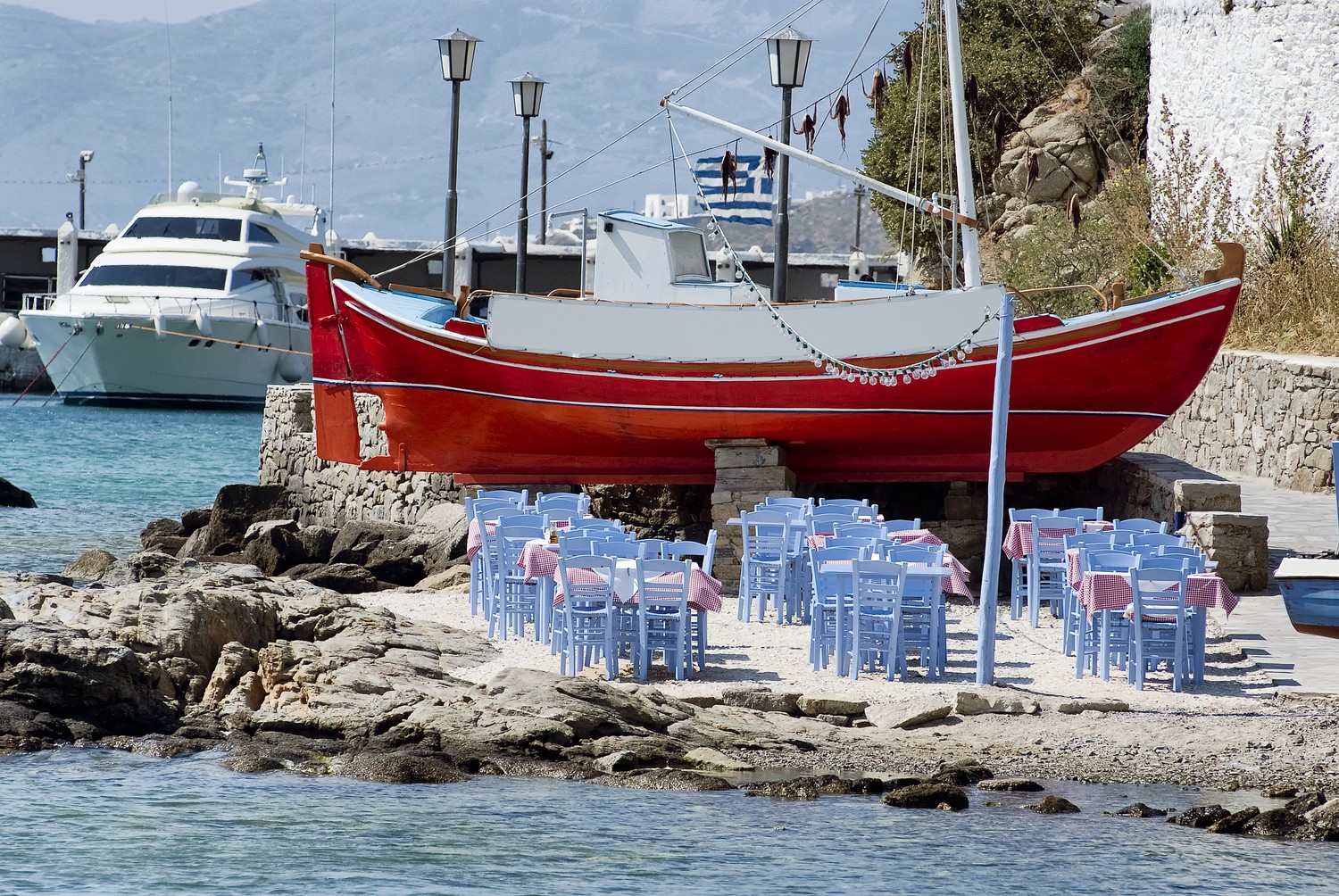
Photo: Baboulas Ouzeri – unpretentious, charming and “the least gourmet restaurant on the island”.
You’ll find everything on Mykonos: upmarket restaurants, beach club fare, elegant bars and tavernas serving simple dishes. If you want to eat well, don’t just head for the places with the best views.
The tavernas in Ano Mera or just off the well-known streets are particularly pleasant. Typical dishes include kopanisti, a spicy cheese from the Cyclades; louza, a traditional air-dried pork loin; fresh fish; grilled vegetables; fava; salads; and homemade pites. A useful tip: eat where the menu isn’t written in five languages specifically to attract tourists. Mykonos may be expensive, but good food doesn’t always have to come from the most prominent locations.
Our recommendations:
For a special lunch, Kiki’s Tavern near Agios Sostis is well worth a visit. The restaurant is only open during daylight hours as there’s no electricity – and that’s precisely what gives it its simple, authentic charm. Also lovely for lunch are Kastro’s Mykonos with its special location in Chora, Tsaf Seafood for fish and seafood, Limnios for Greek cuisine with a view, Kavos for a relaxed island atmosphere, and Baboulas Ouzeri for straightforward Greek cuisine in a cosy setting.
To start the day, we recommend Lalala – ideal for breakfast or brunch. If you’d like to round off the evening in style, you can enjoy the sunset at the 180 Sunset Bar or, later on, have a drink by the water at Negrita in Little Venice.
Video: Kalesma, Mykonos
Mykonos is expensive – and that goes for hotels too. In peak season, prices can easily rival those in cities such as London, Paris or New York. If you want to save money, you should not only compare booking platforms but also enquire directly with the hotel. You can often get better rates by booking directly or paying in cash. A free airport transfer can also save you 20 to 30 euros. A breakfast included in the price is also a real bonus on Mykonos – given the prices, that can easily amount to 10 to 15 euros per person per day.
Our accommodation recommendations:
If you prefer something stylish, peaceful and relaxed, take a look at Nomad Mykonos – a retreat offering laid-back, barefoot living, plenty of privacy and a very natural, elegant atmosphere. Kalesma Mykonos is also exceptional: Cycladic beauty in the Mykonian spirit, with plenty of design flair, spaciousness and a luxurious island feel. Another lovely recommendation is The Wild Hotel – ideal for anyone who wants to experience Mykonos in a slightly more secluded way, with a relaxed atmosphere, Aegean style and plenty of peace and quiet away from the main hustle and bustle. For a slightly more budget-friendly alternative, Croco Mykonos is well worth a look. This accommodation is a good option for anyone looking for a stylish stay without necessarily opting for the very highest price bracket.
Mykonos is noisy, beautiful, expensive, photogenic and sometimes overcrowded. But the island is also rugged, historic, traditional and surprisingly diverse. If you only visit the well-known spots, you’ll get a very glossy version of Mykonos. But if you get up early, head into the island’s interior, explore the north and visit Delos, you’ll discover a different side.
Perhaps that is precisely the best tip for Mykonos: don’t try to see everything that everyone else sees. Instead, seek out the moments when the island isn’t putting on a show. That’s when Mykonos reveals why, despite everything, it is more than just its reputation.

© Swiss Bankers 2026


 Compare cards and conditions

