


Important information:
Am 10. April 2024 wurden das Kundenportal sowie der Web-Zugriff auf das Kartenkonto eingestellt. Bitte laden Sie die Swiss Bankers App herunter, um weiterhin uneingeschränkten Zugriff auf alle Dienste zu haben.
Are you a Swiss Bankers sales partner?
Hier geht es zum Partnerportal.
Avignon combines medieval walls, the light of the South of France and a surprisingly vibrant cultural scene. Set amongst the imposing Papal Palace, quiet alleyways, small squares and the banks of the Rhône, this is a city that doesn’t merely display its history, but lives it as a matter of course. In this article, you’ll discover Avignon’s most beautiful sights, hidden gems, culinary tips, stylish hotels and practical advice for planning your trip.
 18.06.2026
 Eliza
Eliza
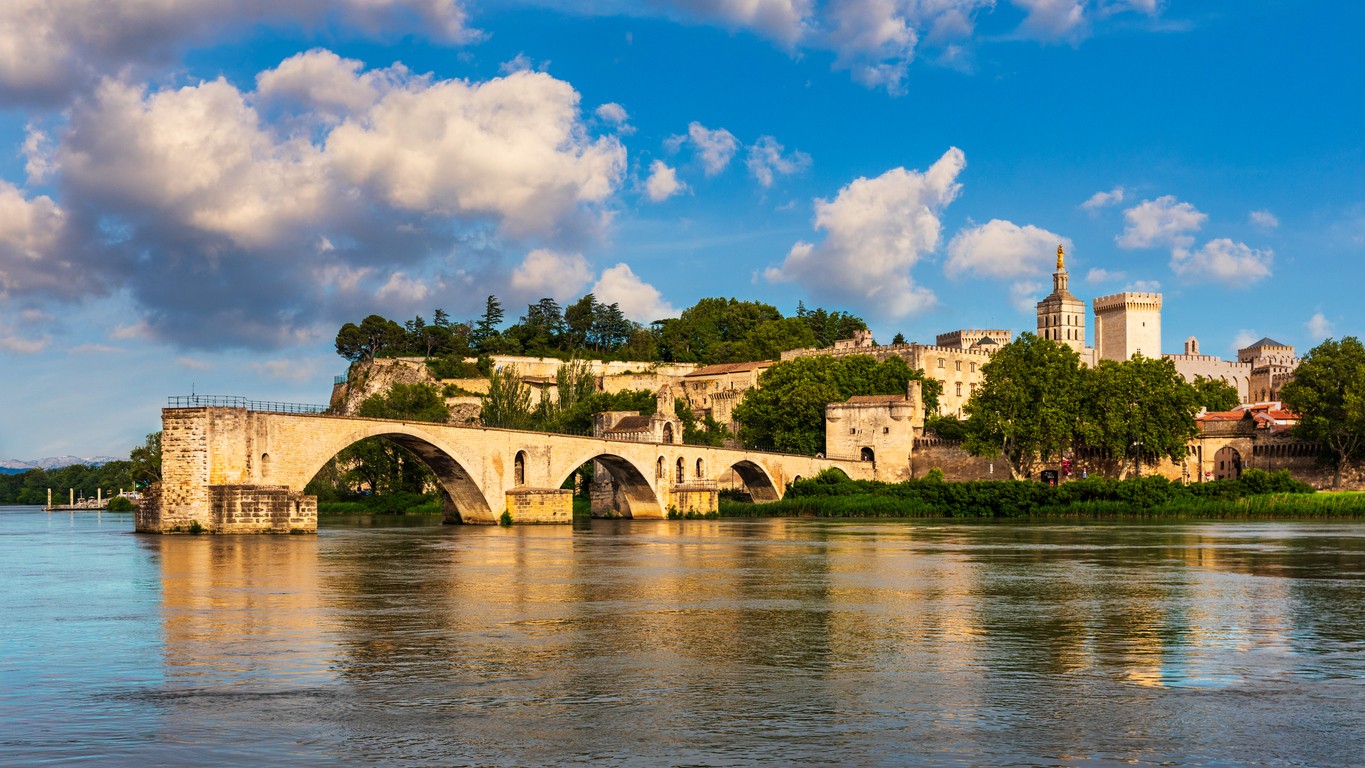
Photo: Avignon lies in the heart of Provence, on the left bank of the Rhône, and at first glance almost seems like a city that moves to its own rhythm.
Avignon lies in the heart of Provence, on the left bank of the Rhône, and at first glance almost seems like a city with a rhythm all of its own. The well-preserved city walls enclose the historic old town, where squares, churches, small shops and cafés are packed closely together. Anyone entering through one of the city gates will quickly realise that Avignon is best explored on foot.
Within the city walls – the so-called ‘intra-muros’ – the districts are less sharply demarcated from one another than in large cities. Nevertheless, individual areas have their own distinct character. Around the Palais des Papes, the Rocher des Doms and the Balance/Saint-Bénézet area, Avignon reveals its most monumental side. Here, many well-known sights lie close together, and your gaze wanders almost automatically between medieval walls, the Rhône and historic squares.
The Vernet district has a somewhat more elegant and tranquil feel, with galleries, antique shops, beautiful façades and charming little spots perfect for a leisurely stroll through the city. Things liven up around Saint-Agricol and the Place de l’Horloge: cafés, restaurants and classic cityscapes characterise this part of the old town. The Quartier des Teinturiers is particularly atmospheric, with the Rue des Teinturiers, the small canal, old waterwheels and cobbled streets. It feels a little more bohemian and quieter than the main squares.
The area around Les Carmes is also well worth a visit, particularly for its market, the little eateries and the relaxed neighbourhood atmosphere. If you want to explore Avignon at a leisurely pace, it’s best not just to walk from one sight to the next, but to let yourself wander through these different corners of the city. This will give you a feel for the city that goes beyond the well-known highlights.
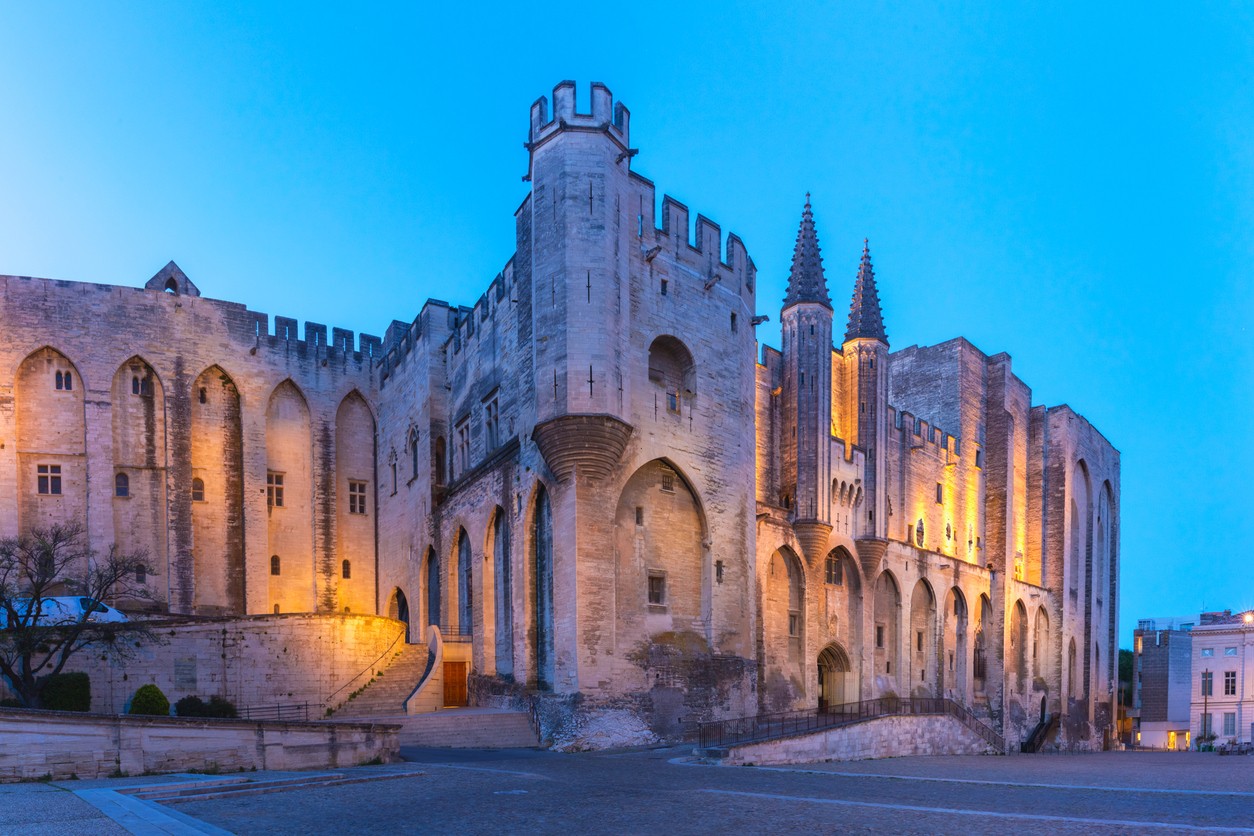
Photo: One of the most famous sights in Avignon is the Palais des Papes.
Avignon’s main attractions are conveniently close to one another and can easily be explored on foot. Particularly within the city walls, there is a delightful mix of rich history, quiet alleyways, spacious squares and views of the Rhône.
The most beautiful sights in Avignon:
Palais des Papes: The Papal Palace is Avignon’s most impressive building and serves as a reminder that the city was the seat of the popes in the 14th century. Its imposing walls, courtyards and halls still convey the political and religious significance Avignon held at that time.
Pont Saint-Bénézet: The famous bridge, better known as the Pont d’Avignon, now extends only partially into the Rhône. It is precisely this fragmentary nature that gives it its charm – the view of the bridge from the Rocher des Doms or from the Île de la Barthelasse is particularly beautiful.
Rocher des Doms: The elevated garden above the Papal Palace is one of the most pleasant spots to take a break. From here, the view opens out over the Rhône, the Pont Saint-Bénézet, Villeneuve-lès-Avignon and the rooftops of the old town.
Notre-Dame des Doms Cathedral: Right next to the Papal Palace stands Avignon Cathedral with its gilded statue of the Virgin Mary. It is somewhat quieter than its grand neighbour, but blends beautifully into the historic ensemble surrounding the Place du Palais.
Place de l’Horloge: This central square is one of the liveliest spots in the old town. Cafés, theatres, the town hall and the historic carousel create a classic southern French townscape here, which is particularly well suited for a break.
Musée du Petit Palais: The museum is situated on the edge of the square, next to the Papal Palace, and displays art from the Middle Ages and the Renaissance. It’s a great tip if you’d like to delve a little deeper into Avignon’s history.
Collection Lambert: As a contrast to the medieval backdrop, the Collection Lambert displays contemporary art in an elegant city mansion. It is precisely this blend of old Avignon and modern art that makes a visit here so interesting.
Many of Avignon’s famous sights are so close together that you can explore them at a leisurely pace in a single day. The tour becomes particularly enjoyable if you plan a few little detours along the way – for example, through the Vernet district, down to the Rhône or into one of the quieter side streets of the old town.
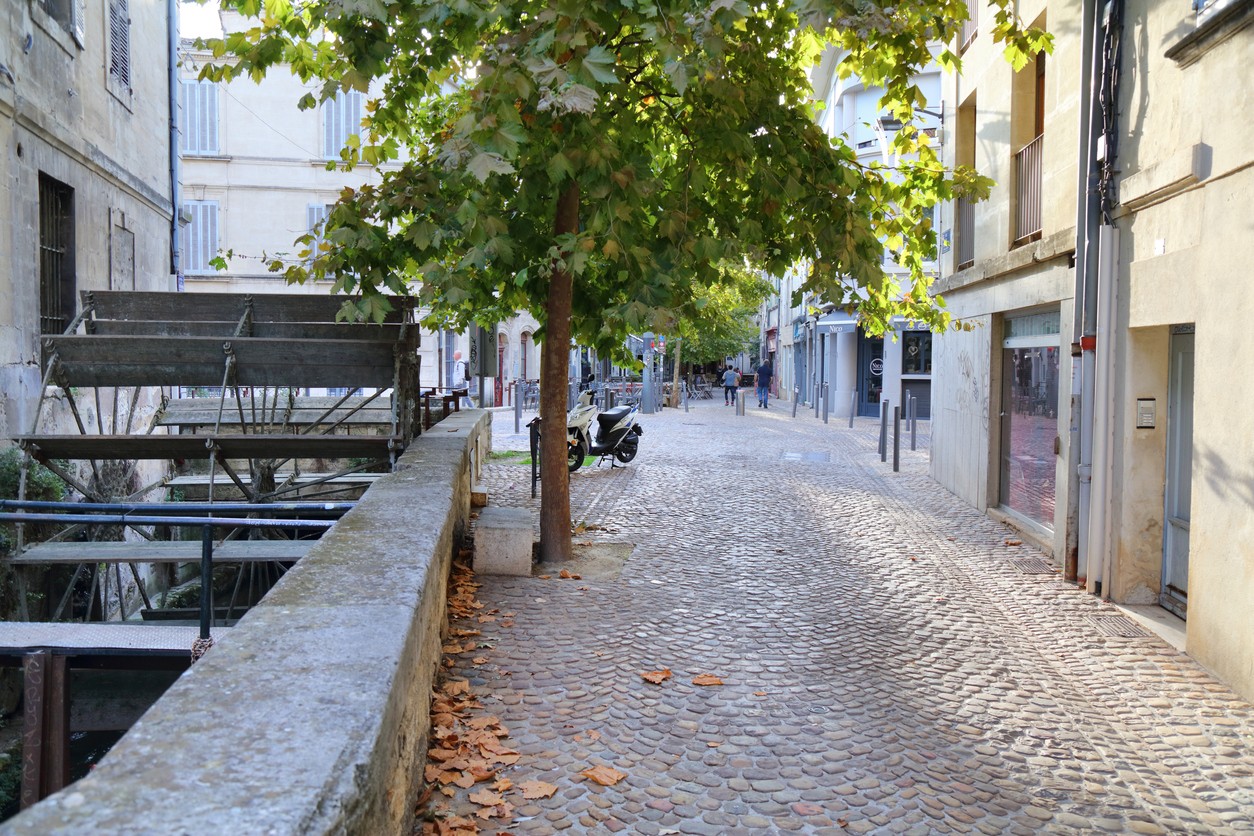
Photo: A lovely hidden gem in Avignon is the Rue des Teinturiers – water wheels line the small canal, serving as a reminder of the city’s textile heritage.
As well as the Papal Palace, the Pont d’Avignon and other well-known sights, there are a number of places in Avignon that are easily overlooked, even though they reveal a great deal about the character of the city. It is precisely these smaller discoveries that make a stroll through Avignon particularly charming: a canal shaded by ancient plane trees, quiet courtyards, surprising art spots and views that only reveal themselves at second glance.
The best hidden gems in Avignon:
Rue des Teinturiers: The Rue des Teinturiers is one of Avignon’s most atmospheric streets. Along the small canal, old waterwheels serve as a reminder of the city’s former textile heritage, whilst cobblestones, trees and small local establishments create an almost village-like atmosphere.
Quartier Vernet: Around Rue Joseph Vernet, Avignon reveals a more elegant, tranquil side. Galleries, antique shops, beautiful façades and hidden gems make the neighbourhood ideal for a leisurely stroll through the city away from the main tourist crowds.
Musée Louis Vouland: This small museum feels more like a private townhouse than a traditional exhibition space. Furniture, crafts and decorative art reveal a cultured, intimate side to Avignon that fits in perfectly with the city’s more tranquil atmosphere.
Île de la Barthelasse: This island in the Rhône, opposite the old town, is a lovely spot from which to view Avignon from a distance. In the evening in particular, the view from here opens up to reveal the city walls, the Papal Palace and the Pont Saint-Bénézet bathed in soft light.
Les Carmes: The area around Les Carmes has a relaxed, neighbourhood atmosphere with a market, small cafés and less hectic alleyways. If you come here in the morning, you’ll experience Avignon at a more everyday pace and with less of a staged feel.
Cloître des Carmes: The cloister of the former Carmelite church is a peaceful spot right in the heart of the city. During the Festival d’Avignon, it becomes a stage; outside the festival season, it remains a lovely place to enjoy a quiet moment amongst ancient walls.
These hidden gems reveal a softer, more personal side to Avignon. If you take your time and don’t just tick off the major sights, you’ll discover a city full of subtle transitions: between history and the present, the Rhône and the narrow streets, culture and the laid-back charm of the South of France.

Photo: The Dentelles de Montmirail are a lovely day-trip destination from Avignon – this limestone massif near Gigondas is renowned for its jagged rock formations, walking trails, climbing routes and vineyards.
Avignon is not only a lovely destination for a city break, but also a great base from which to experience the many different facets of Provence. All around the city, you’ll find Roman monuments, small villages by the water, vineyards, limestone landscapes and peaceful walking trails. Many of these excursions can easily be planned as half-day or full-day trips.
Villeneuve-lès-Avignon: Directly opposite Avignon, on the other side of the Rhône, lies Villeneuve-lès-Avignon. The town has a more peaceful atmosphere than the old town and, with the Chartreuse, the Tour Philippe-le-Bel and beautiful views of the Papal Palace, offers a relaxing complement to a visit to the city.
Île de la Barthelasse: This large island on the Rhône is ideal for a stroll, a cycle ride or a peaceful view back towards Avignon. The city looks particularly beautiful from here in the evening, when the Papal Palace, the city walls and the Pont Saint-Bénézet are bathed in soft light.
L’Isle-sur-la-Sorgue: This small village is known for its canals, water wheels, antique shops and lively market. L’Isle-sur-la-Sorgue is particularly well suited to a relaxing day out with plenty of Provençal charm – amongst the water, little bridges, cafés and lovely spots to browse.
Châteauneuf-du-Pape: Wine lovers can plan a trip to Châteauneuf-du-Pape. The village lies north of Avignon and is known for its wines, its views and the ruins of the old papal residence. The combination of countryside, history and regional delicacies is a real treat.
Dentelles de Montmirail: If you’d like to include a bit more nature in your itinerary, you can head further towards Gigondas and the Dentelles de Montmirail. This small limestone massif lies amongst vineyards, pine trees and Provençal villages and is particularly well-suited to hikes offering sweeping views across the Rhône Valley.
Arles or Nîmes: Both cities are ideal for a day trip and add Roman history, southern French squares and a different atmosphere to your itinerary. Arles has an artistic, slightly rougher feel, whilst Nîmes is more elegant and strongly characterised by its Roman monuments.
This makes it a wonderful way to combine a visit to Avignon with its surroundings: sometimes peaceful by the water, sometimes cultural, sometimes set against the vast Provençal countryside. If you only have a few days, it’s best to choose one or two excursions rather than trying to cram too much into your trip – particularly around Avignon, the charm often lies in exploring at a leisurely pace.
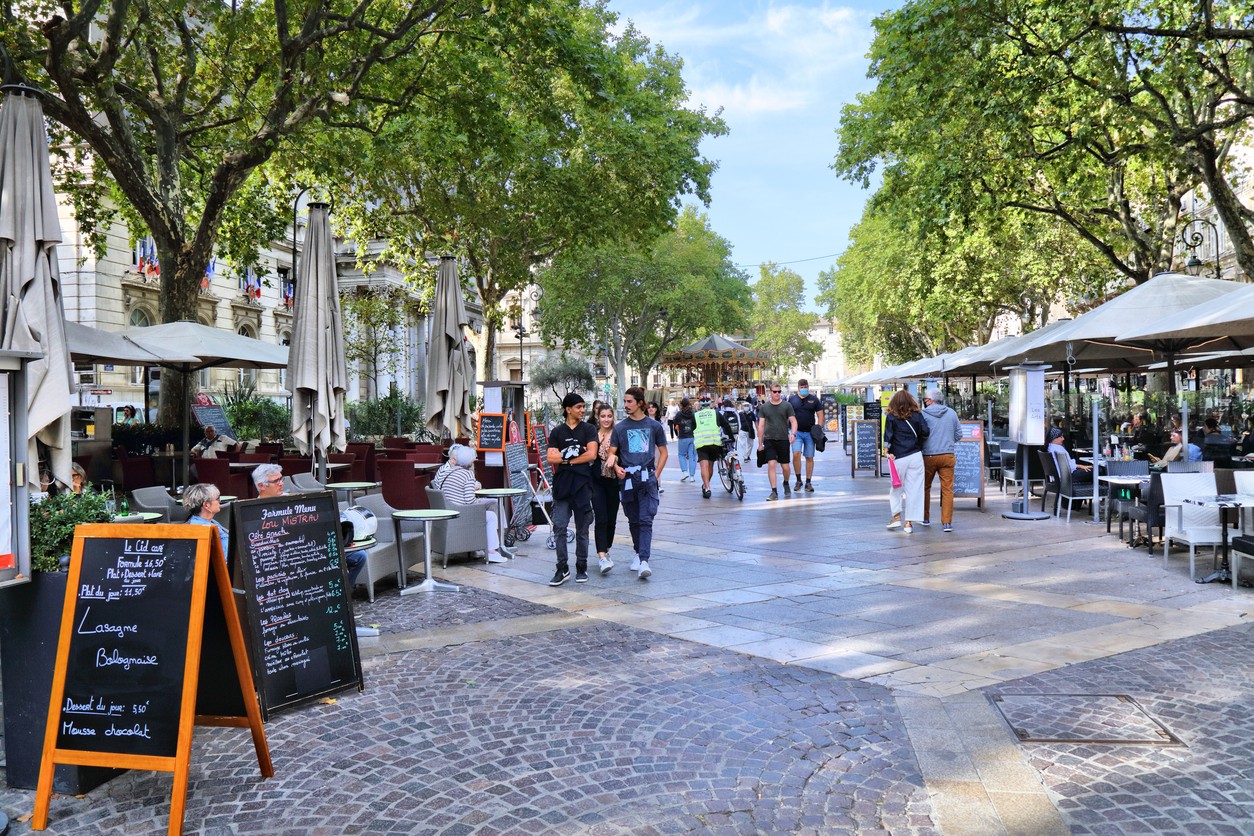
Photo: Avignon’s cuisine is strongly influenced by Provence: olive oil, herbs, vegetables, cheese, wine and sun-ripened fruit all play a major role.
Culinary-wise, Avignon showcases its very Provençal side: with olive oil, herbs, sun-ripened vegetables, tapenade, goat’s cheese and wines from the Rhône Valley. Typical regional dishes include ratatouille, tian de légumes, daube provençale, anchoïade, fougasse and olive-based dishes and products – all of which are perfect for a leisurely stroll through the city.
A lovely first stop is Les Halles d’Avignon near Place Pie. In the covered market hall, you’ll find vegetables, cheese, bread, spices, olives and regional specialities; particularly in the morning, it offers a lively glimpse into local daily life.
For a sweet break in between, Affogatino fits perfectly into your stroll through the city. This little café, with the feel of a salon de thé and glacier, is ideal for coffee, ice cream or a quick stop between the market hall, the old town’s narrow streets and the sights.
In the evening, you might want to be a little more discerning: Le Goût du Jour offers modern, seasonal cuisine in a tranquil atmosphere, whilst Hiély-Lucullus combines Provençal influences with Peruvian-inspired flavours. Those looking for vegetarian, vegan or simply vegetable-focused meals will find V&G – Veggie et Gastro a perfect choice.
Le Vin Devant Soi is the perfect spot for an aperitif or a quick wine break. Here you can sample wines from the region and other French wine-growing areas – a lovely way to round off a day spent exploring the Papal Palace, the Rhône and the old town’s narrow streets.
Avignon offers a lovely selection of accommodation set amongst the historic old town, quiet courtyards and Provençal charm. Properties that combine a central location, character and a relaxed atmosphere are particularly suitable.
The most beautiful hotels in Avignon:
Garlande Hôtel Avignon Centre: This small hotel is situated in a pedestrianised area in the heart of the old town, housed in a Provençal townhouse with historic character. With its individually designed rooms, it is ideal for travellers who want to experience Avignon from a central, charming location without having to walk long distances.
Le Magnan: This boutique hotel is situated within the city walls and combines a relaxed, friendly atmosphere with a small garden. It’s a lovely choice if you’re looking for a peaceful stay whilst still being within easy reach of the old town, restaurants and attractions.
Hôtel Le Bristol: This four-star hotel is situated on the edge of the historic centre and, with its 1920s style, adds a touch of elegance to your stay. The location is particularly convenient if you’re travelling by train and wish to explore Avignon on foot.
Domaine de Rhodes: If you’re looking for quieter accommodation with a rural feel, the Domaine de Rhodes offers a special retreat on the Île de la Barthelasse. This former hunting lodge is set in lush greenery, with a garden, swimming pool and plenty of that Provençal charm – ideal if you want to combine a city break with relaxation.
Les Jardins de Baracane: This charming maison d’hôtes is situated within the city walls and, with its garden, pool and historic building, feels almost like a little oasis in the heart of Avignon. The combination of a central location, a peaceful atmosphere and a personal touch is particularly lovely.
Extra tip for workations and longer stays:
COWOOL AVIGNON: This modern aparthotel is particularly well-suited to longer stays, families or travellers who prefer a bit more space and their own kitchenette. For a classic city break in Avignon, the location lacks the atmosphere of the smaller establishments in or near the old town.
Whether it’s a historic townhouse, a boutique hotel, an elegant city hotel or a green retreat: with the right hotel, you can explore Avignon in a particularly relaxed way – with short distances to cover, peaceful breaks and a real sense of Provence.
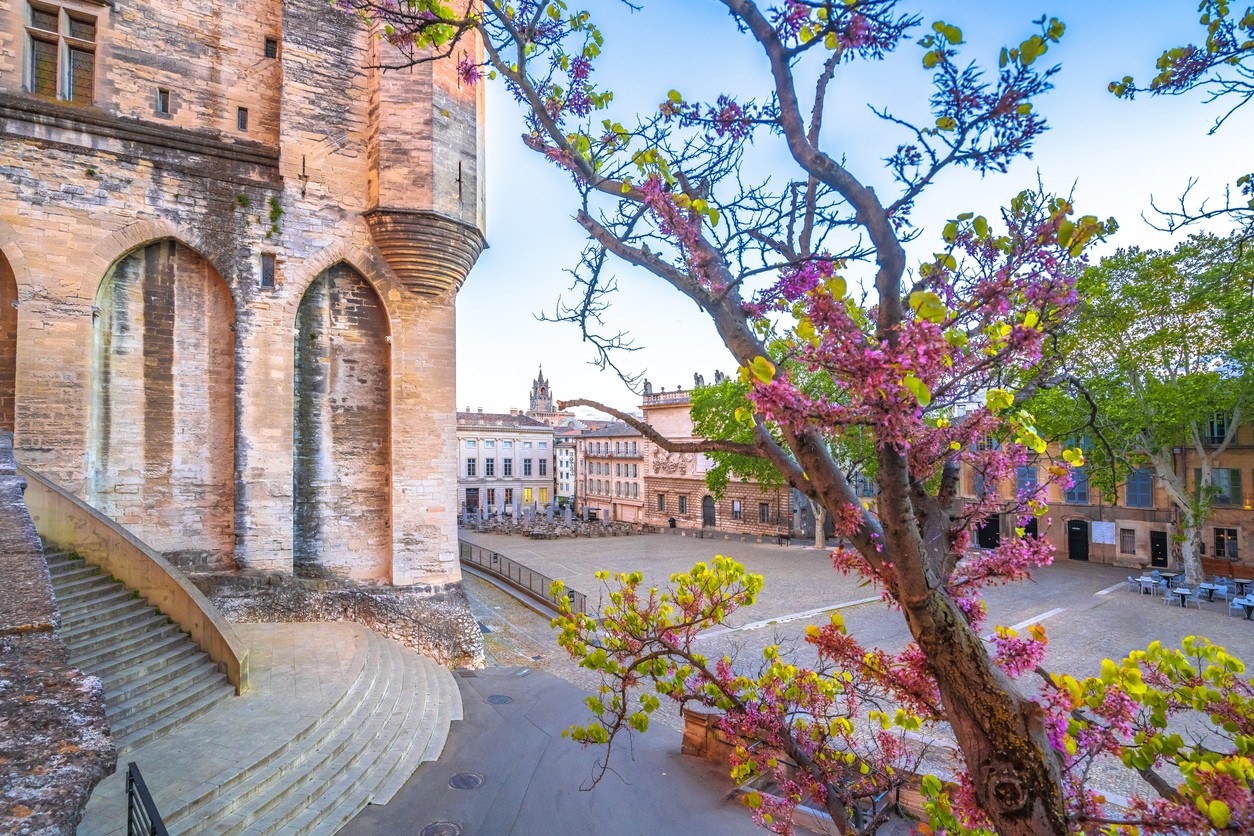
Photo: Avignon has a Mediterranean climate with warm, dry summers and fairly mild winters. Spring and autumn are particularly pleasant.
Avignon has a Mediterranean climate with plenty of sunshine, warm summers and fairly mild winters. Spring and autumn are particularly pleasant: the light is soft, the temperatures are ideal for strolling around the city, and the old town can be enjoyed at a more leisurely pace than during the peak season.
In spring, the squares and terraces slowly come to life again, whilst day trips to Villeneuve-lès-Avignon, L’Isle-sur-la-Sorgue or the surrounding Provence are particularly appealing.
Summer brings plenty of southern French energy to the city, but it can also get very hot. Those travelling in July will experience Avignon at its cultural peak: this is when the famous Festival d’Avignon, with its theatre, dance, music and performances, takes centre stage. Many performances take place in historic courtyards, on stages and at special venues; at the same time, Avignon is considerably busier during this period. For a peaceful city break, June or September are often more pleasant.
Autumn is a particularly lovely time to visit if you’d like to combine Avignon with wine, the countryside and culinary delights. Around Châteauneuf-du-Pape, Gigondas and the Dentelles de Montmirail, it’s the season for vineyards, wine tastings and autumnal excursions. Events centred on wine and the harvest, such as those in Châteauneuf-du-Pape, also fit in well with this season. Temperatures are generally milder than in the height of summer, and Provence is bathed in warm, golden colours.
Winter has its own charm too: the city is quieter, museums and sights can be explored without large crowds, and clear days often cast a beautiful light over the Rhône and the city walls. In January, Cheval Passion is also one of Avignon’s well-known events, whilst Les Hivernales brings the city together culturally in winter with dance and choreography. Those who wish to experience Avignon at a more leisurely pace will find this time of year a very pleasant alternative to the peak season.
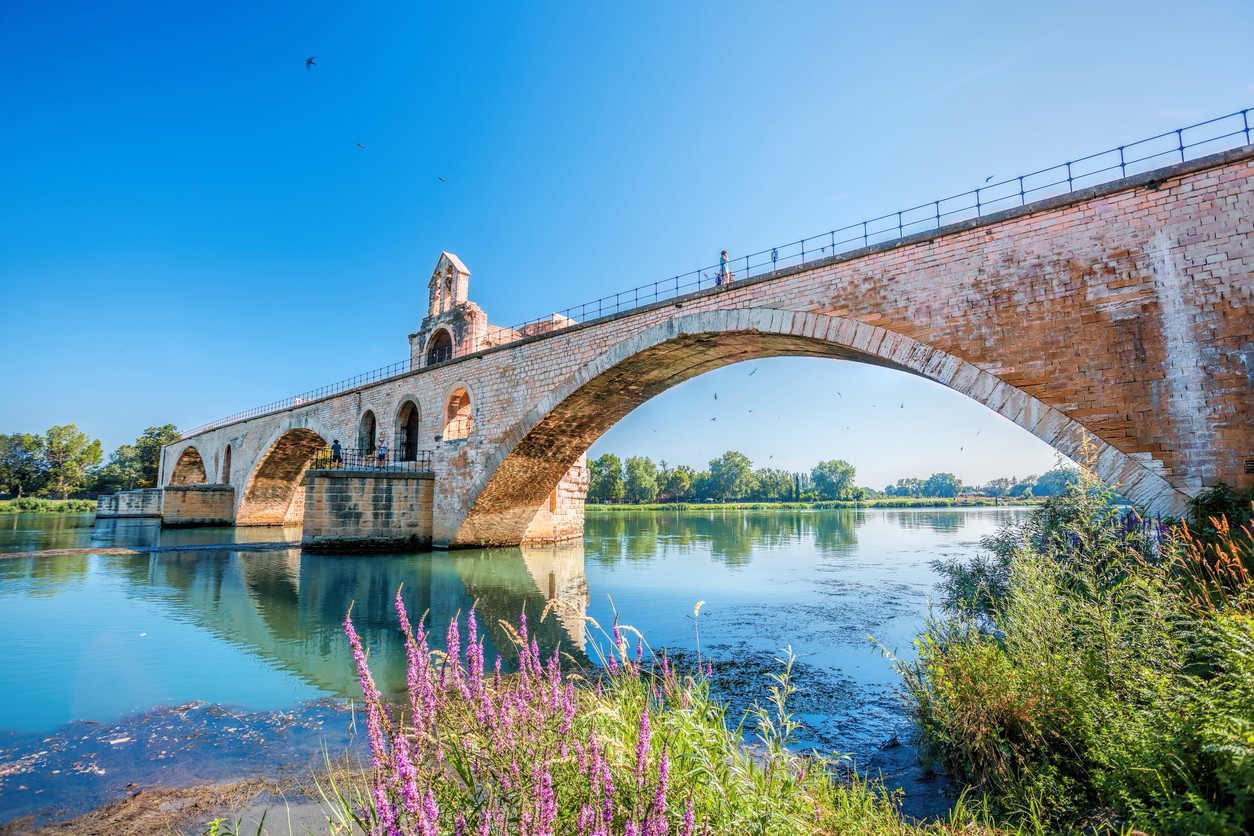
Photo: The old town of Avignon is a delight to explore on foot.
Avignon is conveniently situated in the south of France and can be reached from Switzerland in various ways. The old town itself is compact, whilst day-trip destinations can be easily reached by train, bus or car, depending on their location.
Train: Avignon has two stations: Avignon Centre near the old town and Avignon TGV just outside the city. From Switzerland, you’ll usually travel via Geneva, Lyon or Paris. There’s a fast train service between the TGV station and the city centre.
Car: Travelling by car is convenient if you also wish to explore Provence, small villages or wine-growing regions. In the old town itself, a car is rather impractical; it is better to use car parks or multi-storey car parks outside the narrow streets.
By plane: Good airports to fly into are Marseille, Lyon or, depending on your connection, Montpellier. From there, you can continue to Avignon by train, shuttle, bus or hire car.
On foot: The old town is wonderful to explore on foot. Comfortable shoes are nevertheless recommended, as the cobblestones, steps and warm summer days can quickly take their toll.
If you’re mainly interested in exploring Avignon, Villeneuve-lès-Avignon and nearby towns such as Arles or Nîmes, you’ll manage perfectly well without a car. For villages, the countryside and vineyards, however, a hire car can be handy.
Conclusion: Avignon is a destination for anyone wishing to combine history, culture and the southern French way of life. Between the Papal Palace, the Pont d’Avignon, the banks of the Rhône and the quiet alleyways, an atmosphere emerges that feels both grand and serene. If you take your time, you’ll discover Avignon’s sights not just as a historical backdrop, but above all in the little moments in between: whilst visiting the market, in the evening light by the river, or in a square beneath the plane trees.

© Swiss Bankers 2026


 Compare cards and conditions

